Is this police force professional and capable of handling violen...
/ 2026-10-16 18:54:07Focus


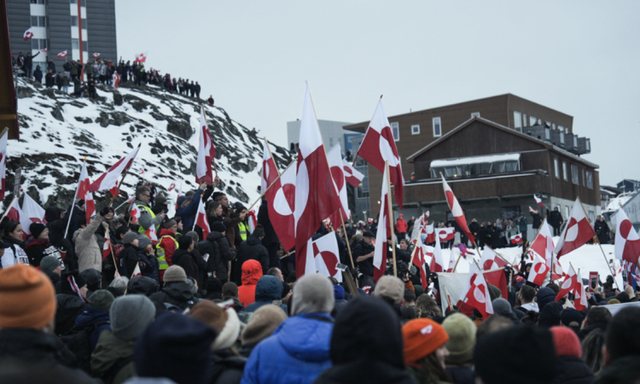
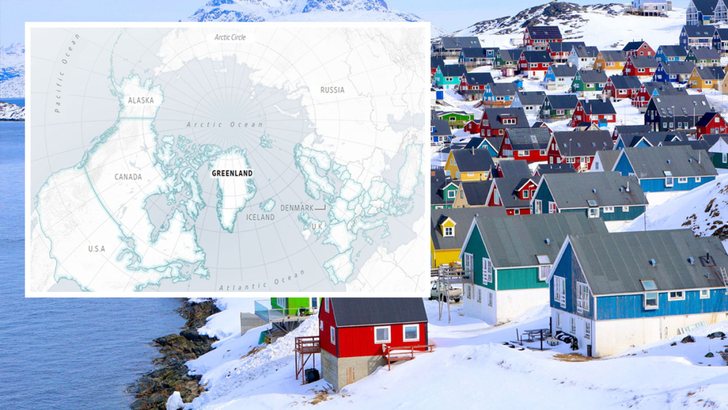
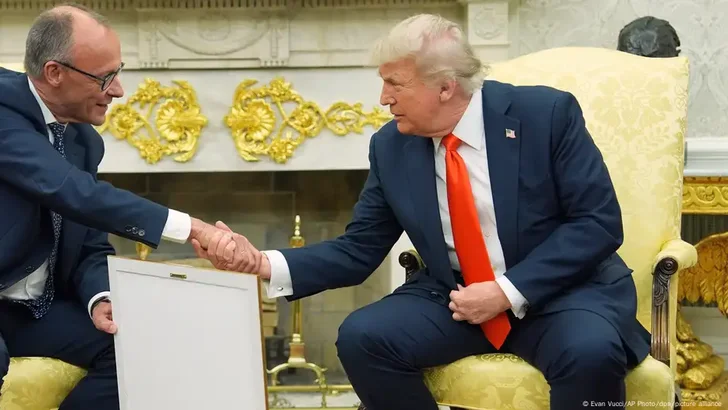
Donald Trump has toughened his stance on Greenland and turned a threat he had made just hours earlier into a concrete decision. The US president has announced that, starting February 1, the US will impose 10% tariffs on Denmark, Norway, Sweden, France, Germany, the United Kingdom, the Netherlands and Finland, accused of "showing up in Greenland for unknown reasons."
In a message on his social network Truth, Trump clarified that the tariff will increase to 25% from June 1 and will remain in effect “until an agreement is reached for the full and total purchase of Greenland.” Below is an explanation of what the economic and political consequences of a measure that goes far beyond a normal trade conflict would be.
Why do these tariffs risk being economically devastating?
Because they are not starting from scratch. The new tariffs of 10% and then 25% would be added to those already in force: currently 15% for Denmark, Sweden, France, Germany, the Netherlands, Finland and Norway, as well as 10% for the United Kingdom. This would bring the total burden to 40% for EU countries and Norway and up to 35% for London.
These levels are much higher than average manufacturing industry profit margins, which typically range between 5% and 12%. In many cases, exporting to the US would simply become economically unsustainable.
Which countries would be hit hardest?
The impact would be broad but uneven:
Germany would suffer the biggest hit in absolute terms, especially in the automotive industry and advanced mechanics.
France would be affected in aerospace, agri-food, luxury and chemicals, with the risk of permanent loss of markets.
Denmark and the Netherlands would feel the impact strongly in pharmaceuticals, chemicals and agri-food. For the Netherlands, its role as a logistics hub would also be damaged.
Sweden and Finland would quickly cross the threshold of sustainability in machinery, transport, paper and chemistry.
Norway would be penalized mainly in fish products, metals and energy.
The United Kingdom, starting from a 10% base, would reach up to 35%, hitting automotive and pharmaceuticals at a still delicate stage after Brexit.
How would this affect the European and American economies?
The effect would be gradual, but not linear. The first tariff hike would reduce trade by a few percentage points, with costs initially absorbed by margins or through renegotiations.
Moving to 35-40% levels would change the nature of the measure. With EU-US trade exceeding €800 billion per year, many companies would be forced to significantly reduce their volume or leave the US market. In the US, prices for consumers could increase by 8% to 20%, depending on the sector.
Why wouldn't the effect be temporary?
Because such high tariffs push companies to reorganize supply chains, not simply postpone exports.
Once production shifts or trade flows change, getting back on track is costly and slow. The risk is a structural loss of transatlantic economic ties.
How can the European Union react?
The EU has retaliatory instruments that have been used before, with countermeasures that could amount to several billion euros.
Faced with cumulative tariffs of this level, a European reaction would be politically difficult to avoid, paving the way for a trade escalation.
Are these fees legally sustainable?
Formally, they can be justified by the “national security” exception in international trade agreements, but legally they are fragile.
This clause has been used less than 20 times in 70 years and rarely cumulatively. Using it for territorial purposes would set an unprecedented precedent.
What impact would it have on NATO?
Such tariffs among allies would put pressure on NATO, which is based on trust and predictability and does not provide for internal economic sanctions.
Turning a strategic dispute into a trade conflict risks eroding the cohesion of the alliance.
What is the most realistic scenario?
Immediate and varied blows to the affected countries, European countermeasures in the medium term, and a long-term deterioration of transatlantic relations.
The economic costs would be certain; the political benefits, very uncertain./ Corriere della Sera