Is this police force professional and capable of handling violen...
/ 2026-10-16 18:54:07Focus


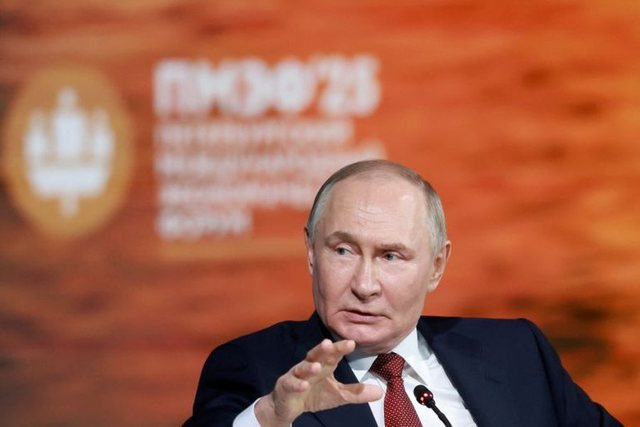
The new proposal presented by Ukraine and its European allies for a peace agreement has been met with immediate rejection by Russian propaganda. Media close to the Kremlin have described the draft as "impossible to accept," hardening their tone towards the West and Kiev.
The economic newspaper Kommersant described the document as “unacceptable,” while the well-known Telegram channel Rybar, linked to high-ranking Russian military circles, called it “ridiculous.” Meanwhile, Moskovsky Komsomolets satirized the text, writing that “not everything is going according to ‘plans.'”
In Russia, the White House's 28-point plan, which analysts said contained many concessions to Moscow, was also met with suspicion. But the European-Ukrainian counterproposal was immediately rejected, accompanied by accusations.
Presidential envoy Kirill Dmitriev accused the EU of "wanting to continue the war until the last Ukrainian," also alluding to the sensational case of Ukrainian businessman Timur Mindich, which had embarrassed President Volodymyr Zelensky.
On Friday, before the Security Council, Vladimir Putin hinted that he had discussed the American plan with the United States ahead of a possible meeting with Donald Trump in Alaska. He called the new version of the draft “a product of the Trump administration,” tacitly distancing himself from the idea of freezing the front line, a proposal strongly opposed by Russian hardliners.
For the Kremlin, a ceasefire that preserves the current situation would mean giving up parts of Zaporizhia and Kherson, which Russia has declared "constitutional territory" since 2022. Nationalist ideologue Aleksandr Dugin called the draft a "trap."
"We have not taken Kiev, nor have we liberated all of our constitutional territories. The West will use the ceasefire to prepare for another war," he said.
However, according to Putin, that document could serve “as the basis for a lasting solution.” Now the Kremlin claims that Kiev and the EU’s rejection of the American draft gives Moscow the “alibi” it was looking for.
Officially, the Kremlin has not yet reacted to the text drafted in Geneva by Ukraine and the EU, but pro-government media have already declared it unacceptable.
According to analysts, the Russian strategy has been simple from the beginning: Not to reject a plan that aligns with its demands, but to wait for the other side to overthrow it, gaining political advantage.