Is this police force professional and capable of handling violen...
/ 2026-10-16 18:54:07Focus


One of the most unusual and controversial US-Israeli war plans against Iran has now come to light: according to an investigation by The New York Times, Washington and Tel Aviv had considered former Iranian President Mahmoud Ahmadinejad as the figure who could take over Iran after the fall of the current regime.
The report reveals that in the early days of the joint US-Israeli offensive, there was a multi-phase strategy for regime change in Tehran that included eliminating Supreme Leader Ali Khamenei, destabilizing the state apparatus, and establishing an “alternative government.” At the center of this scenario was Ahmadinejad—a choice that many US officials considered unlikely.
According to American sources cited by the newspaper, Ahmadinejad was consulted in advance about the plan, and one of the Israeli airstrikes on the first day of the war was aimed at "liberating" him from house arrest in Tehran.
The attack that changed everything
On February 28, in the first wave of bombing, Israel struck not only the compound where Ali Khamenei was located, but also the area where Ahmadinejad was being held under surveillance. The objective, according to American officials, was to eliminate the Islamic Revolutionary Guard Corps that controlled him and pave the way for his release from isolation.
Ahmadinejad was wounded but survived the attack – although it was initially reported that he had been killed by US strikes. However, according to sources close to him, he became disillusioned with the way the operation was conducted and lost faith in the plan for regime change.
Since then, the former Iranian president has not been seen in public and his whereabouts remain unknown.
An extremely contradictory figure
The idea that the US and Israel would rely on Ahmadinejad to lead Iran after the war has caused great consternation, given his political history.
Ahmadinejad led Iran from 2005 to 2013 and became internationally known for his aggressive rhetoric against Israel and the United States. He strongly supported Iran's nuclear program, denied the Holocaust and declared that Israel should be "wiped off the map."
During his presidency, Iran accelerated uranium enrichment and violently suppressed domestic protests, particularly during the crisis following the 2009 elections.
But in recent years he had become a problematic figure for the Iranian establishment. He accused the religious elite of corruption and had entered into open conflict with Ali Khamenei. His candidacies for the presidential elections of 2017, 2021 and 2024 were rejected by the Guardian Council, while his movements were severely restricted.
Suspicions of ties to the West
According to the report, several figures close to Ahmadinejad have long been accused by Iranian media of suspicious contacts with the West and even with Israeli intelligence.
One element that has fueled speculation is his travels outside Iran in recent years. In 2023, he visited Guatemala, while in 2024 and 2025 he traveled to Hungary - a country with close relations with Israel and Prime Minister Benjamin Netanyahu.
In Budapest, Ahmadinejad gave lectures at universities close to Viktor Orban's government. He returned to Iran just days before the Israeli attacks began.
Another detail that raised questions was his almost total silence during the war with Israel, even though he had historically been one of the most anti-Israeli figures in the Islamic Republic.
The plan to overthrow the regime
According to The New York Times, the Israeli strategy for Iran was built in several stages.
Initially, the military structures and key leaders of the regime would be targeted. In parallel, Israel counted on internal rebellions and the activation of Kurdish groups against Iranian forces.
It was then expected that political chaos, damage to infrastructure, and psychological influence campaigns would create the perception that the regime was losing control.
In the final phase, according to the plan, the theocratic government would collapse and a new political structure with Western support would be created.
However, most of these objectives were not realized. Although Khamenei was killed in the first attacks and Iran suffered heavy military damage, the Iranian political system survived.
Skepticism within the Trump administration
The report emphasizes that even within the US administration there was great skepticism about the idea of Ahmadinejad's return to power.
Some officials considered him too radical and unpredictable to be a reliable partner for the US.
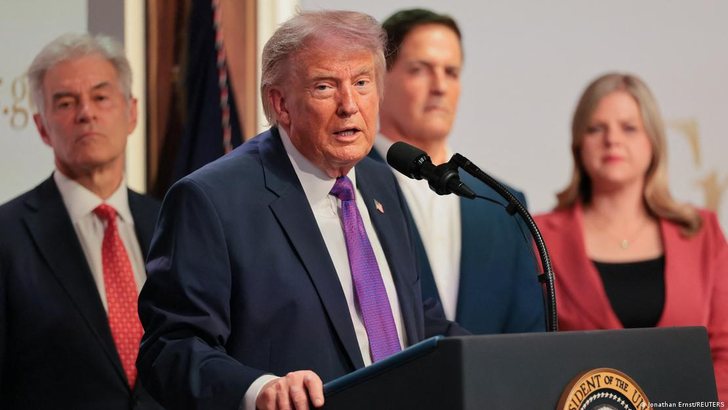
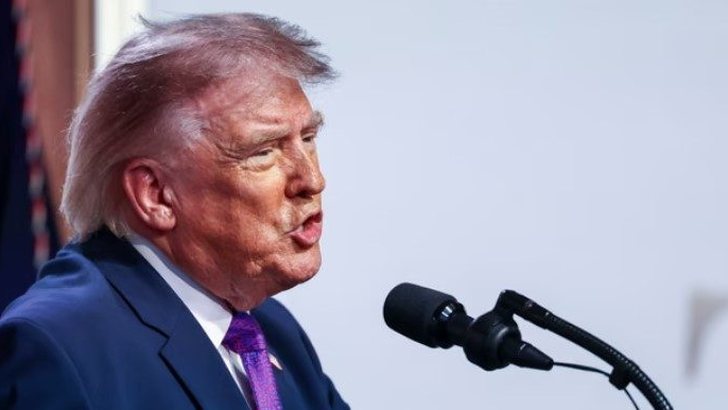
However, Donald Trump was believed to have been inspired by the operation in Venezuela against Nicolas Maduro and thought a similar model could work in Iran.
In an interview with The New York Times in 2019, Ahmadinejad himself surprised public opinion by praising Trump.
"Trump is a man of action. He thinks like a businessman and knows how to calculate costs and benefits," he declared at the time.
The big mystery: where is Ahmadinejad?
Currently, no one knows exactly where the former Iranian president is.
After initial reports that he had been killed, Iranian media confirmed that he had survived, while the IRGC guards who were keeping him under house arrest had lost their lives.
Analysts believe that the return of his name to public circulation could be an indication that new negotiations are taking place behind the scenes about Iran's political future.
Meanwhile, even after the failure of the initial plan, some Israeli officials continue to believe that regime change in Tehran remains possible.