How Belinda Balluku is fabricating the rumor about Top Channel's...
/ 2026-10-19 16:19:00Focus


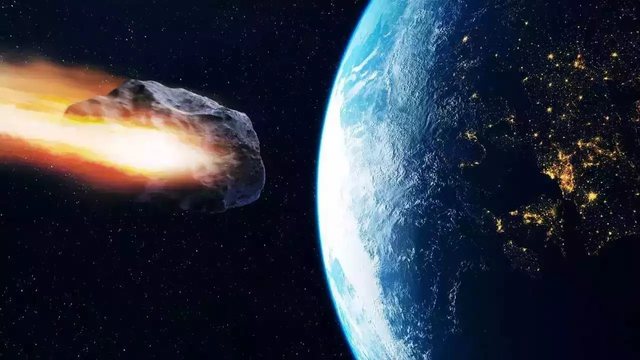
Fears of an asteroid hitting Earth are growing.
The European Space Agency (ESA), in ongoing collaboration with NASA, continues to try to collect as much data as possible before it disappears from view and reappears in 2028.
The probability that an asteroid will collide with Earth on December 22, 2032 has increased to 2.3%. A risk that is becoming increasingly serious and that has put all space agencies on alert for the first time.
The data that could continue to change until next April, when more is known about the so-called “2024 YR4”. And it will be in that month that it will no longer be visible from terrestrial observatories until its trajectory returns it to Earth's view in 2028 and then on the date indicated in 2032.
"This is the first time that the United Nations has had to sound an alarm and activate the planetary defense protocol, which sounds a bit like Star Wars, but that's actually what it's called," says Jorge Bolívar, a specialist in the History of Science, on the 'Mesa de Análisis' program on Canal Sur, the media writes.
Although, as he himself says, this does not mean that this is the first time that an asteroid like this risks hitting Earth.
"In 1908, an asteroid about the same size as this one hit Siberia. It was called the 'Tunguska event.' What we do know is that it affected about 2,000 square kilometers of land, uprooted about 80 million trees from the forest where it fell, and killed, it is believed, about three people. In other words, the asteroid may have been very small in size compared to our planet," he describes.
Jorge Bolívar also downplays the chances of a collision and calls for calm: "If it were to fall, the arc where it would strike would be from South America to Africa and the Pacific. In other words, Europe is outside that orbit."