Protests, violence, curfews: From France to Albania, why Europe'...
/ 2026-10-20 23:47:20Focus


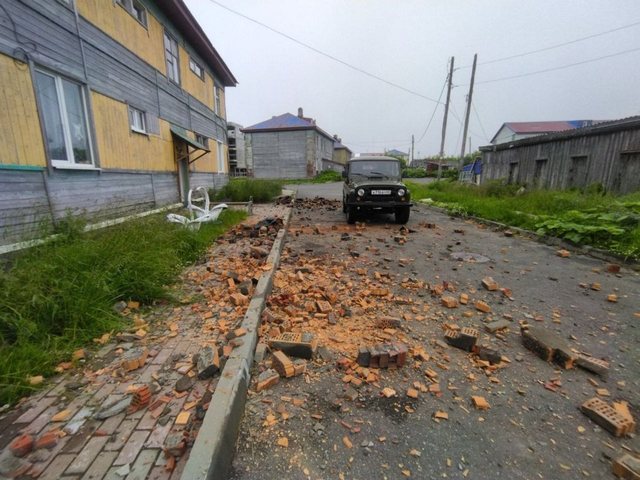
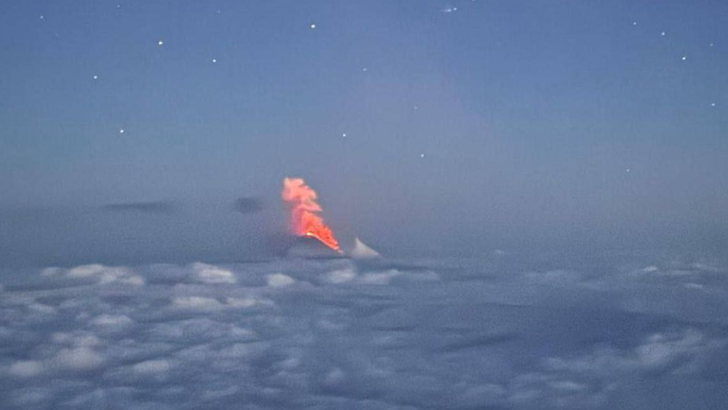
At 11:25 a.m. on Wednesday, the ground shook in Kamchatka with a rarely recorded magnitude of 8.8. Alarms spread rapidly along the entire Pacific Rim. Millions of people were evacuated for fear of a catastrophic tsunami, like those that shook the world in 2004 and 2011.
But this time, the sea did not raise its deadly walls. Waves reached up to 4 meters in some parts of the Russian coast, but did not bring the apocalyptic floods that many expected.
What happened differently this time? How is it possible that an earthquake of this magnitude did not produce the tsunami that history has taught us to expect with anxiety?
Below are the mechanisms that lead to devastating tsunamis and the mysterious factors that stopped the power of the waters this time.
What caused the earthquake?
Kamchatka is located in an area known for high seismic activity, called the "Pacific Ring of Fire", where about 80% of the world's earthquakes occur, according to the British Geological Survey.
According to scientists, the earthquake was a "megathrust" type, a type of powerful earthquake that occurs when one ocean tectonic plate (such as the Pacific) subducts under another, in this case the Okhotsk microplate.
This process is not smooth. The plates often get stuck and the tension builds up for thousands of years, until it is suddenly released in a powerful earthquake. In this case, the rift surface was probably hundreds of kilometers long, which explains the high magnitude of the earthquake.
In the same area, in 1952, a magnitude 9.0 earthquake struck less than 30 kilometers from today's epicenter, according to the U.S. Geological Survey.
Why wasn't there a big tsunami?
Although sudden plate movements can displace large amounts of water and cause tsunamis, there are several factors that affect the size of the waves.
In the ocean, a tsunami travels at speeds of over 800 km/h, the speed of a passenger jet, but with low waves. As it approaches the coast, the speed decreases and the waves increase.
However, the height of the tsunami is also affected by the shape of the sea and coastal relief, as well as the depth of the earthquake. The latter occurred at a relatively shallow depth of about 20.7 km, which could have caused significant water displacement, but initial reports suggest that predictive models may have overestimated the impact.
According to seismology professors, if the epicenter were a few kilometers deeper, the amplitude of the waves would be significantly lower.
The role of warning systems
One of the reasons why the consequences were avoided was the improvement of early warning systems. After the 2004 tragedy, which killed over 230,000 people in 14 countries, many countries around the Pacific set up tsunami warning centers. These centers immediately send signals to populations to evacuate in case of danger.
However, scientists warn that accurate earthquake prediction remains impossible. The latest quake was preceded ten days ago by another with a magnitude of 7.4 in the same area, which may have been a foreshock, but not an accurate indication of the major quake.
According to the Geophysical Institute of the Russian Academy of Sciences, aftershocks are expected for the next several weeks, while monitoring of the area will continue with high intensity.