Is this police force professional and capable of handling violen...
/ 2026-10-16 18:54:07Focus


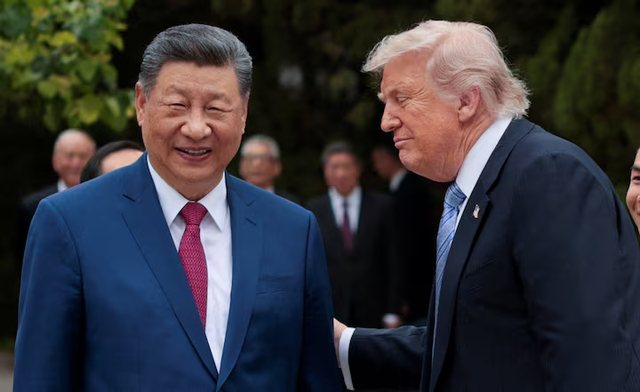
Chinese President Xi Jinping is increasingly emerging as one of the central figures of global diplomacy, having hosted both US President Donald Trump and Russian President Vladimir Putin in Beijing within a few days.
The grand ceremonies organized at the Great Hall of the People, with an honor guard, military bands, and high-level state protocol, reflected China's effort to project itself as a global power that communicates with all parties and aims to play a key role in international developments.
For Beijing, the visits of the two most important world leaders are a signal that China has become an indispensable center of diplomacy and the global economy.
International analysts estimate that China's growing influence is related to its economic power, dominant role in industrial production, and control over rare minerals, which give Beijing a strong advantage in international relations.
The meeting with Putin once again confirmed the strategic rapprochement between China and Russia, at a time when Moscow continues to face Western isolation due to the war in Ukraine.
Russia remains increasingly dependent on China economically, as Beijing is Moscow's largest trading partner and the main buyer of Russian oil and gas.
However, the relationship between the two countries is seen as increasingly unequal. Although more than 20 cooperation agreements in areas such as trade and technology were signed after the meeting, China has yet to give its approval for the massive Russian gas pipeline project that the Kremlin has been seeking for years.
Experts believe that this shows Xi Jinping's stronger position in relation to Vladimir Putin, at a time when Russia is in greatest need of Chinese support.
At the same time, Xi appears to be strengthening his position in relation to the US.
According to analysts, the uncertainties of American foreign policy and global tensions have given China the opportunity to present itself as a more stable partner for many countries.
Just a few years ago, China was facing diplomatic isolation due to the Covid-19 pandemic, tensions with the West, and criticism over human rights abuses in Xinjiang and Hong Kong.
However, Beijing has gradually changed its diplomatic style and has recovered relations with several traditional US allies, including Australia, Canada and the United Kingdom.
In the last decade, Xi Jinping has consistently promoted the idea of the "great renaissance of the Chinese nation," while recent visits by world leaders to Beijing are considered by Chinese propaganda as evidence of China's strengthening position in the international arena.
However, Putin's visit also highlighted the limits of Chinese diplomacy. During joint statements, Xi spoke of the urgent need to end the war in the Middle East and criticized military strikes on other countries, but avoided any direct comment on the war in Ukraine.
This silence has raised questions in Europe about China's willingness to play the role of a neutral mediator in the Russian-Ukrainian conflict.
The United States and the European Union have repeatedly called on China to reduce economic support for Russia, but Beijing seems wary of losing a strategic ally like Moscow.
Analysts warn the BBC that this diplomatic balance remains challenging for Xi Jinping, especially at a time when China is seeking to strengthen economic relations with Europe to support its export-oriented economy.
Although Beijing is trying to project the image of a global power indispensable for diplomacy and international trade, skepticism towards the Chinese authoritarian system and the policies of Xi Jinping's government continues to remain strong in many Western countries.