"The fate of the homeland is in our hands" - An appeal by Ismail...
/ 2026-10-18 16:09:54Focus


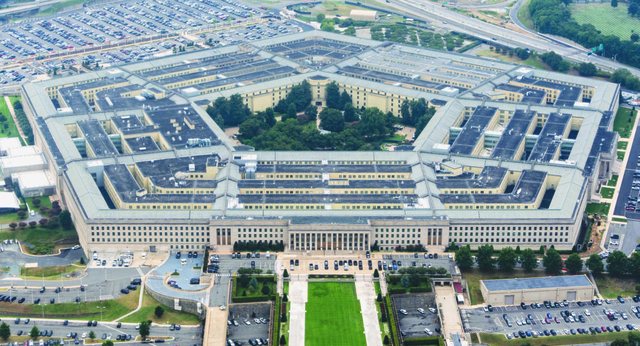
China is no longer the primary security threat to the United States, according to the Pentagon's new National Defense Strategy, released on Friday.
The document, which is published every four years, places the defense of American territory and the Western Hemisphere at the top of its priorities.
The strategy emphasizes that Washington has long neglected the "concrete interests of Americans" and signals a more restrained approach to international engagements, including support for allies.
The Pentagon announces that the US will provide "more limited" support to its partners and calls for greater security burden-sharing, arguing that many allies have been "content to allow Washington to subsidize their defense."
This strategy reinforces the policy lines pursued by the Trump administration during the first year of its second term.
The document underlines that the US will guarantee military and commercial access to key strategic areas, such as the Panama Canal, the Gulf of America and Greenland.
"From the utopian idealism of the past, towards harsh realism," the document says, describing the new approach as fundamentally different from the strategies of post-Cold War administrations.
Regarding China, the Pentagon emphasizes that relations will be managed through “strength, not confrontation.” The objective, according to the strategy, is not to dominate or humiliate Beijing, but to prevent any power from dominating the United States or its allies.
Unlike previous documents, Taiwan is not mentioned directly, although the US emphasizes that it aims to thwart any attempts at regional dominance. It is worth recalling that late last year, Washington approved an arms sale to Taiwan worth $11 billion, prompting military reactions from China.
Russia is described as a "persistent but manageable threat" to NATO's eastern flank, while for North Korea the strategy envisages a more limited American role, assessing that South Korea is capable of taking the main responsibility for deterrence.
The document denies that this approach constitutes isolationism, emphasizing that the US aims for a more focused and realistic strategy, where American interests are not automatically equated with the threats faced by other countries.
In this context, European allies are expected to take the lead on threats that are greater for them than for the US, in a world that, according to some Western leaders, is moving towards an increasingly less rules-based international order.