"Condemned" protesters?! Who trapped Rama inside the Prime Minis...
/ 2026-10-23 16:02:00Focus


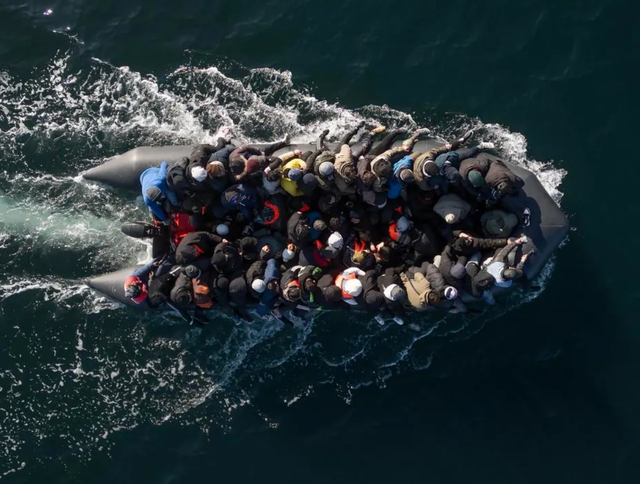
The United Kingdom government under Prime Minister Keir Starmer is reportedly considering the possibility of using countries in the Balkans as 'return hubs' to send rejected asylum seekers, according to government ministers quoted in a leading British newspaper.
Such plans, if true, are very much in line with the trend among policymakers in Europe to pursue such offshore schemes. However, they stand in stark contrast to Prime Minister Starmer's earlier opposition to the previous Conservative government's very similar Rwanda scheme.
According to the Times, the Labour party is considering options to sign deals with countries in the Balkans to send rejected asylum seekers there. This differs from the previous Rwandan scheme in that the latter included people (in theory) whose asylum claims were being processed abroad, while the former would (in theory) only be used for people who have already been rejected.
Despite this difference, the comparison has been noted and Keir Starmer's statements criticizing the previous plan have made the rounds on social media. However, such an apparent turn towards the idea of "shifting" Britain's responsibilities for refugees is not a complete surprise, as Starmer has previously praised Italian Prime Minister Giorgia Meloni for Albania's very similar scheme.
The general idea is very much in vogue in Europe more broadly, with individual European Union member states having successfully lobbied the European Commission, the EU's executive arm, to open up the legal possibility of 'return hubs' where people could be deported to countries they did not come from, something previously considered anathema.
The stated rationale for such schemes generally revolves around the idea that neither Europe nor the UK are able to handle the number of people trying to cross irregularly into their territory to seek asylum. Given the various human rights conventions the EU and the UK are bound by, it is difficult to return people directly to their countries of origin, as in many cases they will face risk and countries will often not accept people forcibly returned.