Is this police force professional and capable of handling violen...
/ 2026-10-16 18:54:07Focus


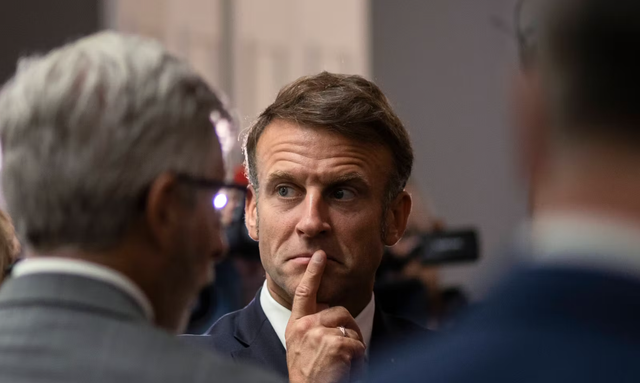
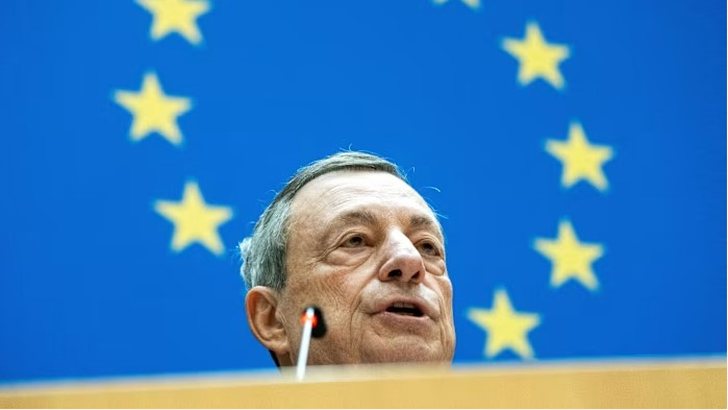
Europe faces a critical strategic and economic moment, French President Emmanuel Macron warns, calling for swift action to avoid losing global weight.
He described the situation as an "exceptional geopolitical and geoeconomic situation," stressing that the continent risks falling behind in the face of competition from the US and China.
In the interview with The Economist, Macron argues that if Europe does not invest more quickly in the economy and remove obstacles to growth, it could be "cleansed of American technology and Chinese imports."
His message comes ahead of EU leaders' discussions on the bloc's competitiveness.
The French president proposes four main directions of reform.
First, he calls for a simplification of the EU's numerous rules, arguing that bureaucracy stifles innovation and economic growth. Second, he calls for the diversification of suppliers and a reduction in dependence on limited partners outside Europe, including in energy and digital technology.
In this context, he suggests strengthening the international role of the euro and reducing dependence on foreign strategic resources. The objective, according to him, is for Europe to gain greater economic and strategic autonomy.
Third, Macron proposes a “European preference” policy for critical sectors such as steel, chemicals and defense. The idea is to link state subsidies and public procurement to the minimal use of European inputs.
Finally, it calls for a huge increase in investment in public and private innovation, including the issuance of joint bonds to finance defense, green technology, and artificial intelligence.
Macron describes the current moment as a "Greenland moment," arguing that Europeans are gradually understanding the strategic risk.
He warns that the initial fear that the US might leave Europe could be replaced by a false sense of security. According to him, the current crisis is a “deep geopolitical rift.”
However, not all EU countries agree with the French proposals.
Some countries worry that the preference for European production could turn into protectionism and harm investment.
Macron rejects these criticisms, saying the goal is not to impose rules on European companies that do not apply to imports.
The French president also emphasizes the importance of European military cooperation, including joint defense projects and future combat air systems.
Ultimately, Macron argues that Europe should not underestimate its advantages as a market of 450 million inhabitants and as a space based on the rule of law.
The challenge, according to him, is to transform these advantages into real geopolitical power before global rivals create an insurmountable gap.