


Is this police force professional and capable of handling violen...
/ 2026-10-16 18:54:07Focus


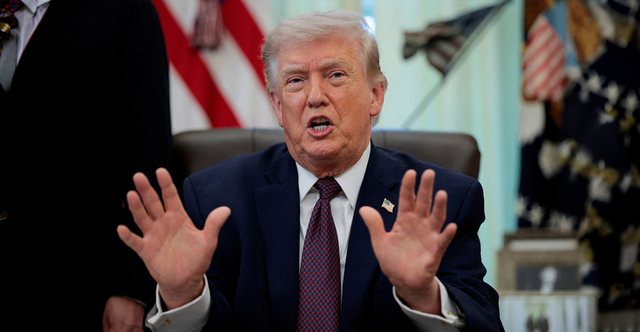
The war with Iran is becoming the biggest challenge of Donald Trump's presidency, risking overturning part of his foreign policy agenda and the promise to remove America from long-running conflicts in the Middle East.
This is the argument of an analysis published by The Economist, which brings to mind a principle of former US President Barack Obama: "Don't do stupid shit" — a simple piece of advice, but one that could have been a warning for Trump's decision to get involved in the war with Iran.
According to the analysis, Trump could have avoided such a situation if he had followed Obama's approach more closely, despite his opposition to his Democratic predecessor.
From the promise of peace to a new war in the Middle East
Trump had built part of his foreign policy on the idea of avoiding long-term US military interventions and focusing on economic deals.
His administration had declared that the Middle East would enter a phase where "trade would replace chaos," while Washington would focus on investments in technology, energy, and defense.
However, the decision to join Israel in attacks on Iran changed this direction.
According to the analysis, Trump entered the conflict without a clear plan for ending the war and with the expectation that strikes against the Iranian leadership could bring about regime change in Tehran.
The authors compare this expectation to a misconception that a complex and deeply entrenched regime can only be overthrown through airstrikes.
Trump's successes and the risk of a strategic mistake
The analysis acknowledges that Trump's record in the Middle East is not only negative.
Among his achievements are the Abraham Accords, through which several Arab countries normalized relations with Israel, as well as pressure on Israeli Prime Minister Benjamin Netanyahu to reach a ceasefire with Hamas.
Also, the attacks on Iranian nuclear facilities are considered an action with a strategic logic, as they aimed to damage Tehran's nuclear capabilities.
However, according to the analysis, the problem lies in the expansion of the conflict and the lack of a clear political objective behind the military operations.
Obama's warning and lessons from Bush's wars
Barack Obama formulated his foreign policy principles after the George W. Bush administration's experience in Afghanistan and Iraq.
After the attacks of September 11, 2001, the United States became involved in two long wars that brought enormous human, financial, and political costs.
Obama concluded that America should choose its battles carefully and intervene militarily only when there are serious threats to national interests.
According to the analysis, Trump shares some elements of this approach: he is skeptical of state-building in distant lands and critical of allies who rely heavily on American power.
But the main difference is the way policy is implemented: Trump often acts on impulse, underestimates complexity, and places more emphasis on public pressure than detailed diplomacy.
War damages Arab allies' trust in US
One of the biggest consequences of the conflict with Iran could be the weakening of Gulf countries' trust in the United States.
Trump had envisioned a Middle East where relations would be based more on business and investment. But military tensions have made it more difficult to realize major economic projects in the region.
According to the analysis, countries like Saudi Arabia and other Gulf states could begin to diversify their strategic partnerships, strengthening ties with countries like China and Turkey.
Although the alliance with the US remains important, some governments in the region may seek alternatives to not being completely dependent on American policy.
A war that could define Trump's legacy
According to "The Economist", the conflict with Iran could become a defining moment for Trump's presidency.
If the war ends without a clear strategic outcome, it could damage the very image Trump sought to build: that of a president who avoids endless wars and puts American interests first.
In the end, the analysis brings back Obama's warning: in international politics, military power is important, but reckless decisions can produce consequences that even the greatest power in the world cannot easily control.


