"The fate of the homeland is in our hands" - An appeal by Ismail...
/ 2026-10-18 16:09:54Focus


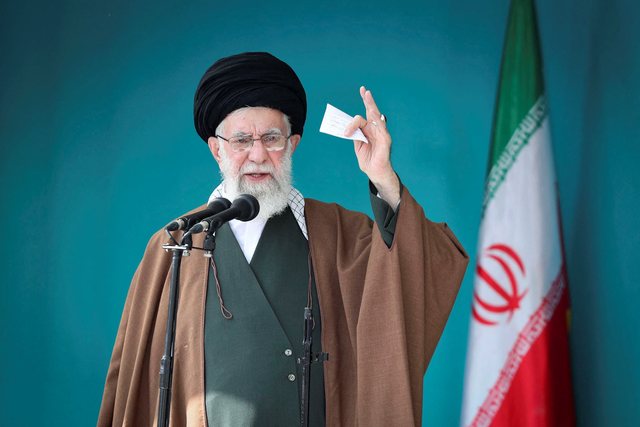
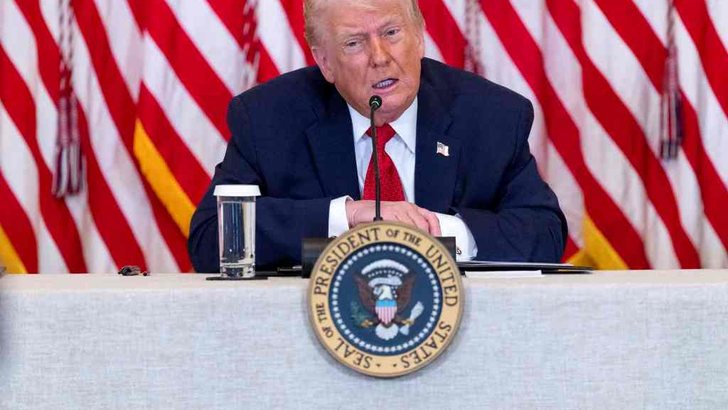
Iran's Supreme Leader Ayatollah Ali Khamenei called US President Donald Trump a "criminal" for supporting protests in Iran and blamed him for thousands of casualties, acknowledging that thousands of people have been killed.
In a speech broadcast on state television, Khamenei said the protests had killed several thousand people. It was the first time an Iranian leader had given an indication of the death toll from the wave of protests that began on December 28 and was met with a brutal and bloody crackdown.
"In this uprising, the US president made personal statements, encouraged people to take action and said 'We support you, we support you militarily,'" said Khamenei, who has the final say on all matters of state. He repeated accusations that the US seeks dominance over Iran's economic and political resources.
“We consider the US president a criminal, because of the victims and the damage, because of the accusations against the Iranian people,” he added. He described the protesters as “foot soldiers” of the United States and said they had destroyed mosques and educational centers. “By harming people, they killed several thousand of them,” he said.
Khamenei's comments come a day after Trump took a more subdued tone, saying Iran had canceled the hanging of more than 800 people and adding that he greatly respects the fact that they canceled the executions. He did not clarify who he had spoken to in Iran to confirm whether the killings had been canceled. Trump's statements were a sign that he might be backing off from a military strike. In recent days, Trump had told Iranian protesters that "help is coming" and that his administration would act accordingly if the killings of protesters continued or if Iranian authorities executed detained protesters.
In his speech, Khamenei said the rebels were armed with weapons imported from abroad, without naming any specific country. “We do not plan, we do not lead the country to war. But we do not spare domestic violators either; worse than domestic violators, there are international violators. We do not spare them either,” he said, calling on officials to follow up on the relevant issues.
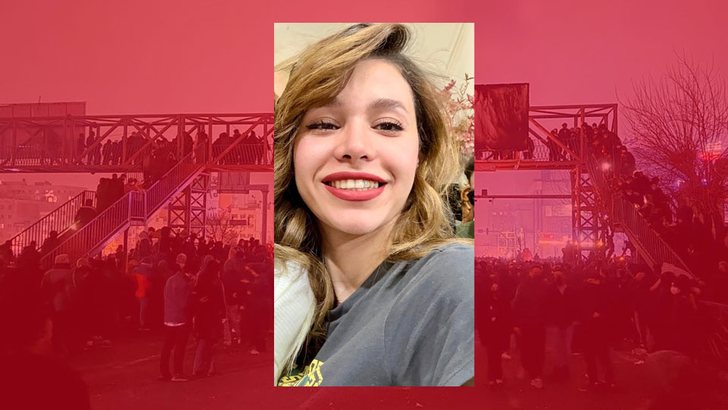
Iran has returned to a state of calm after a brutal crackdown on protests that began on December 28 over the country's struggling economy. The regime's crackdown has left at least 3,090 people dead, according to the US-based Human Rights Watch, surpassing any other wave of protests or unrest in Iran in decades and reminiscent of the chaos that preceded the 1979 revolution.
The agency has been accurate throughout the years of demonstrations, relying on a network of activists inside Iran to confirm all reported casualties. The AP has not been able to independently confirm the death toll. Iranian officials have again accused the United States and Israel of fomenting unrest in the country. On Friday, Iranian President Masoud Pezeshkian, in a phone call with Russian President Vladimir Putin, accused the United States and Israel of meddling in the unrest.
There have been no signs of protests for several days in Tehran, where commercial activity and street life have returned to seemingly normal, and Iranian state media has not reported any new unrest.
During the unrest, authorities blocked all internet access on January 8. On Saturday, text messaging and very limited internet services began to temporarily resume in some parts of Iran. Text messaging began working overnight, while users could access local sites through an internal internet service. Some also reported limited access to the international internet through the use of a VPN.