Protests, violence, curfews: From France to Albania, why Europe'...
/ 2026-10-20 23:47:20Focus


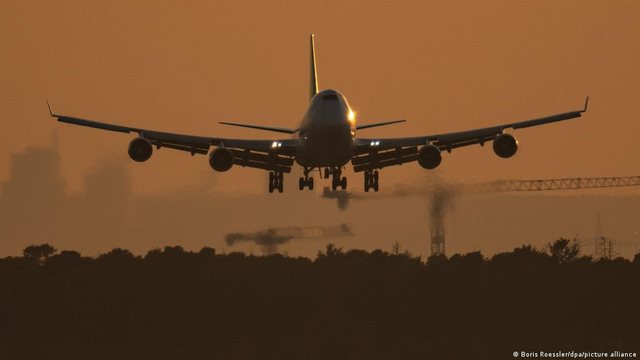
The production of the legendary Jumbo-Jets came to an end. 54 years after the first flight in 1969 and after the production of 1500 examples. Boeing hopes the 747 will fly again for decades.
When Boeing historian Michael Lombardi talks about the 747, it seems like he's talking about a religious issue. In his warm and slow voice he talks about the largest civil project of all time, the construction of aircraft: "It is a great symbol for humanity and what it is capable of doing. It has changed the world, it has made the world seem smaller, and it has democratized air travel,” Lombardi said in Seattle, speaking days before the historic event.
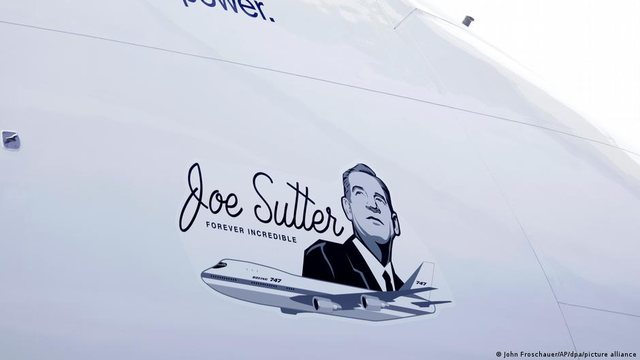
On January 31, 2023, a great era came to an end, almost exactly 54 years after the first flight made in 1969, the production of the Boeing 747 comes to an end and the delivery of the last aircraft is accompanied by a celebration. The last aircraft of this type is specimen 1574, which is an Atlas Air 747-8F freighter used by the logistics concern.
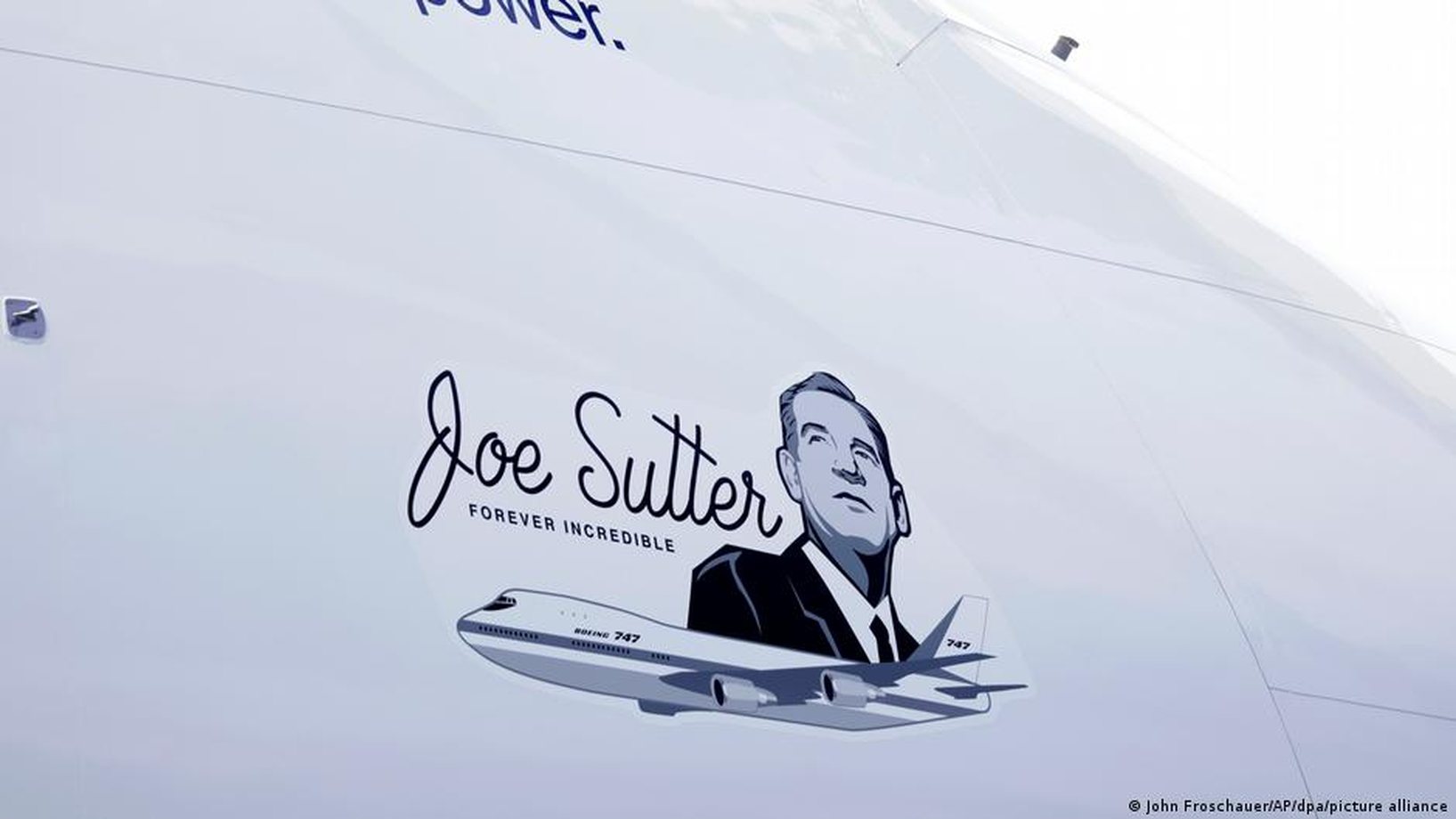
Kühne & Nagel. Only a small sticker affixed to the front nose flap of the aircraft reminds you of the fact that this is the last 747 and remembers the "father of the 747", engineer Joe Sutter, a legend of the sector, who replaced life in 2016.
Big and fast boom in the history of air transport
The Boeing 747 has managed to have the largest and fastest development in the entire history of passenger transport, surpassing its predecessor, the Boeing 707, with a maximum of only 189 passengers. The Jumbo-Jet was initially allowed to fly 550 passengers and later managed to carry up to 660 passengers.
The history of the creation of the 747 is legend and myth: In 1965, the two most influential men in air transport at the time, Boeing CEO William 'Bill' Allen and Pan-Am founder Juan Trippe, were making the annual salomon fishing trip when they struck an agreement in principle to build the world's largest passenger plane. The agreement was made by shaking hands, and without signing any official document.
Today it is almost unbelievable that a project that would decide the future of their firms and would cost billions of dollars, managed to become unofficial in this way. "Basically Trippe said, 'If you make a plane like that, I'll buy it.' And Allen replied, "I'll produce it if you buy it." No contract was signed, but that was enough to start the program," Joe Sutter later said.
At first it was thought of as a transitional model
In today's age of computer-aided design and virtual three-dimensional models created with a few clicks of the mouse, it's hard to imagine the challenges faced by Boeing 747 engineers in the mid-sixties. It was clear that the airlines, especially Pan Am, wanted to have a much larger aircraft than those produced up to that time, a ground completely untrodden until then.
For Juan Trippe, the 707 was just the right size, so he clung to the initial idea of building a double-decker aircraft in which two 707 fuselages would be stacked on top of each other. But that idea was abandoned. as early as 1965. The 747 was effectively intended as a transitional aircraft, to be used until the majority of intercontinental passengers flew at the speed of sound, either on Concorde aircraft or on their competitor, the American Boeing SST aircraft ( called 2707, which was abandoned in 1971), which were developed at the same time.
Later the 747 would continue to operate as a transport aircraft. The wheelhouse was therefore moved above the main deck, because for simple cargoes only the front nose with a hatch was now needed. This configuration created a small canopy area behind the cabin, thus creating the famous "hump" of the 747.
Instead of building two thin floors on top of each other, as originally thought, the 747 was equipped with only one main floor. However, at six meters wide, the plane's field had the largest area ever for a passenger plane, with nearly ten seats and where two cargo containers could fit side by side.
On April 13, 1966, Pan Am placed its first order for 25 Boeing 747s worth $525 million (about $4.8 billion today) so the 747 program officially began.
Huge production hall
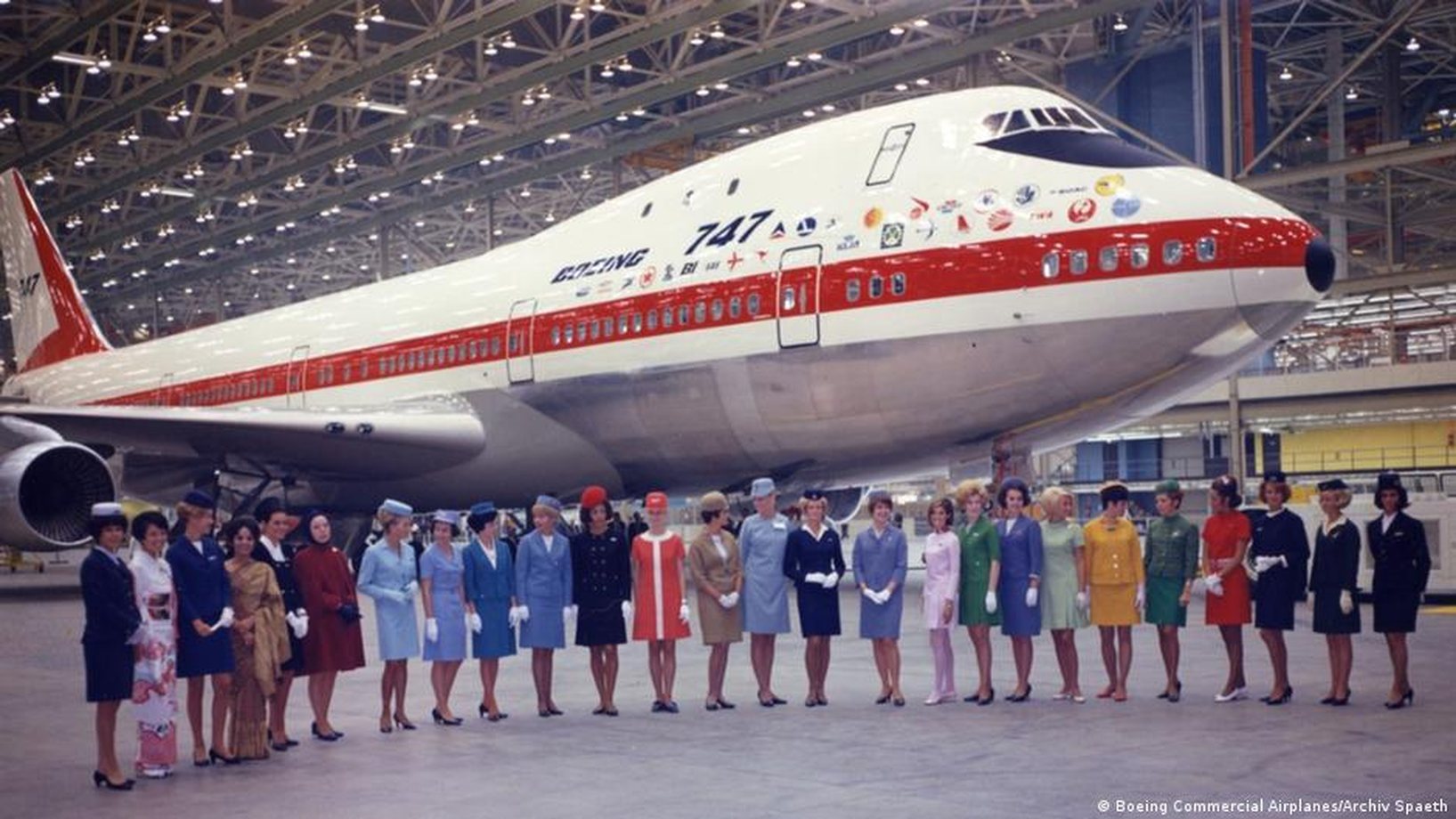
In June 1966, Boeing purchased 315 acres of wooded marshland near Paine Field Airport in Everett, Washington, north of Seattle, to erect the 747 manufacturing plant, which by volume is still the largest building in the world. biggest in the world. In fourth place is currently the airlift hall of the former Cargolifter in Brandenburg, now Tropical Islands Resort, which is two and a half times smaller than the 747 production halls. Building the 747 factory has been a race of relentless with the analog instruments of that time.
The factory was erected while work continued on the design of the 747. Everything was planned minute by minute, the prototype had to fly within two and a half years, the launch was scheduled for September 30, 1968. Less than three years after the signing by Pan Am of the agreement in principle for the award of the order and two and a half years after the agreement on the design of the passenger hall of the aircraft. And the very ambitious plan was followed: Exactly at the appointed time in the sky the new rulers appeared.
First flight without problems
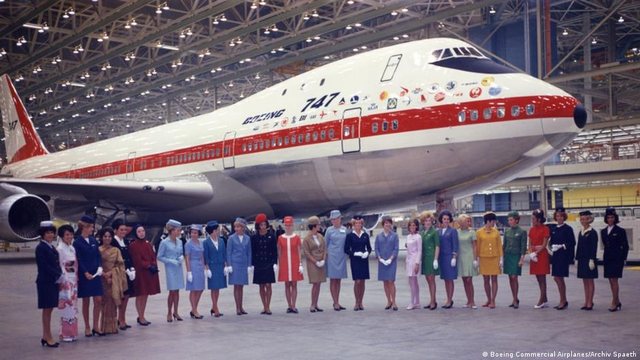
The Spacious Age, as the 747 era has been called, actually began on February 9, 1969, with the first flight going unusually smoothly. Pan Am's first passenger jet took off from New York to London on January 12, 1970. By 1975, the rapidly growing global 747 fleet had flown 100 million passengers. In October 1993, Boeing supplied a 747 to Singapore Airlines, achieving the delivery of the one thousandth 747 aircraft, a significant figure.
As proof of the longevity of the initial concept of the 1960s, the decision was made in 2005 to produce a new generation of 747s. Boeing did this together with Lufthansa, which since the 1970s has been among first customers, and although with the Airbus A380 aircraft, another double-decker competitor continued to exist.
The latest version of the Boeing 747-8 was produced at that time with the active cooperation of the true legend of the 747, Joe Sutter. Four decades after the production of the first 747, the baggage area was expanded for the first time. In this way the 747-8 became the longest passenger plane in the world.
But the era of this type of aircraft had already ended, the passenger version of the 747 is hardly sold, only for the transport of goods it is sold. 16 years after the first flight Airbus started in 2021 with the production of the A380. But the Boeing 747 will continue to play an important role, at least until the US Air Force's two new presidential jets, called Air Force One, are produced. They are thought to take off after 2027.
And the historian of the firm, Michael Lombardi is sure that "Boeing Jumbos will fly until the centenary of the first flight, until 2069, the kings of the sky will cross in the sky for decades more."/ DW