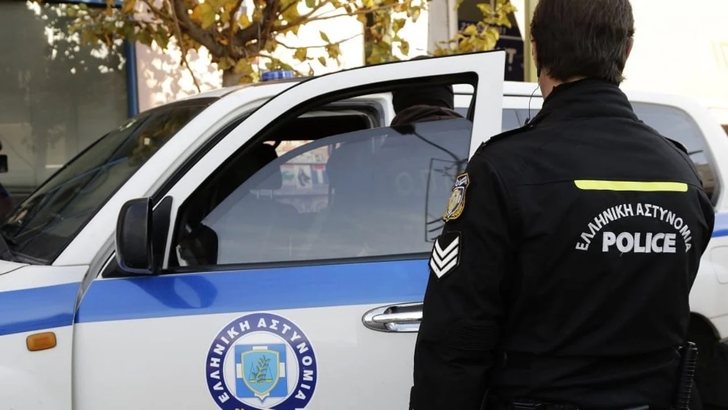
Is this police force professional and capable of handling violen...
/ 2026-10-16 18:54:07Focus


Former Syrian leader Bashar al-Assad has issued his first statement from Moscow since the fall of his regime.
In a social media post, Bashar al-Assad claimed he had planned to continue fighting rebel forces before Russia evacuated him.
The comments, his first in public since the overthrow of his regime more than a week ago, were made on the Syrian Presidency's Telegram channel.
The statement said he left Damascus for Russia on December 8 - "one day after the fall" of the city, adding: "At no point during these events did I consider resigning or seeking refugee status."
"The only course of action was to continue the fight against the terrorist attack."
Assad fled the Syrian capital after a lightning offensive by anti-regime forces across the country - bringing an abrupt end to his 24-year rule.
He claimed to have remained in Damascus "carrying out my duties" until rebel forces entered the city and only then, in coordination with Russian forces, did he move to Moscow's base in the coastal province of Latakia.
Assad claimed he planned to continue fighting.
"The only course was to fight the terrorists," says al-Assad.
But as it appeared his forces had completely collapsed in the face of the rebel advance, the air base where he was staying was attacked by drones, he said.
"With no possible means of leaving the base, Moscow requested that the base command organize an immediate evacuation to Russia on the evening of Sunday, December 8," he added.
His whereabouts, as well as those of his wife Asma and their three children, were initially unknown, until Russia said Assad had fled Syria after negotiations with rebel groups.
Assad also claimed that he had "never sought positions for personal gain" and instead considered himself "a guardian of a national project, supported by the trust of the Syrian people."
However, he apparently does not talk about a possible return.
Now that the Assad regime has fallen, ending more than 50 years of his family's rule, the death toll from the war and destruction that marked his time is now dwindling.
The UN estimated last year that over 300,000 civilians had been killed by the end of March 2021 in the conflict.
In 2021, researchers estimated that another 250,000 fighters had been killed in the first ten years of the civil war.
The Syrian Network for Human Rights (SNHR) estimated that government forces and Iranian-allied militias were responsible for about 87% of these deaths.
The victims include almost 30,000 children.
Assad's government also institutionalized torture according to human rights groups.
Assad's notorious Sednaya prison complex was dubbed the "Slaughterhouse of the People" where prison guards carried out mass hangings and executions, Amnesty International said in a 2017 report.