How Belinda Balluku is fabricating the rumor about Top Channel's...
/ 2026-10-19 16:19:00Focus


US President Donald Trump has insisted that the US is negotiating with Iran to end the war, but Tehran has repeatedly stated that there are no talks.
Iranian Foreign Minister Abbas Araghchi acknowledged that messages had been exchanged with the US through intermediaries, but said that these were "not dialogue, nor negotiations, nor anything like that."
Trump stated that Iran is "afraid" to acknowledge the existence of the talks because, according to him, "they are afraid they will be killed by their own people."
So who should be trusted? Is peace near, or are the parties preparing for a long war that could affect global energy prices this summer?
Signs are that the situation is approaching a stalemate similar to the Russia-Ukraine war. Both sides say they want an end to the conflict, but only on their own terms, which remain far apart.
What the US and Israel want
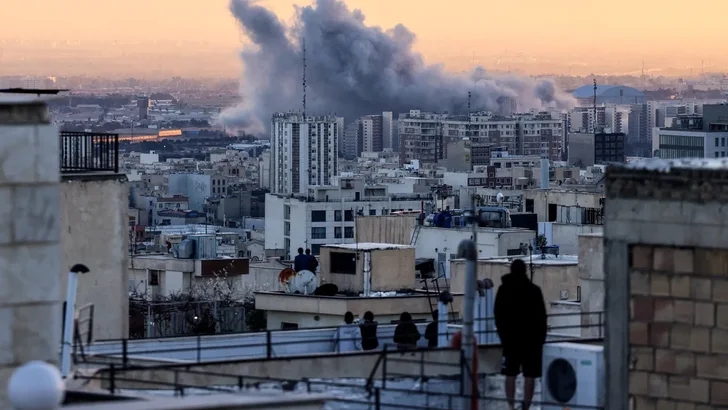
When the war began on February 28, there were hopes in Washington and Jerusalem that military superiority would bring about the overthrow of the Iranian regime, or force it to accept peace on American terms.
This has not happened. On the contrary, every day that the Iranian regime survives, it seems more confident in itself.
A 15-point plan proposed by the US includes:
stopping Iran's nuclear program
ban on ballistic missiles
cutting off support for allied groups such as the Houthis in Yemen and Hezbollah in Lebanon
In return, Iran would receive sanctions relief and a shared role in controlling the Strait of Hormuz.
What does Iran want?
Initially, Iran rejected the American plan, calling it "excessive."
Later, Araghchi said that some ideas have been presented to Iranian leaders and that decisions will be made at the appropriate time.
Iranian state media has listed five conditions for ending the war, including:
payment of damages
recognition of Iran's control over the Strait of Hormuz
guarantee that the country will not be attacked again
These demands are considered unacceptable to the US and its allies.
Iran believes that, as the largest country in the region with over 90 million inhabitants and the longest coastline on the Persian Gulf, it should restore its role as "policeman of the Gulf", a role it had before the 1979 Islamic revolution.
He also wants the US Navy's Fifth Fleet removed from the region and aims to become the leading military power in the Persian Gulf, with the support of Russia, China and North Korea.
Iran says it does not trust the US, as it has entered into negotiations twice - in 2025 and in February of this year - and then the US withdrew, launching military attacks.
Iran's critics say Tehran was simply dragging out the talks without any real intention of giving up programs that threaten the region.
What do the Gulf countries want?
The Gulf Arab countries are concerned by the developments. They had no sympathy for the Iranian regime, but had achieved a kind of balance before the conflict began.
Now, they watch with concern that the US failed to overthrow the Iranian regime, leaving it weakened but even more aggressive, striking its neighbors with drones and missiles.
Iran has managed to exercise de facto control over the Strait of Hormuz, gaining major influence over the global energy market.
This increases pressure on Trump to end the war, while limiting his options.
Meanwhile, about 5,000 US Marines and other troops could be sent to the region, but any ground operation carries a high risk of casualties and further escalation of the conflict.
The survival of the Iranian regime has made it more determined in its demands. It believes that time and geography are on its side. The more the US says Iran is desperate for a deal, the less willing Tehran seems to accept one./ BBC