


Is this police force professional and capable of handling violen...
/ 2026-10-16 18:54:07Focus


The Roman army (often led by Illyrian generals) was the main architect of Rome's greatness, but not enough is still known about the Roman legions.
The extraordinary efficiency of the army was ensured by the organization into legions (25 in the first century, each with more than 5,000 soldiers), divided into groups and centurions. Rigorous training ensured great maneuverability for formations, supported on the battlefield by war machines (catapults, etc.). From the name, the pay, to the way they were trained, 10 facts you didn't know about the Roman legions.

1- NAME. The term legion came from the word lego, which means to collect, choose. So the legion was a selection of men skilled in the profession of arms.
2-CENTURIONS. According to some researchers, Gaius Mario is responsible for the birth of the professional army. It was he who, around 100 BC, transformed the organization of the legions, making them a powerful war machine.

At this stage the centurions begin to take on more importance in forming the middle rank of the military hierarchy. Each centurion commanded a centurion, which consisted of 100 soldiers.
3- SIGNS. Ever since the Marian reform, the eagle became a distinctive sign for the legions. While each separate legion had its own symbol.
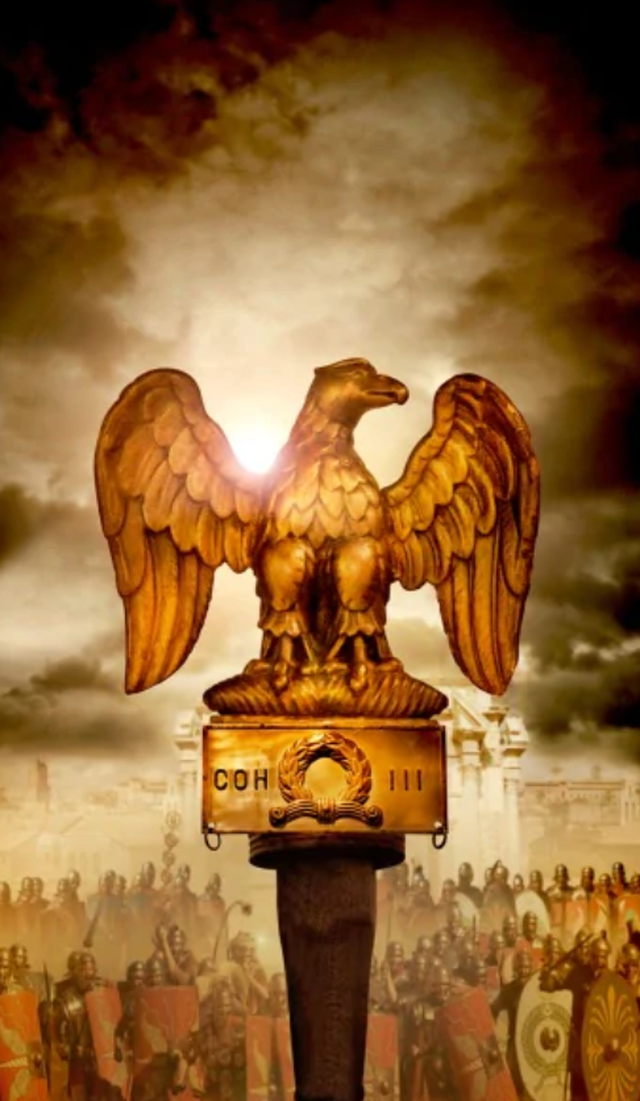
For example, the 1st Italian Legion, founded by Nero in 67 with headquarters in France, had the wild boar as its symbol. While the she-wolf with twins was the symbol of the II Italian Legion, founded by Marco Aurelio.
4- SALARY. The salary was somewhat low, but the grant of lands at the end of his career made the veteran a small holder.

In the illustration is a legionnaire of the Legion III Flaviae felicis, of the Trojan era, heavily armed, an image that has entered the collective memory.
5- MARATHONAMAKERS. Typically a Roman legionary was able to travel 20 miles (30 km) in five hours, at ordinary pace (gradus militaris) and fully equipped: food, tools, weapons, protective clothing, helmet and pilum (Roman spear), in total 35 kg!

While when the gear increased, the so-called fast step (gradus plenus) they managed to travel 24 miles (35.5 km) in the same time. The five hours' daily march training was necessary to complete the so-called iustum iter, that is, a march of an ordinary transfer, without the pressure of the enemy or special emergencies.
6- MARCHING CAMP. While preparing it, the legionnaires worked full time on the battle plan as well, shield, spear and helmet in hand.

The entrance to the field camp, although carried out with great care, was also designed for a quick and massive departure, but with discipline.
In fact, the attack strategy and tactical philosophy of the Roman army envisaged immediate frontal engagement against enemy forces, even in inferior conditions. So, "all out, quickly attack".
7-THE UNSTOPPABLE. The Roman legions were masters in the art of facing a field battle thanks to their discipline, training and efficient alignment. But over time they became unsurpassed even in the art of fencing. Some siege engines were so large that they sometimes required 100 men to manoeuvre.

In the image is the Elepoli tower built of wood, covered with leather and other non-sticky materials. In it there were throwing machines, archers and above all armed soldiers ready to cross the wall and come out to the side of the enemy via a mobile walkway.
8- DAY OF A LEGIONARY. Fatigue and strict measures marked the daily activity of the Roman legionaries. Waking up before dawn, breakfast (prandium) based on cereals and bread, accompanied by wine or beer, and during this time tasks were also assigned to each legionnaire. As soon as the roles were assigned for the day, the soldiers dispersed and went to the assigned place.

Their services were of the most different, from the guarding escort of a perfect, to the jobs they had to do in the hospital, and while some unfortunates had to clean the bathrooms, others in the construction of roads, some in the service of animals , up to civil and maintenance works.
Those who did not have defined tasks, trained and marched. When they were on mission, as soon as they finished the march, they dedicated themselves to the construction of the protected camp. It was an operation that took two or three hours, fundamental to the safety of the men.
9- TRAINING. Men of the legion who did not have special service or who had completed it, trained with an intensive physical exercise program on the Field of Mars.

The training started with the repetition of exercises with wooden weapons until the organization of a simulation of a battle. There were also maneuvers to familiarize yourself with complex attack formations or artillery exercises.
10-DINNER AND REST. In a makeshift camp or a fortress, the day ended with dusk. Dinner was prepared among friends, which was no different from breakfast, but sometimes a little meat was taken, usually pork or beef; while sometimes there could be chicken, mutton, or even wild animal meat, if someone had been hunting during the day.

After dinner they were free to play, talk, and with some limits even to move around and find "companion". Then they went to sleep in their own bed, probably on the ground when in the field, and perhaps in a bunk when in garrison.


