Protests highlight trauma crisis, operating rooms under reconstr...
/ 2026-10-15 18:35:16Focus


Foreign Policy / For decades, the official story of the West's first covert operation against a communist regime has been almost undisputed.
According to this account, in the late 1940s and early 1950s, the United States and the United Kingdom organized a series of covert operations in Albania, parachuting groups of Albanian emigrants with the aim of penetrating the country and creating the conditions for the overthrow of Enver Hoxha's regime.
The spectacular failure of the mission has long been attributed to the betrayal of British double agent Kim Philby, who was suspected of informing Moscow, which then informed Tirana.
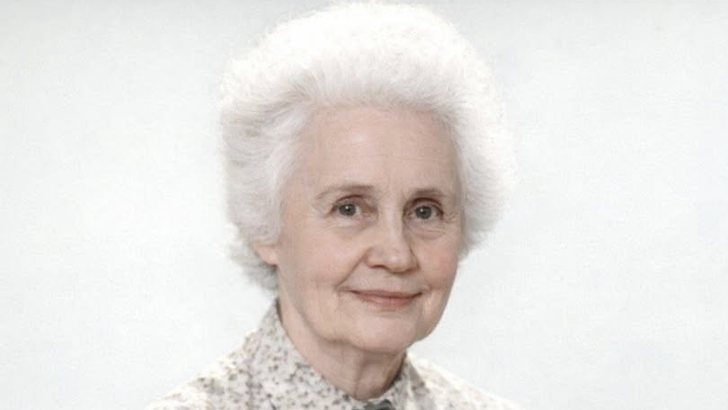
But a new study by political scientist Stephen Long, published in the book A Rich Harvest of Bitter Fruit: CIA and MI6 Covert Action in Communist Albania at the Dawn of the Cold War, challenges this version of history.
After extensive work in archives and dozens of interviews, Long argues that many of the beliefs so far are incorrect.
According to him, the initial objective of the operation was not necessarily the overthrow of the communist regime. London and Washington wanted to understand how stable Hoxha's power was, whether there was an organized opposition, and what could happen in the event of a weakening of the regime.
At that time, there was also a fear that an immediate overthrow of Hoxha could lead to intervention from Yugoslavia, Greece or Italy, risking the dismemberment of Albania.
At the end of World War II, Albania was a politically divided country.
In addition to opponents of the communist regime, Hoxha's own leadership also experienced purges, arrests, and political trials that created the impression that the regime could collapse if faced with sufficient pressure.
To gather intelligence from within the country, the CIA and MI6 recruited dozens of Albanian immigrants from refugee camps in Europe. They were trained in Malta and West Germany in the use of weapons, covert communications, terrain orientation, and survival techniques.
Initially, naval landings were organized by the British, while later the Americans used C-47 aircraft to parachute teams into Albanian territory.
However, almost every mission encountered problems from the start. Some agents withdrew before departure due to political conflicts among themselves.
Other missions were postponed due to bad weather. Often the teams were poorly equipped, with clothing unsuitable for the Albanian winter and lacking supplies.
Even when they managed to enter Albania, many of them landed kilometers away from the planned areas. In some cases, local residents immediately realized that paratroopers had landed in the area, prompting the State Security to mobilize immediately.
Some teams were forced to hide for days in the forests and then retreat towards Yugoslavia or Greece without achieving any objectives.
Other missions ended even more tragically. Dozens of agents were captured or killed shortly after landing, and contact with them was lost forever. Within six years of the operation, about 36 percent of the participants were killed, missing, or arrested.
Long argues that the main reason was not Kim Philby's activities.
According to him, the Soviet Union had no interest in risking one of its most important agents for an operation in Albania, a country of limited strategic importance compared to other Cold War objectives.
Instead, the author identifies two main causes of failure.
First, many of the Albanian emigrants lacked the necessary experience for covert operations. Information about the missions often leaked to the emigrant communities, ending up in the hands of Albanian authorities.
Second, the CIA and MI6 made serious operational mistakes. American officers often refused to admit that their teams had been compromised.
In some cases, even after receiving clear signals that agents had fallen into the hands of the Sigurimi, they continued to send other teams to the same areas, exposing them to the same fate.
The operation ended in 1955 without achieving its objectives. Enver Hoxha remained in power for another three decades, while the history of these missions was covered for years by the myth that everything had failed only because of Kim Philby's betrayal.
According to Stephen Long, the new documents show a much more complex picture. The failure was the result of poor planning, lack of coordination, overestimation of the capabilities of Western services and underestimation of the Albanian State Security.
For the author, this story remains one of the most significant examples of how strategic mistakes and institutional arrogance can have greater consequences than the actions of a single spy.