Protests highlight trauma crisis, operating rooms under reconstr...
/ 2026-10-15 18:35:16Focus


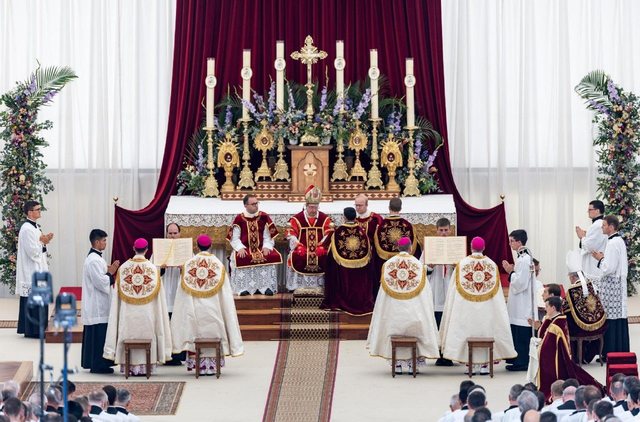
The Lefebvists, officially known as the Priestly Brotherhood of Saint Pius X, are an ultraconservative Catholic movement that opposes the reforms of the Second Vatican Council (1962–1965).
They have returned to the spotlight after carrying out bishop ordinations without the Pope's permission, an act that according to canon law brings automatic excommunication and deepens the clash between Rome and traditionalist sectors of the Church.
The movement was founded in 1970 by French Archbishop Marcel Lefebvre as a reaction to the modernization of the Church, particularly liturgical changes and openness to the contemporary world.
Their main symbol remains the defense of the traditional Latin Mass, but the clash with the Vatican goes beyond ritual: They question the authority of the Pope and the legitimacy of the decisions of the Second Council.
The first major crisis occurred in 1988, when Lefebvre ordained four bishops without papal mandate, triggering automatic excommunication by John Paul II. Although Benedict XVI later lifted the excommunication in an effort at reconciliation, the group was never fully integrated into the Catholic Church.
Today, the clash has returned after the Brotherhood re-ordained four bishops without Vatican authorization. According to the Holy See, this action constitutes a "divisive act" and automatically triggers excommunication.
The Vatican had warned earlier that such a step would be considered a serious violation of church unity, but the ceremony took place anyway, putting the Pope in his first major confrontation with ultraconservative sectors.
The conflict is not only religious, but also political and cultural. Lefebvres are seen as a symbol of resistance to Catholic modernism and as a point of reference for groups that criticize the Church's openness to pluralism, migration, and interfaith dialogue.
In this context, Pope Leo XIV is trying to preserve the unity of the Church at a time when ideological tensions within Catholicism have increased significantly. The situation also coincides with a broader international backdrop.
While ceremonies for the 250th anniversary of independence are taking place in the US, led by Donald Trump with a nationalist narrative, the Pope is expected to deliver a completely opposite message from Lampedusa, an island symbol of the migration crisis in the Mediterranean.
This places the Vatican in a position of marked contrast to conservative American political currents that support more isolationist visions. In Lampedusa, the Pope is expected to speak about human dignity, equality between peoples and the moral responsibility of wealthy countries towards migrants.
This stance is seen as a counter-narrative to the "MAGA" ideology and political nationalism attributed to Trump, deepening the perception of a distance between the Vatican and part of American Catholicism.
Within the Church, the Lefebvrian crisis is seen as a symptom of a wider divide between tradition and modernity. Although the group represents a minority, it has great symbolic weight because it embodies the rejection of the reforms of Council II and the challenge to papal authority.
Pope Leo XIV, descended from the Augustinian order, thus faces an early test of his authority. He inherits a Church where tension with conservative sectors has grown and where every decision on liturgy or doctrine has political and cultural consequences.
In this context, Lefebvists are not just a religious phenomenon, but part of a broader cultural rift that also affects the US and Europe, where Catholicism is often intertwined with political and ideological identities.
The new clash with the Vatican shows that the challenge of unity in the Church remains one of the most delicate issues of the new pontificate.