Protests highlight trauma crisis, operating rooms under reconstr...
/ 2026-10-15 18:35:16Focus


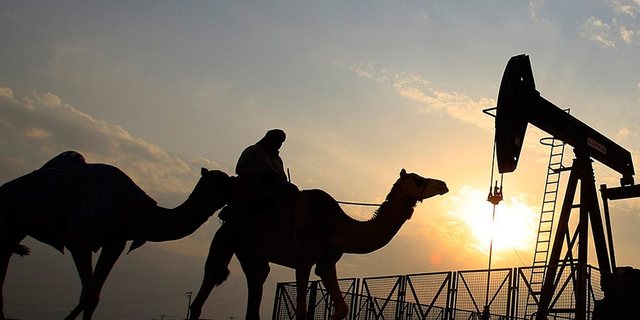
The Persian Gulf region represents a unique geological phenomenon, where the interaction of tectonic forces over millions of years has created the largest hydrocarbon reservoirs on Earth.
This region possesses more than thirty supergiant fields, each with a capacity of over five billion barrels of oil, making its wells up to five times more productive than those in the North Sea or Russia.
The history of the formation of this wealth is closely linked to the collision of the Arabian Plate with the Eurasian Plate, a geodynamic process that began about 35 million years ago.
This collision resulted in the formation of the Zagros Mountains on the Iranian side and giant dome-shaped structures on the Arabian side, which serve as natural traps for oil and gas.
The presence of hydrocarbons in this area was known since ancient times, when early populations used natural bitumen for ship construction and insulation thousands of years before the Common Era.
However, the modern era of oil began in 1908 with the first discovery in Western Iran. During the 1950s and 1960s, extensive exploration confirmed that no other region on the planet could match the scale of the Persian Gulf's reserves.
Not even with energy-rich areas like Western Siberia or the Permian Basin in the US. From a scientific point of view, this abundance is explained by the high quality of the source rocks.
Oil and gas were formed by the decomposition of organic material, such as marine zooplankton and phytoplankton, under the high pressure and heat of the sedimentary basin.
While rocks with two percent organic content are considered high quality, formations in Gjin, such as Hanifa and Kazhdumi, reach levels of up to thirteen percent.
This organic matter was trapped in porous limestone reservoirs, such as the Ghawar field in Saudi Arabia, the largest in the world, and the South Pars-North Dome gas field, shared between Qatar and Iran.
Currently, about half of the world's oil reserves and forty percent of its gas are located under just three percent of the region's land surface. Even after a century of intensive resource exploitation, estimates by the U.S. Geological Survey (USGS) show that the potential remains high.
Reports suggest that about eighty-six billion barrels of oil and three hundred and thirty-six trillion cubic meters of natural gas still remain to be discovered.
Furthermore, the use of new technologies, such as horizontal drilling and hydraulic fracturing, is opening new production chapters in Saudi Arabia and the United Arab Emirates, cementing the Persian Gulf's position as the planet's leading energy hub for decades to come.