Is this police force professional and capable of handling violen...
/ 2026-10-16 18:54:07Focus


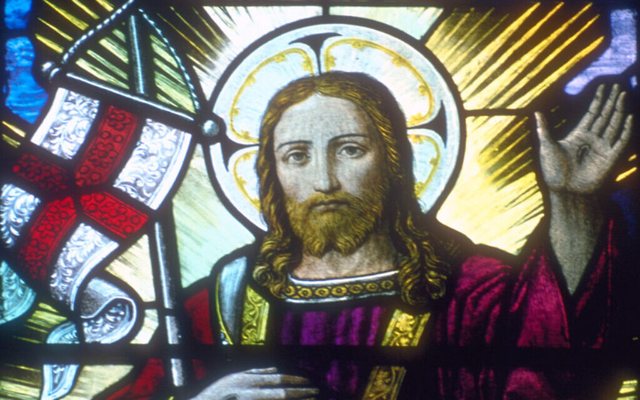
Every Christmas, a relatively small town in the Palestinian West Bank is put in the center of the world's attention: Bethlehem. According to some biblical sources, Jesus Christ was born in this city about two millennia ago.
And yet, the Gospels of the New Testament do not agree on the details of Jesus' birth in Bethlehem. Some do not mention Bethlehem or the birth of Jesus at all. The different views of the Gospels can be difficult to reconcile. But as a New Testament scholar, I think the Gospels provide important insight into Greco-Roman views of Christ's ethnic identity.
According to the Gospel of Matthew, the first Gospel in the New Testament, Joseph and Mary were in Bethlehem when Jesus was born. The story continues with the wise men who went to the city of Jerusalem after seeing a star, which they interpreted as signaling the birth of a new king.
It further describes their meeting with the local Jewish king, Herod, who is asked about the location of Jesus' birth. The Gospel says that the Star of Bethlehem leads them to a house - and not a manger - where Jesus was born to Joseph and Mary. They worship Jesus and give him many gifts.
The Gospel explains that after their visit, Joseph has a dream in which he is warned of Herod's attempt to kill the baby Jesus. Then Joseph, Mary and the infant Jesus fled to Egypt. Matthew records that after King Herod dies of an illness, Joseph, Mary and Jesus do not return to Bethlehem, but travel north to Nazareth in Galilee.
Meanwhile, the Gospel of Luke, which was written during the same period as the Gospel of Matthew, has a different version of the birth of Jesus.
Luke's Gospel begins with Joseph and a pregnant Mary in Galilee. They go to Bethlehem because of the census of the Jewish population, which the Roman emperor Caesar Augustus had requested. Since Joseph was a descendant of King David, Bethlehem was the birthplace where he was required to register.
Luke's Gospel mentions no family journey to Egypt, no paranoid King Herod, no infanticide, and no wise men visiting the baby. According to him, Jesus was born in a manger, after travelers had occupied all the inns of the city.
After the birth, Joseph and Mary are not visited by scholars, but by local shepherds who were very happy about the birth of Jesus. Luke also says that Joseph, Mary and Jesus leave Bethlehem 8 days after his birth, go to Jerusalem and then from there to Nazareth.
John Meyer, a scholar of Jesus as a historical figure, explains that "the birth of Jesus in Bethlehem should not be taken as a historical fact", but as a "theological statement placed in the form of an apparently historical narrative".
So the belief that Jesus was a descendant of King David led to the development of a story about the birth of Jesus in Bethlehem. Raymond Brown, another scholar of the Gospels, also points out that "the two accounts are not only different, but they contradict each other in a number of details."
Meanwhile, the other Gospels, that of Mark and John, do not mention the birth of Jesus, or his relationship with Bethlehem. The Gospel of Mark is the earliest account of the life of Jesus, written around AD 60. In the first chapter of Mark, it is said that Jesus is from "Nazareth of Galilee".
This is repeated several times throughout the Gospel, and Bethlehem is never mentioned. Meanwhile, the Gospel of John, written about 15 to 20 years after that of Mark, does not connect Jesus with Bethlehem. Even for him, the birthplace of Jesus is Galilee. Jesus found his first disciples there, and it was there that he performed some of his miracles.
This does not mean that John was unaware of the significance of Bethlehem. In one instance he mentions a debate in which some Jews referred to the prophecy which claimed that the Messiah would be a descendant of David and would come from Bethlehem.
But according to the Gospel of John, Jesus is never associated with Bethlehem, but with Galilee, and more specifically, Nazareth. Even the Apostle Paul, who wrote the earliest documents of the New Testament, does refer to Jesus as a descendant of David but does not connect him to Bethlehem.
The book of Revelation also claims that Jesus was a descendant of David, but does not mention Bethlehem. But within the Hebrew Bible, a prophetic book called Micah, thought to have been written around 722 BC, prophesied that the Messiah would come from David's hometown of Bethlehem. Thus Matthew and Luke's inclusion of the city of Bethlehem in their writings contributed to the claim that Jesus was the Messiah of Davidic descent.
* Rodolfo Galvan Estrada III , is assistant/professor of New Testament at Fuller Theological Seminary