Is this police force professional and capable of handling violen...
/ 2026-10-16 18:54:07Focus


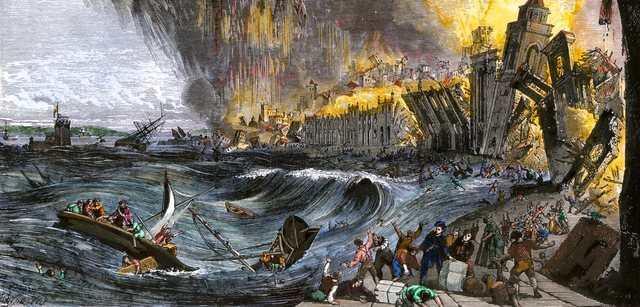
The Lisbon earthquake of 1755 had such a profound impact on the world that we still feel its impact today. Besides the destruction of one of the most important cities of the 18th century, it also shook the thinking of the time.
Many believed that the earthquake was a punishment from God. Others wondered if science was a better way to understand the universe and how it works.
We now associate these thinkers with the Age of Enlightenment, a period of history that led to the French Revolution and the American War of Independence.
WHAT HAPPENED IN LISBON
Just before 10 a.m. on November 1, 1755—All Saints Day—a fault line 200 miles or more off the Iberian coast ruptured, releasing the energy equivalent of 32,000 Hiroshima atomic bombs.
So powerful was the earthquake that its effects were felt from the Azores to Sweden. Lisbon suffered the worst. Over the next few minutes – and the arrival of two more tremors – (the earthquake) would bring one of Europe's largest cities to its knees. It is thought to have measured up to 9.2 on the Richter scale.
The city was destroyed. Ten thousand people remained dead under the ruins of churches, houses and markets. Then the tsunami hit. The Atlantic Ocean rarely produces tsunamis, so the people of Lisbon would have been as unprepared for the tidal wave as they were for the earthquake.
It seemed to come from nowhere, this wall of water, and so terrible was the tsunami that people as far away as Brazil were killed. Hundreds of survivors of the Lisbon earthquake emerged from the rubble only to be pulled into the Tagus River and absorbed into the Atlantic Ocean. This was only 30 minutes after the earthquake.
Then came the fires. There was no electricity in 1755, but there were many candles and they were all lit to celebrate All Saints Day. Likewise, stoves and hearths were lit with roaring fires to celebrate the festival.
When the earthquake first struck, those candles and stoves fell to the ground, starting hundreds of small fires throughout the city. With the entire city now ablaze, not only did the fires spread, but they combined to create a veritable firestorm that was so powerful in its thirst for oxygen that it could suffocate people 100 meters away from the fire – before burning them.
Thousands of people trapped in the rubble – people who had just survived the worst earthquake in European history and who then survived a rare and terrifying tsunami – were burned alive.
The firestorm raged for a week, and smaller fires continued for weeks afterward. In total, up to 40,000 people were killed in what was the day before the richest city in Europe.