Is this police force professional and capable of handling violen...
/ 2026-10-16 18:54:07Focus


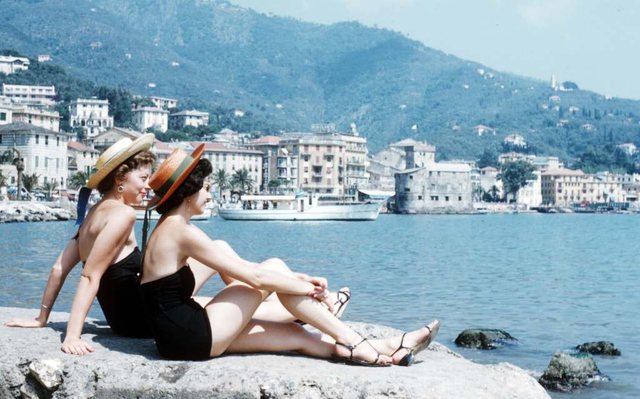
Like the steam locomotive, the mechanical telephone and the first vaccine, beach holidays were actually invented in Great Britain.
Spending a vacation at the beach may seem like the most natural thing in the world: strolling along the coast, playing in the waves, and stretching your legs and arms out in the sand.
However, the beach has not always been considered a place to relax and have fun: after all, it can be too cold or too hot, too sandy, humid, gloomy or unpleasant.
And then there's always the possibility of drowning at sea. The idea of beach holidays became popular in 18th-century Britain, from where it spread around the world.
This is not to say that people avoided the beach before: vacationing there, however, was not a cultural phenomenon.
The origins of beach holidays are linked to the way industrialization was changing Britain at the time, as well as to some medical theories that spread during that period that seem strange today.
As Daniela Blei writes in an excellent essay published on Smithsonian.com – the magazine of the Smithsonian Institution – there are not many accounts of people relaxing on the beach dating back to early times.
From antiquity to the 18th century, the beach "stirred fear and unrest in the popular imagination" and was "synonymous with wild and dangerous nature. It was the place where ships were wrecked and natural disasters occurred," Blei writes.
Some of the earliest and most important references to the sea in Western culture come from the Bible, where the ocean is described as a mysterious and destructive place: it caused the Great Flood and is described in Genesis as a "great abyss."
“This untamed element was proof that Creation was not yet complete,” writes Alain Corbin in his book “The Invention of the Sea: The West and the Seduction of the Beach” (1750-1840), which Blei cites in her article.
Roman poets and philosophers Horace, Ovid and Seneca detested the sea and described it as an “unsocial” force that divided people, Corbin explains. In Shakespeare’s works, the sea appears in the form of storms, chaotic voyages and shipwrecks.
However, in the 17th and 18th centuries, the sea began to appear in French poetry in a more flattering light, says Corbin.
In the 18th century, Dutch seascape paintings began to attract tourists to coastal towns, eager to admire the same views that the painters had observed.
But a deep awareness of the benefits of spending time on the beach began in Britain in the late 18th and early 19th centuries, largely thanks to the medical prescriptions of the time.
Many doctors of the time believed that bathing in the cold sea could be beneficial for conditions such as melancholy and spleen problems, a supposed excess of black bile that made people introverted, depressed, cautious, and in a bad mood.
The disease stems from the idea of the four humors, a basic medical theory dating back to Hippocrates and the ancient Greeks.
Robert Burton, an English scholar who wrote The Anatomy of Melancholy in 1621, described melancholy as one of the chief human diseases, a disease of the soul and body associated with the spleen.
However, to combat melancholy, Burton's strategy didn't exactly involve beach vacations: Burton believed that people suffering from melancholy should stay in dry places.
However, Corbin explains that his theories ultimately led, one way or another, to the spread of beach vacations.
Burton believed that the best cure for melancholy was a change of scenery and therefore recommended travel, a change of scenery and finding a place that allowed him to admire the horizon.
Over the next two centuries, Burton's prescriptions inspired other doctors who began advising patients to go to the coast, believing that immersion in cold, salty, and turbulent waters would induce a shock that had beneficial effects on their health.
Doctors' prescriptions of the time detailed the duration, frequency, and conditions of bathing, and scientific treatises were numerous, listing the best beaches for a variety of ailments.
Corbin shows that British women often employed “washing assistants,” who helped them understand the proper time and method for washing—for example, which part of the body should come into contact with the waves.
“The 'chasers' would plunge their patients into the water just as the waves broke, taking care to keep their heads underwater to increase the sensation of drowning,” Corbin writes.
Like tempering steel, these periodic cold baths were considered a method of strengthening patients, such as young women whose pale skin was considered dangerous.
The discovery of oxygen by Antoine Lavoisier in 1778 led to the widespread popularization of theories about the health benefits of sea air, which was thought to be more oxygenated and cleaner, Corbin explains.
Meanwhile, the water and air in British cities were becoming increasingly polluted. Factories were springing up all over Britain – the first country to industrialize.
Tourism and industrialization went hand in hand, giving people both the desire and the opportunity – in terms of finances and transportation – to leave.
Over time, going to the seaside became a kind of competitive activity in British high society.
In 1783, the Prince of Wales – who would later become King George IV – visited Brighton, after being told that bathing in the sea would improve his arthritis problems.
In the following decades, this trend spread to all elites. In Jane Austen's novel "Emma," published in 1815, for example, the protagonist's hypochondriac father constantly discusses with his high-society friends the health benefits of various British beaches.
The custom of going to the coast then spread to all levels of society. The railways that were built across Britain in the early 19th century made ocean travel accessible even to the lower classes.
By the end of the 19th century, Blackpool had become the world's leading seaside resort for the working class.
"By 1840, the beach had acquired a new meaning for Europeans. It had become a place for human consumption: a coveted 'escape' from the city and the routine of modern life," writes Blei.
Like many other things of the era, seaside holidays became one of Britain's cultural exports, spreading by word of mouth and through British immigrants.
By the early 19th century, resorts had already sprung up in Normandy – in northwestern France – northern Germany and Scandinavia, says Walton, and by the end of the century, they had also reached the United States, first on the New England coast and then gradually in the Mid-Atlantic region and the South.
In the 1960s, the rise of package holidays led to the decline of traditional tourist towns like Brighton and Coney Island. But for those who want to visit them, a dip in the sea is probably still a good cure for the blues.