Is this police force professional and capable of handling violen...
/ 2026-10-16 18:54:07Focus


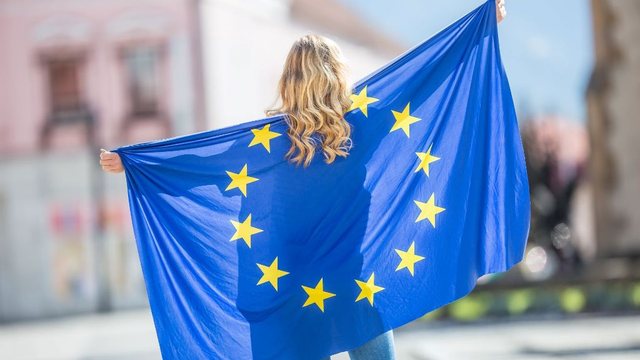
Voters across the continent have big choices to make at the ballot boxes next year. Euronews takes a look at the key electoral tests facing the EU and beyond next year.
The year 2025 turned out to be a crucial year for high-stakes elections across the European Union.
Romania found itself at the center of coordinated foreign interference campaigns on social media, while Poland's Prime Minister, Donald Tusk, failed to consolidate his party's position against the conservatives in the presidential race.
And while the Christian Democrats returned to power in Germany, right-wing billionaire Andrej Babiš was re-elected in the Czech Republic.
Now, the EU is entering 2026 with Russia’s war in Ukraine continuing on its eastern flank. With member states divided over how best to support Kiev and tensions rising between the bloc and the United States, the year’s big elections could once again transform Europe’s political and geopolitical position.
Euronews takes a look at the key electoral tests facing the EU next year.
Hungary: The end of the Orban era?
The year 2026 could mark the end of the longest continuous period in power in the EU.
Viktor Orbán first served as Hungary's prime minister between 1998 and 2002 and has reigned since his re-election in 2010. In the race for his sixth term in office, he faces a serious challenger: Péter Magyar, a former Fidesz member turned opposition leader.
Orbán's Fidesz party and Hungary's Tisza party do not differ significantly on social issues, such as LGBTQ+ rights or migration, but Hungary is arguing strongly for improving the purchasing power of Hungarians, currently one of the lowest in Europe, and for better relations with Brussels, which still conditions multi-million euro cohesion fund payments on respect for the rule of law.
His campaign appears to be touching on an important chord: the latest polls put Tisza 13 points ahead. But whatever the outcome, the vote will have repercussions far beyond Hungary's borders.
Orbán stands at the center of Europe's national-conservative camp, aligning closely with the worldview of US President Donald Trump, and openly challenging the EU's main positions on migration, democratic standards, and in particular the war in Ukraine.
Budapest's reluctance to sanction Moscow or support Kiev has deepened divisions within the bloc. A change of leadership could reshuffle the power dynamics within the European Council at a crucial moment for Ukraine's future.
Spain, Germany, France and Italy: Local calculations for national governments
Four of the EU's biggest powers are preparing for regional and municipal elections that will confirm how much momentum the far right has and provide a check on growing distrust of authorities in Madrid, Berlin, Paris and Rome.
In Spain, Prime Minister Pedro Sánchez's socialist PSOE party is suffering defeat in the December 21 regional elections in Extremadura, marking its worst result ever in what was a traditional stronghold.
Meanwhile, in Madrid, Sánchez's ruling coalition is under pressure after several corruption scandals and is struggling to pass a budget for the third year in a row.
The upcoming regional elections in Aragon on February 8, Castilla y León on March 15 and Andalusia, Spain's largest region by size and population, on June 30 at the latest, will all be crucial tests not only for the PSOE but also for the center-right opposition People's Party (PP).
The question is whether the PP can secure a majority before the 2027 general elections without relying on the support of the far-right Vox party.
Also on March 15 and 22, the French will go to the polls to elect mayors across the country – and just like in Spain, these local elections will serve as a gauge ahead of the 2027 presidential election.
France is currently facing a political crisis of prolonged government instability, record low approval ratings for President Emmanuel Macron, and the continued rise of the far-right National Rally (RN), despite its leader Marine Le Pen being banned from running for office.
In Italy, municipal elections in the major cities of Rome, Milan, Bologna and Turin were postponed during the pandemic and rescheduled for spring 2027. Instead, voters will go to the polls in 2026 only in a smaller number of cities such as Venice, Reggio Calabria, Arezzo, Andria and Pistoia.
Italians will also vote in a referendum on a constitutional reform of the justice system. It will be held next spring, but the date has not yet been set. It will be seen as a test of public support for Meloni's coalition ahead of general elections in 2027.
Recently, several German states are preparing for regional elections: Baden-Württemberg and Rhineland-Palatinate in March, and Saxony-Anhalt, Berlin and Mecklenburg-Vorpommern in September.
These state elections will test the popularity of Chancellor Friedrich Merz, who has held office since May, and will also measure the rise of the far right not only in the deindustrialized former East Germany but also in the wealthier West.
Sweden: The Shadow of Foreign Intervention
Looking forward to September's general election, Prime Minister Ulf Kristersson wrote in X that "when Sweden goes to the polls next year, we will do so in a serious security situation that we must take into account."
Kristersson is governing a coalition of centrists, socialists, liberals and Christian Democrats, which is currently performing in polls similar to the results of the 2023 election.
Since then, Sweden has faced a surge in violent crime, fueling right-wing rhetoric heard across Europe, in which the phenomenon is often highlighted to provide fodder for anti-immigration arguments.
But the "serious security situation" that worries the prime minister is the threat of foreign intervention.
In November, the defense ministry said it had increased its cybersecurity capabilities and was on alert for election interference, such as the one first seen in Germany, which this year insisted it had not interfered with the election.
Russia will "pay a price" for its "hybrid attacks" on electoral infrastructure.
Such foreign intervention operations are likely to benefit parties that are critical of immigration, skeptical of EU integration, and more ambiguous in their stance toward Moscow, a tendency exemplified by the Sweden Democrats.
Sweden's elections are expected to be a test of democratic sustainability in the EU following the implementation of the Digital Services Act (DSA), which addresses election interference on social media, and the bloc's proposed Democracy Shield.
Denmark: Under pressure, at home and abroad
After losing Copenhagen for the first time since 1938, Mette Frederiksen and her Social Democrats will now face a national vote.
Analysts say Frederiksen's tough stance on immigration has not borne fruit. Polls show the prime minister, who has been in power since 2019, could lose her position, with the governing coalition that includes parties from the center-left to the center-right looking increasingly fragile.
Denmark is also concerned about its territorial integrity. Earlier this month, Trump reiterated his expansionist intentions regarding Greenland, an autonomous territory of the Kingdom of Denmark.
The vote should take place before October 2026, but the date has not yet been confirmed.
Bulgaria: No government, but the euro is coming soon
Bulgaria will officially adopt the euro as its currency on January 1, 2026. However, the country has experienced significant political instability since November, following the resignation of the government amid massive street protests over corruption and oligarchic influence.
Latvia and Slovenia: Potential new heads of state
Slovenia and Latvia will hold parliamentary elections in March and October, respectively.
In Slovenia, polls show the center-right opposition Democratic Party slightly ahead of the current ruling Movement for Freedom, a center-left party led by Prime Minister Robert Golob. Analysts say forming a government after the election could be difficult, as several new and smaller parties are entering the race.
In Latvia, the election will determine who will succeed the current center-right coalition led by Prime Minister Evika Siliņa. Her party is currently in second place in the polls, just behind the conservative National Alliance.
Earlier in 2025, local elections revealed vulnerabilities in the voting IT system, but Latvia's Central Election Commission says it has resolved them ahead of the October polls.
US, Brazil, Israel and Russia: Global elections with implications for the EU
The EU is not just at the mercy of its voters.
In November 2026, American voters will go to the polls for the midterm congressional elections, which determine the composition of the U.S. House of Representatives and one-third of the seats in the U.S. Senate.
The outcome could determine how much power the Trump administration can wield at home and abroad. Europeans will be watching closely. Earlier this month, the US administration released a National Security Strategy in which it pledged to “cultivate resistance to Europe’s current trajectory within European nations” to halt its “civilizational decline.”
Brazilians will go to the polls in October 2026. Current President Luiz Inácio Lula da Silva, the favorite in the polls, is seeking a second term.
The EU's stake in this vote lies in the future of the Mercosur agreement, a free trade agreement that has been in the making for more than two decades.
Israel will also hold parliamentary elections and vote for its prime minister, potentially changing the power dynamics that have shaped conflicts in the region.
Russians will also vote in parliamentary elections - but the result is expected to be manipulated in President Vladimir Putin's favor, with opposition parties largely silent and press freedom increasingly limited.