Is this police force professional and capable of handling violen...
/ 2026-10-16 18:54:07Focus


International politics in 2025 will be largely dominated by potentially transformative elections, economic instability, and deep uncertainty about future prospects for global peace and prosperity.
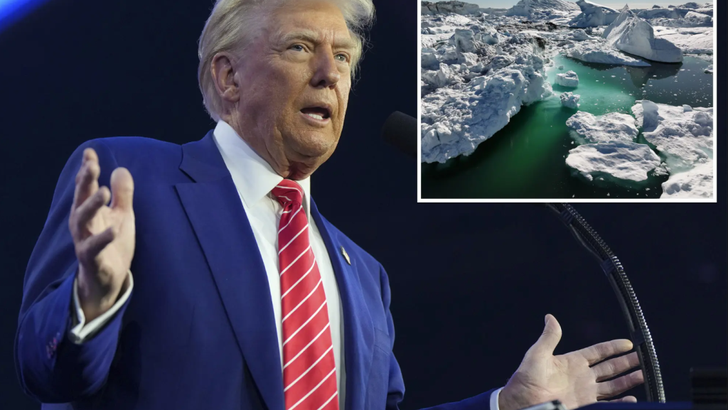
Donald Trump's return to the US presidency will reverberate around the world. His unpredictability, his controversial policies and his appeal to populism will be felt across the globe.
Elections are due on three continents, as left-leaning governments seek re-election. In Germany, Olaf Scholz of the Social Democratic Party will seek a second term.
The election will also test the strength of the far right; however, Scholz will probably remain in power as Germans historically give their chancellors several terms in office.
In Australia, Anthony Albanese of the Australian Labor Party will seek a new term to stay in power. In Canada, Justin Trudeau, after nearly a decade in office, faces calls to resign as he heads into his fourth election.
In both cases, the ruling parties face strong headwinds, leaving the outcome uncertain. Trudeau hopes to be a host when G7 leaders meet in June in Canada.
Prime Minister Justin Trudeau arrives to participate in a bilateral meeting with Italian Prime Minister Giorgia Meloni at the G7 Summit in Savelletri Di Fasano, Italy, in June 2024.
All countries will focus on the economy
Powerful countries like China and Russia will continue to be led by long-serving, elderly leaders who do not face elections. However, due to the lack of succession mechanisms in both countries, the illness, death, or departure of a Chinese or Russian leader could easily result in instability or worse.
The recent sudden and dramatic imposition of martial law in South Korea illustrates how quickly political dynamics can spiral out of control. It also serves as a stark reminder of how polarization and political harshness, coupled with authoritarianism, can rapidly undermine democracy – but also how democracy can prevail after the South Korean president was ultimately blamed for his actions.
For politicians, it is not the elections themselves that are difficult, but keeping the promises they have made or will make in the electoral campaign.
For Trump, and others like British Prime Minister Keir Starmer, this means paying special attention to the economy in the new year.
The economy, in fact, will play a huge role in politics in 2025. A strong economy that generates jobs will be a cure for frustrations among the masses and will brighten the standing of politicians. On the other hand, a depression or recession will escalate inequality, increase poverty and lead to calls for political action.
The International Monetary Fund predicts "sustainable" economic growth in 2025. But even stable economic conditions generate political consequences if they do not meet citizens' expectations.
During the US presidential election campaign, Trump took advantage of many Americans who felt insecure and saw a bleaker economic outlook for themselves, even as inflation was declining and unemployment remained low. The same phenomenon has occurred in other elections held in 2024.
Economic uncertainties
Economic risks lurk in 2025. One concern is bubbles: overblown beliefs and investments that turn out to be less than bright. The current hype around artificial intelligence, which has driven the market value of Nvidia — a maker of chips for AI applications — from $400 billion two years ago to over $3.3 trillion today, is a concern.
Cryptocurrencies are once again seen as a get-rich-quick scheme, with the price of Bitcoin more than doubling in the past year. The problem with bubbles is that when they burst, they are often followed by recessions or depressions.
A second concern is trade wars and protectionism, weapons in the economic battles between the US and countries seeking to match its economic prowess, particularly China.
Caught between the warring giants are many other countries – like Canada – that must navigate treacherous rhetorical and regulatory battles.
Although economists agree that tariffs raise the price of products and ultimately cost jobs as consumers have less purchasing power, politicians see them as ways to protect jobs in their countries and show resolve to voters.
The coming year is expected to be full of loud rhetoric on trade along with plenty of threats, including more from Trump.
Uncertainty in 2025 will also come not only from bubbles and trade wars, but also from rapidly advancing technology, such as artificial intelligence.
Global conflicts
Trump has claimed he will act to end border battles between Ukraine and Russia and fighting in Gaza and other parts of the Middle East.
His isolationist view is that the US benefits little from its involvement in conflicts far from home. However, stepping back and seeking peace is easier said than done.
Leaders in North Korea, Iran, and others will look for opportunities in the new year to advance their interests and to incite and provoke the superpowers. As always, the Middle East will remain the world’s flashpoint, with a mix of authoritarianism, nationalism, religion, and superpower involvement.
The fall of Syrian dictator Bashar al-Assad to a diverse group of rebels is nothing short of the latest upheaval in the region. Assad's removal will in no way increase instability in the region.
Source: The Conversation