Protests, violence, curfews: From France to Albania, why Europe'...
/ 2026-10-20 23:47:20Focus


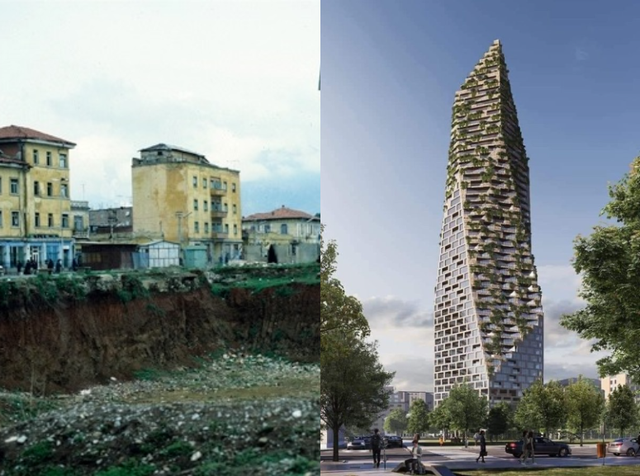
For more than two decades, “ Hajdin Sejdi's Pit ” was one of Tirana's most visible urban scars.
Located in the heart of the capital, near the Opera and Ballet Theater, it became a metaphor for the Albanian transition: a project launched, blocked, abandoned and shrouded in endless controversy .

Even after it was established as a public space in 2011, its history did not end. On the contrary, it seems that the "otherness" of this plot continues to haunt every project associated with it.
In recent years, the ambitious "Mountain of Tirana" project was introduced in place of the pit, a giant tower that aimed to change the skyline of the capital.
But today, as the project is once again in limbo, the name of its main builder, businessman Ilir Shtufi, has appeared in a major SPAK investigation into drug trafficking and money laundering.
From "pit" to 65-story tower
"Tirana Mountain" was conceived as one of the tallest buildings in Albania, with about 65 floors and nearly 185 meters high.
The project was linked to the company Nova Construction 2012, where the main shareholder is Ilir Shtufi. The project itself has been the subject of political and urban criticism since its presentation.
Opponents have considered it a symbol of the concretization of Tirana's center and an example of a development model that favors large economic interests over the public interest.
But after the arrest of businessman Ilir Shtufi, the urban planning debate has been replaced by a very important one: what happens to such a large project when its promoter ends up on SPAK's radar?
SPAK and the "shadow" of the investigations
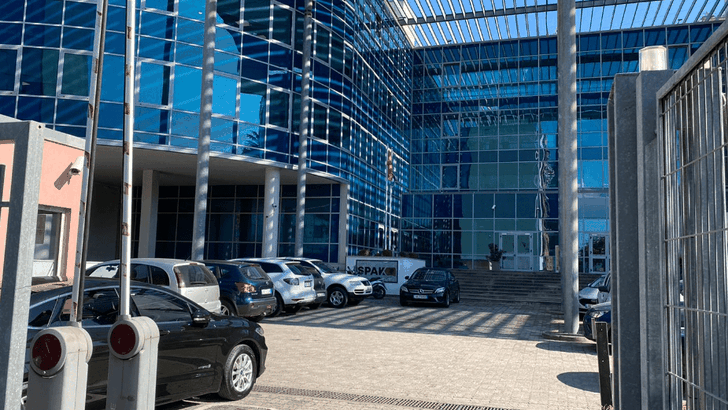
On June 12, 2026, SPAK announced security measures as part of an operation against drug trafficking and money laundering.
Among the people for whom security measures were reported was businessman Ilir Shtufi, the latter was arrested in Greece.
The investigation is related to suspicions of criminal activities and money laundering, this is not the first contact of Shtuf's name with SPAK.
In recent months, he has also been mentioned in investigations related to tender procedures and infrastructure projects, where checks and verifications have been carried out on the companies involved.
The curse of a plot of land known as "Hajdin Sejdi's pit"?
The park behind the Palace of Culture has been a place of relaxation for the citizens of Tirana for many, many years, especially during the communist period, filled with greenery and various trees. Inside it was also a large clothing store, while around it were typical Tirana houses.
In the early 1990s, this place received an ugly name, "Ajdin Sejdi's Pit", a pit that contained within it the filth of nature and the people who "frequented" that place.
In 1991, the businessman from Peja and residing in Switzerland, Hajdin Sejdia, became closely associated with Fatos Nano's first government, the Transitional Government, created after the fall of the communist "Politburo".
Sejdi's "Iliria Holding" company received the right from the "Nano" government to build a giant 50-story building in the park behind the Opera House.
For reasons that have been obscured over the years, Sejdia only managed to dig a giant hole, while the building remained on paper.
Due to ownership problems, for almost two decades, governments and municipalities failed to close the "Ajdin Sejdi's hole".
In 2012, the then mayor of Tirana, Lulzim Basha, launched a project to transform the “pit” into a flower garden. In presenting the project, Basha stated at the time that the owners would be compensated and the green space would be available to citizens.
For the next 10 years, until 2022, the area behind the Opera House remained a large flower garden, near the center of Tirana.
This, until October 2022.
The history of this plot seems to repeat itself. Initially, it became a symbol of the failures of the transition.
It then became a symbol of new urban ambitions. Today, its name is linked to a dossier that includes charges of drug trafficking and money laundering.
Question mark about the 'pit' that is never becoming a 'mountain'
The "Mountain of Tirana" issue is no longer just an architectural or urban planning debate.
It touches on some of the most sensitive topics in today's Albania: the relationship between business and politics, the transparency of capital in the construction sector, and the ability of institutions to investigate projects with major economic impact.
While SPAK continues its investigations and justice is expected to provide its answers, one thing remains clear: the land known for decades as " Hajdin Sejdi's Pit " continues to produce stories that go far beyond concrete and towers.
And perhaps this is precisely where its true "wrongness" lies, the fact that every project that is built on that land seems to inherit the shadows of the past.
©Copyright Vox News
This article is exclusive to Vox News, and is copyrighted under Law No. 35/2016, "On Copyright and Related Rights". The article may be republished by other media only by citing Vox News and including a link to the source at the end, otherwise any violator will be held liable under Article 178 of Law No. 35/2016.