Is this police force professional and capable of handling violen...
/ 2026-10-16 18:54:07Focus


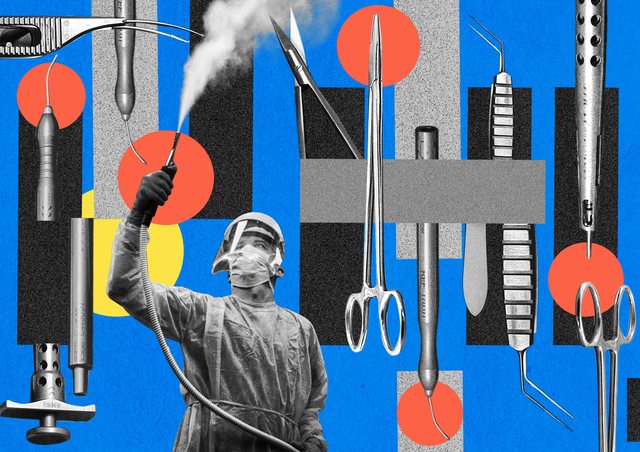
The media were among the first to devote extensive space to the so-called sterilization issue from the very beginning. They raised accusations and articulated claims long before the justice bodies, SPAK and GJKKO, spoke out.
"Suddenly," some media outlets returned to healthcare concessions on Thursday, exactly one day after the GJKKO dismissed SPAK's accusation of "structured criminal group" in the criminal process related to the sterilization contract.
The reason for this return was the investigation into the insufficient supply of drugs for the oncology service. The lack of drugs is a serious issue, with high public sensitivity, and as such requires treatment with full responsibility, not unilateral use for other purposes of distracting responsibility.
However, this time too, responsibility was once again directed towards the concession contracts and, directly, towards Ilir Beqaj as their signatory.
But Ilir Beqaj has not been the Minister of Health for nine years. When he left office in 2017, the annual health budget was around 400 million euros. By 2026, this budget had doubled, reaching 800 million euros.
Also, the annual expenses for the four concession contracts in 2025 were 2.9 billion lek, while 1.6 billion lek are programmed for 2026. So, the difference of 1.3 billion lek, or about 13 million euros, that this year will not go to those commonly called "oligarchs", deserves a persistent question: what will this money be used for? Will it be channeled to cover the needs for oncology drugs?
Another fact that cannot be overlooked is that the sterilization concession contract ends on March 8, 2026. It is pointless to talk about it yet.
As for the laboratories' concession contract, it is publicly known that it was drafted with the assistance of the IFC. It is also known that, at the time Ilir Beqaj left the post of minister, the relevant commission had not yet completed the evaluation process nor announced the winner. This contract was only approved in 2019.
And this is where the fundamental question arises: if three concession contracts were signed directly by the Minister of Health, why was the fourth contract, the one for laboratories, approved by a decision of the Council of Ministers? Why did the 2019 head of state elevate this decision-making to the government level? Was this a procedural obligation, a political choice, or a way to distribute responsibility?
Two answers come to mind.
First, for the distribution of political and administrative responsibility. A contract that is approved by the Council of Ministers does not remain solely the burden of the minister, but becomes a decision of the executive.
Second, for procedural protection. In practice, a sensitive contract is often raised at the government level when a stronger formal basis is required, especially when public debate or subsequent scrutiny is expected.
And in addition, the minister delegated the signing of the contract to the secretary general.
©Copyright Vox News
This article is exclusive to Vox News, and is copyrighted under Law No. 35/2016, "On Copyright and Related Rights". The article may be republished by other media only by citing Vox News and including a link to the source at the end, otherwise any violator will be held liable under Article 178 of Law No. 35/2016.