Is this police force professional and capable of handling violen...
/ 2026-10-16 18:54:07Focus


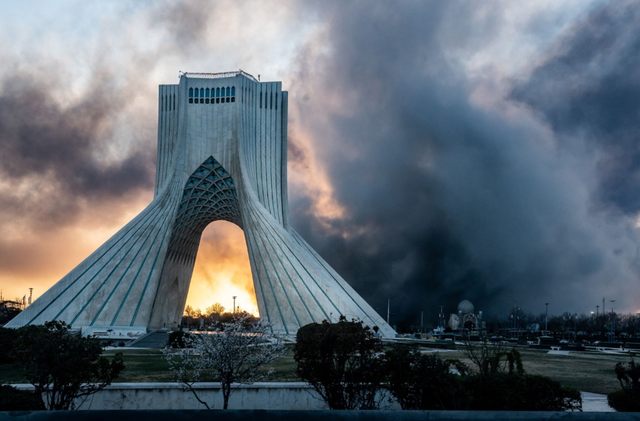
Giuseppe Sarcina – Corriere della Sera
At yesterday's Alliance meeting in Brussels, US representative Scott Oudkirk asked for the support of partners. Turkey and Spain were clearly against it, although for different reasons. All other countries are not exposed. France and the United Kingdom are ready to defend only their interests in the Persian Gulf.
For several hours, the Turkish government was completely taken by surprise. No one in Ankara expected to be among the targets of the Iranian response to the US-Israeli attack. Later that day, Wednesday, March 4, Turkish intelligence services determined that the missile, intercepted and shot down in Turkish airspace, was actually headed for Cyprus.
The surprise of the Turks is easy to explain. Yesterday, Tuesday, March 3, the North Atlantic Council, the body that brings together ambassadors or other representatives of the 32 members of the Alliance, met in Brussels. Turkey and Spain were the only countries that clearly distanced themselves from the attack launched by Donald Trump and Benjamin Netanyahu. The country led by Pedro Sánchez highlighted the violation of international law; the country led by Recep Tayyip Erdogan noted that it was the most exposed to the escalation of the conflict.
On the other side of the political spectrum, the Netherlands and Albania stood out: the only ones who unreservedly supported Washington and Tel Aviv.
However, most countries, including Germany, the United Kingdom, France and Italy, have adopted an intermediate position. They did not explicitly condemn the American attacks, but rather Iran's indiscriminate retaliation. Most importantly, the large group supported the statement of Secretary General Mark Rutte: NATO will not be involved in the Middle East conflict. However, the French and British declare that they are prepared to defend only their interests in the Persian Gulf.
However, opening the meeting, Scott Oudkirk, the deputy head of the US delegation, first explained the military objectives of the war. Among other things, they included the destruction of Iran's missile capabilities and nuclear laboratories. Oudkirk then urged the allies to cooperate with the US, providing "conventional means and weapons". According to the American diplomat, this would be a "clear example of NATO 3.0", which is, in short, a new version of the Alliance that would work this way: Europeans buy weapons from American industry or contribute to US-led operations, in exchange for total protection. / Prepared by Vox News