How Belinda Balluku is fabricating the rumor about Top Channel's...
/ 2026-10-19 16:19:00Focus


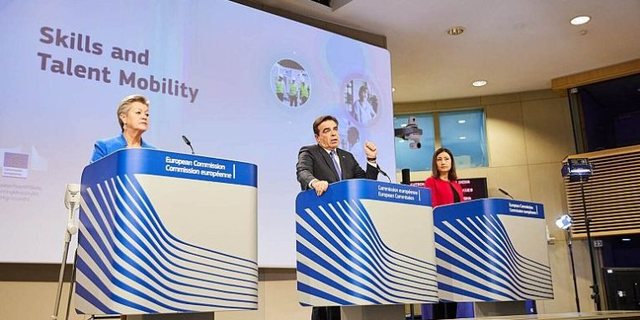
Described by EU home affairs chief Ylva Johansson as "Tinder for jobs", the so-called EU talent pool would match migrant jobseekers with job vacancies according to their skills and qualifications, help address critical shortages in the EU's internal labor market. Participation in the talent pool is voluntary for member states, but Brussels hopes incentives such as funding for vocational training and upskilling will encourage capitals to opt in. The platform will be based on the existing EURES platform, which connects European workers with job offers in other EU countries.
As baby boomers retire and the working population shrinks, many sectors in the bloc face severe shortages in skilled labour, with construction, healthcare and IT particularly hard hit according to the European Commission. The bloc needs seven million more workers in its labor market by the end of the century due to demographic changes. The EU executive has already sounded the alarm on the possible economic consequences of the predicted upheaval of the labor market, warning of huge pressure on public budgets, pensions and the health care system.
Johansson, the EU's chief executive for migrant policy, also said the talent pool could help discourage migrants from embarking on dangerous journeys to the bloc through routes facilitated by smugglers and thereby reduce the number of arrivals irregularities. But while migration for employment is seen in Brussels as one of the main solutions to crack down on irregular arrivals by filling gaps in the labor market, some EU governments are taking a different stance. Governments of all political hues, including France, Italy, Hungary and Poland, are experimenting with pro-natalist policies to boost birth rates and fill labor shortages, an approach particularly favored by far-right governments. .
Hungarian Prime Minister Viktor Orbán and Italian Prime Minister Giorgia Meloni have notably introduced incentives such as tax cuts and payments to bring back their country's rapidly shrinking populations. But the vice-president of the European Commission, Margaritis Schinas, warned not to fall for "wonderful solutions" proposed by demagogues and populists. Schinas presented the plan as a "foreign policy tool" as much as a social policy tool, as it aims to increase Europe's industrial competitive advantage on the global stage, as demand for the skills needed to decarbonise and digitize parts increases. of the economy.
The platform is designed to address shortages in low-, medium- and high-skill sectors, with a particular emphasis on strategic sectors "related to the green and digital transition". The bloc also called on member states to streamline their processes for recognizing foreign skills and qualifications, saying red tapes are discouraging skilled workers from immigrating, a phenomenon dubbed 'brain drain'. Racism is also a stain on the bloc's reputation in the world and risks preventing skilled workers from third countries from applying for jobs, according to Johansson. "We also have to fight to fight racism because this is also a barrier to able-bodied people choosing to come to the European Union," Johansson said.