How Belinda Balluku is fabricating the rumor about Top Channel's...
/ 2026-10-19 16:19:54Focus


The increase in funding for health is being absorbed by PPP concessions, which were given for some non-basic services, while for almost a decade, the drug reimbursement budget has remained almost stagnant. In 2013, drug reimbursement expenditures were 2.1% of total budget expenditures, while in 2024, this ratio deteriorated to only 1.6%. In 2019, the reimbursement fund accounted for 24% of the total expenses of FSKDSH, while in 2024, only 20.6%. Meanwhile, the funds for PPP will occupy over 9% of the FDSDKH budget in 2023 from 7% in 2020. Due to the limited funds available for reimbursement, Albania ranks last in Europe for access to new drugs. Out of 169 new products registered in Europe from 2018-2021, we have valid for the patient only 9 products on the reimbursement list, the last in Europe
The economy and budgetary capacity have increased over the past decade, but funding for basic health services such as drug reimbursement and primary care has remained stagnant, at a time when the needs for pharmaceuticals and health services in an aging population are increasing. .
Official indicators refer to a distorted distribution of funds within the health budget.
For nearly a decade, the drug reimbursement budget has remained almost stagnant, at a time when budget revenues have doubled and the financial resources of the Compulsory Health Insurance Fund (MFISF) have increased.
In 2013, drug reimbursement expenses were 2.1% of total budget expenses, while in 2024, this ratio worsened, as they accounted for only 1.6% of total budget expenses.
From 2019 to 2024, the budget of FSDKSH (the structure that finances public health services) has increased by about 40%, while the item of reimbursement of medications only 20%, according to official data.
In 2019, the reimbursement fund accounted for 24% of the total expenses of FSKDSH, while in 2024 only 20.6%
The increase in health funding is being absorbed by the PPP concessions that were given for some non-essential services, which are under investigation for abuses and so far there have been several arrests.

For example, 1.85 billion ALL are planned for the concession of laboratory services next year, or 42% more than the value determined in the initial contract. Also, the sterilization contract will be financed next year with 1.75 billion ALL, from the 1.2 billion annual payments that were foreseen in the contract.
The needs of the population for medicines are increasing due to the spread of non-communicable diseases and this is also shown by the imports of medicines, which increased by 70% from 2013 to 2022.
More detailed data from IQIVIA (a research resource for innovation in health) shows that Albanians have low access to the main drugs that treat cardiovascular, oncology, autoimmune, nervous diseases, etc., in relation to Europe and the region.
Yes, according to IQIVIA, out of 46 products registered and valid for patients in the field of oncology, Albania has registered only 3 such products. Due to these shortages, hundreds of patients affected by oncological diseases are treated abroad at out-of-pocket expenses.
Reimbursement covers only 35% of the consumption of pharmaceutical products

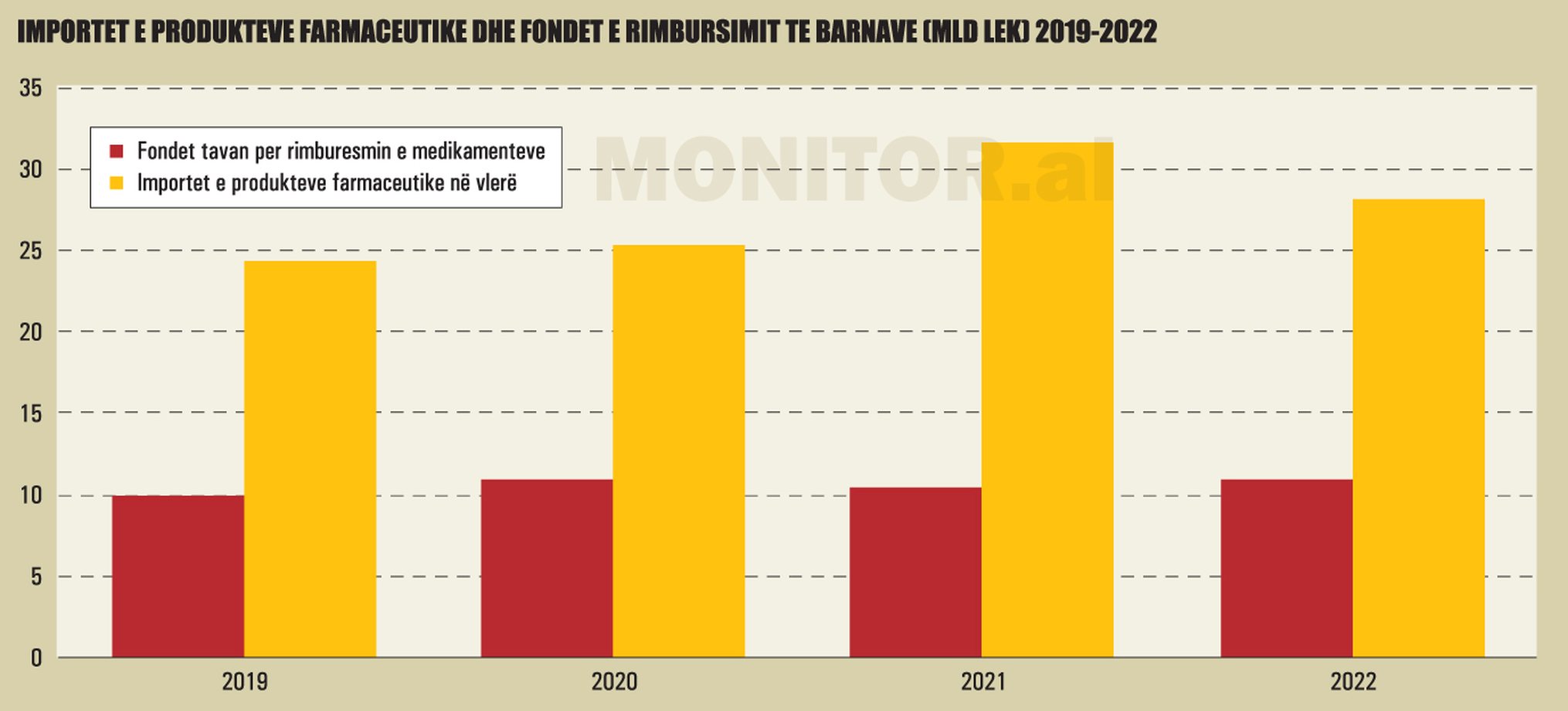
From 2013 to 2022, imports of pharmaceutical products in value increased by 11.3 billion ALL, while funds for reimbursement of medications increased by 3 billion ALL, according to official data.
The value of imports of pharmaceutical products has been increasing rapidly from year to year, especially after the COVID-19 pandemic, which has increased the burden of diseases in the population.
Last year, imports of pharmaceutical products reached 28 billion ALL, about 270 million euros, while the state reimbursement fund was 11.4 billion ALL.
The data shows that Albanian patients financed 61% of the value of imported pharmaceutical products out of pocket in 2022. This ratio was worse during the Covid-19 pandemic, where in 2021, Albanians paid out of pocket with 64.5% of the value of pharmaceutical products.
Low reimbursement funds have led the consumption of drugs to cheap alternatives that come mainly from Turkey, while the representative offices of multinational companies have withdrawn from Albania. From 13 such that were a few years ago, now there are only 3.
More detailed data show that Albanians have low access to the main drugs that treat cardiovascular diseases, oncology, autoimmune, nervous, etc.
Data from the Albanian Association of Pharmaceutical Representatives show that new drugs that have a high sales trend in the European and regional markets have not yet entered the Albanian market.
They cost a lot and are not affordable for patients, as the state does not reimburse them. For example, in Albania, such as Apixaban, Pembrolizumab, which treat autoimmune diseases, are not present.
The Albanian market is under development, where traditional generic and off-patent drugs represent 76%, while specialized hospital treatment with innovative therapies only 24%.
Representatives of the pharmaceutical market say that the needs of the population are much higher than the current supplies. But global experience has shown that public funding and its right orientation moves health systems forward and significantly improves health services for the population.
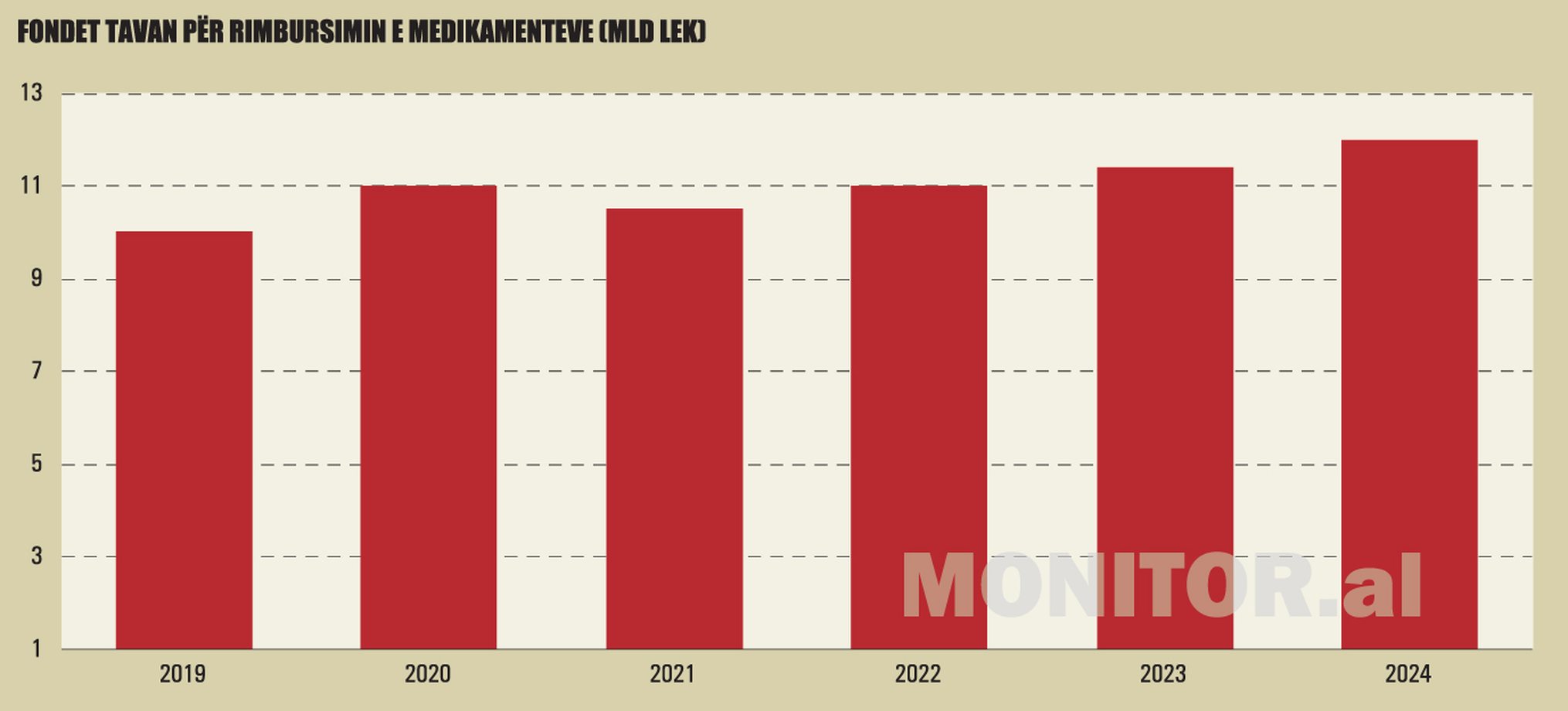
Low budgetary funding causes low reimbursement of innovative drugs that cure diseases such as cancer and autoimmune diseases. Budgetary funds for the reimbursement of medications have remained at the level of 10-11 billion ALL for years, even though the needs of the aging population are increasing. Stagnation of reimbursement funds also keeps the drug market underdeveloped and biases it toward cheaper products.
Legal maneuvering to reduce reimbursement funds
There are data that the population's medication needs are much higher than the ceiling limits set by the government for their reimbursement. The High State Control, in a recent audit at the FSSKDSH, evidenced that the establishment of budget ceilings in relation to these expenses, as well as the non-inclusion in the reimbursement list of the necessary range of vital and expensive medications negatively affects the health level of the population .
The reimbursement of drugs in 2022 was based on a VKM of 2021, which defines the list of drugs that are reimbursed by the FSDKSH and the extent of their coverage and price.
But another government decision in 2022 lowered the reference prices, which are lower than in 2021, according to drug list no. I and no. II. KLSH has observed that the change in the reference prices, which is a decrease in them, despite the fact that the measure of covering the price of drugs in percentage has not changed, has brought about the reduction of the amount of reimbursement in value. This has caused citizens who are treated with reimbursable drugs to use lower quality alternatives. This is the case of diabetes chips, where by the government decision of April 2022, the refundable value of diabetes chips from 19 ALL has become 14 ALL.
The data from FSDKSH show that drug reimbursement expenses in 2022 have increased compared to the previous year. The number of patients who benefited from drug reimbursement in 2022 compared to 2021 is 8,954 lower.
The official data of FSDKSH show that in 2022, 400,825 patients were reimbursed and in 2021, 409,779 patients were reimbursed. Analysis of data from the Fund shows that new cases treated with reimbursable drugs have increased.
There has also been an increase in diagnoses such as diabetes mellitus, essential hypertension, cardiac arrhythmia, and mental disorders related to the post-COVID period.
These factors have led to an increase in the number of prescriptions by 4,334 cases, and therefore also the average reimbursement value per prescription by 109 ALL more. The aging population and the COVID-19 pandemic have increased the burden of disease in the population. Official data shows that 8,603 new cases of chronic diseases were added last year and the value of drug reimbursement due to the increase in morbidity and complexity increased by about 1.1 billion ALL last year.
Insufficient reimbursement "kills"

Low funding for medication reimbursement has left Albania without access to last-generation drugs that treat seriously life-threatening diseases, such as neoplasms.
A study by IQVIA, whose object is research in medical innovations, showed that 168 innovative drugs with marketing authorization have been added between 2018 and 2021 in Europe, but Albania has accepted only 9 of them in the reimbursement lists, referring to information up to January 2023.
IQVIA data show that Albania has accepted on the reimbursement list only 5% of innovative therapies that have come into use in recent years.
From 2018 to 2021, a total of 46 drugs that treat oncological diseases have been approved, but Albania has accepted only 3 of them in its reimbursement lists.
For the same period, 61 new drugs are used for the treatment of rare diseases in Europe, while in Albania only 2 of them are included in the reimbursement lists.
Albania's capacities to include new therapies in the reimbursement list have decreased significantly in recent years. For example, during 2014-2017, Europe approved for use 154 new drugs, while Albania accepted 18 of them in the reimbursement lists.
While from 2018-2021, 168 new therapies came into use in Europe, while Albania included only 9 of them in the reimbursement list.
As can be seen, the capacity to include new drugs in the reimbursement list was halved from 2018-2021 compared to 2014-2017, at a time when neoplasms are increasing and Covid-19 has worsened diseases in the general population.
The data from the Institute of Public Health show that hospitalizations from cancer have been continuously increasing for both men and women. In the period 2015-2019, layoffs increased by over 70%, official data show. The increasing trend is much higher than the incidence trend, which has increased by only 16%, demonstrating the increase in annual contacts with the hospital service for each new case diagnosed with cancer.
PIH points out that a greater offer of health services related to the treatment of tumors is needed, and a greater awareness of society about this group of diseases.
Health funds are devoured by PPP Concessions
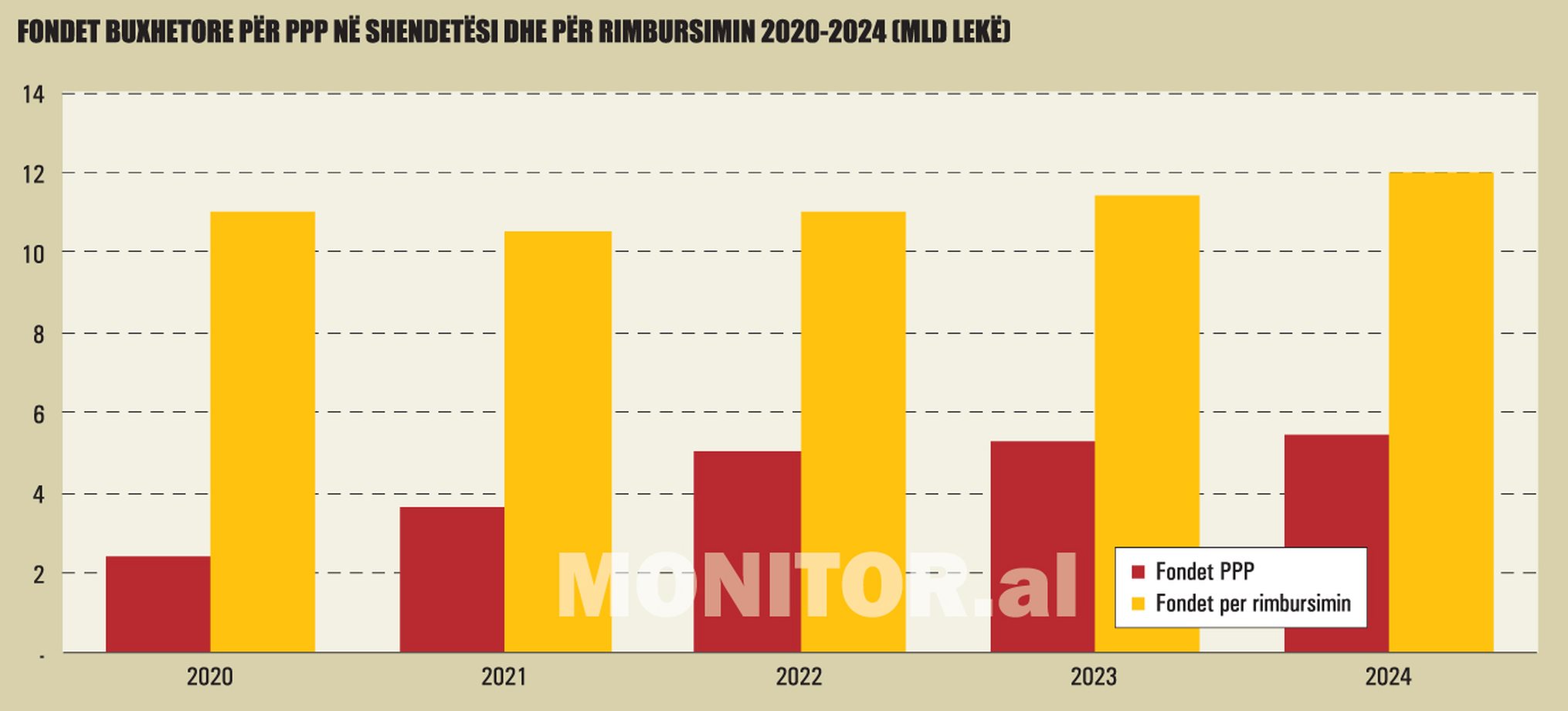
While the fund for the reimbursement of medications remains in place, budget funding for concessionary contracts in health from 2020 to the 2024 program increased by 127%, according to official data from the Ministry of Finance.
In 2024, 5.4 billion lek of funding are programmed for the four contracts, basic control, sterilization, laboratory and dialysis. The financing costs for these PPPs went out of control year after year, at a time when the hospital services for which they were provided are also being jeopardized.
During 2022, the initial plan for the PPP-Laboratory is in the amount of 1,574,000 ALL, but it was added further during the year and results in the amount of 1,639,000 ALL, while for 2024 it is planned at 1,850,000 ALL. The same progress for the sterilization PPP, which reached 1.75 billion ALL per year from the 1.2 billion projected in the initial contract
In 2020, the financing of PPP contracts occupied 7% of the budget of FSDKSH, while in 2024, it will occupy 9.3%.
An audit of the High State Control pointed out that the determination of annual budget ceilings is limiting the performance of laboratory tests for each hospital, sanctioned in the laboratory concession contract, endangering the provision of laboratory tests, to the appropriate extent, according to hospital needs. and bringing as a consequence the guidance of patients in receiving this service from private entities, at a cost to citizens, as well as deterioration of health from not performing the relevant analyzes on time.
The health concession contracts, that of the basic medical control known as "Check Up" and of dialysis in 2022 received 1.2 million euros in payments from the state budget for incomplete services. Taken with abbreviations from MONITOR