Is this police force professional and capable of handling violen...
/ 2026-10-16 18:54:07Focus


Reuters has dedicated a special article this Monday to the impact of the war in Iran on energy prices in Europe, analyzing how different countries are coping with rising costs.
In this article, Albania is considered one of the positive examples in the region, thanks to its high dependence on hydroelectric power, which has helped soften the blow of the crisis and keep energy prices more stable compared to many other European countries.
Reuters article :
Renewable energy in focus as Iran war raises energy prices in Europe
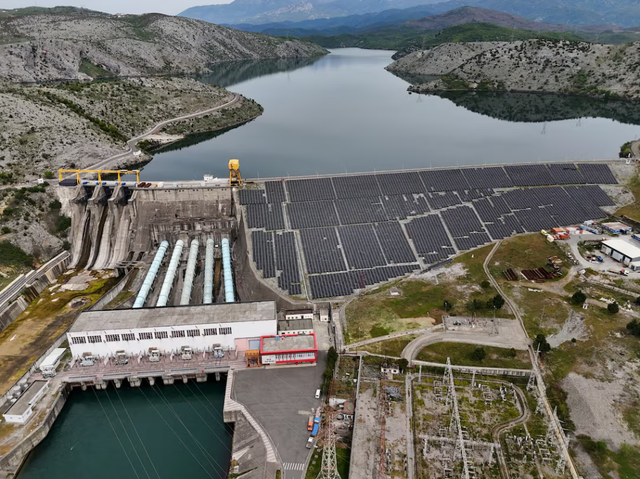
As the war in Iran disrupts global oil and gas flows and energy prices rise sharply, the Drin River, which flows through the mountains of northern Albania, is acting as a kind of shield.
Swollen by winter rainfall and snowmelt, and powered by hydroelectric dams built during the communist period, the river's power provides more than 90% of the country's electricity production, helping to keep wholesale prices under control.
Albania is an example of how countries with higher renewable energy production have been shielded from sharp increases in energy prices since the United States and Israel launched strikes on Iran on February 28, according to price comparisons across Europe. Analysts say this could help households, businesses and economic growth in these countries, as the impact of prices is expected to be passed on to consumers in the coming months.
This situation could also strengthen Europe's transition to green energy, which has been criticized for a lack of urgency and attacked by figures such as US President Donald Trump.
Countries heavily dependent on oil and gas are facing steeper price increases, adding to inflationary pressure and raising the risk of a global recession, a familiar concern for Europeans who faced the energy crisis caused by Russia's invasion of Ukraine in 2022.
The crisis is raising the base price level in the region for everyone, but countries with less flexibility and greater dependence on fuel imports are experiencing the strongest impact on price fluctuations and peaks, said Satyam Singh, an analyst at Rystad.
The difference in energy prices in Europe
Across the Adriatic from Albania, Italy, which produces more than 40% of its energy from gas, has seen a more than 20% increase in reference contracts since the start of the war. In gas-dependent Germany, the increase has been more than 15%.
By contrast, in France, which relies on nuclear power for about 70% of its production, prices have risen less than half as much as in Italy. In Spain, where renewables account for almost 60% of its production, prices have even fallen. Albania also recorded lower average prices in March compared to last year, thanks to its high hydropower capacity.
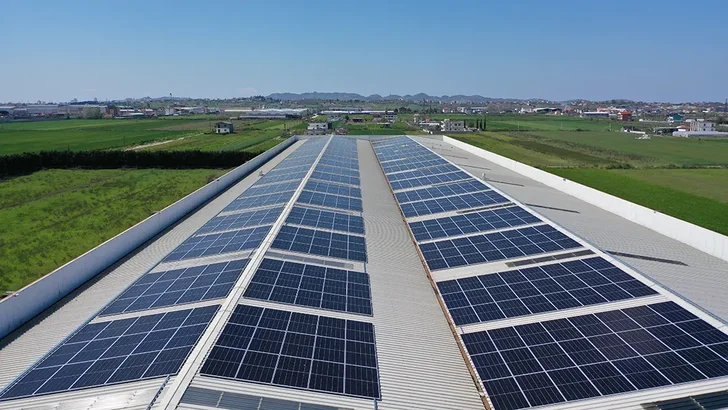
Countries that depend on gas, such as Italy, Germany and Greece, also have solar power generation, but over-reliance on them creates a phenomenon called the "duck curve", where prices fall in the middle of the day but rise sharply in the early morning and evening.
"The goal for most of these countries is to build large renewable energy capacities and long-term storage to replace gas. It's a big challenge," said analyst Alessandro Armenia of Kpler in Paris.
Meanwhile, coal-producing countries such as Poland and Serbia have also performed relatively well. In Greece, the electricity grid operator is demanding that a lignite-fired power plant, scheduled to close, continue to operate for at least another year due to the conflict in Iran.
Businesses and families feel the pressure
Analysts say that the price hit for households is expected to be softer compared to oil and gas increases, as these impacts are reflected in the system with a delay.
The European Commission has drawn up plans to reduce electricity taxes to mitigate the consequences of the war, although it warns that costs for countries could increase significantly.
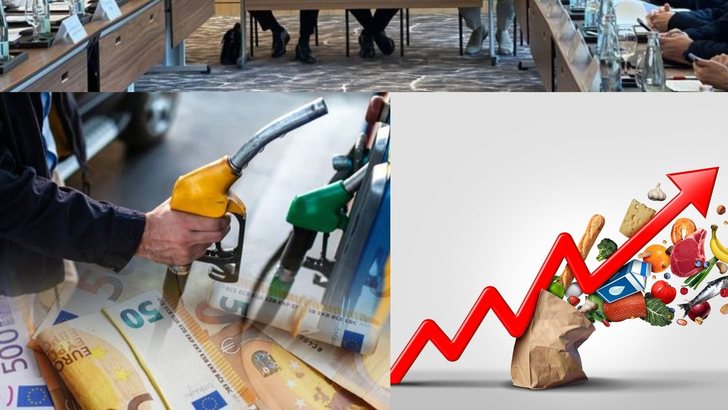
Consumers, already hit by rising fuel prices, are also concerned about more expensive electricity.
In Cyprus, where energy prices are among the highest in the EU, the main supplier predicts increases of up to 20% by August.
In Italy, businesses are also feeling the pressure.
"I have two jobs and we can barely make ends meet. Everything is adding up," said the father of two.
He is not the only one.
Nico Vanni, owner of a bakery, said that the costs of oil, gas and raw materials have increased and warned that if the situation continues, he may be forced to lay off staff.
Old dams help Albania, but for how long?
In Albania, residents near the Vau i Dejës high-rise hydroelectric dam joke that hydropower is the only positive legacy of the country's decades of communist rule.
"Albania's heavy reliance on renewable energy, especially hydropower, has played a crucial role in mitigating the worst effects of the crisis," Albania's Energy Ministry said in a statement, acknowledging, however, that the country is not completely protected.
The country still imports energy when demand peaks, while consumers are protected by state price subsidies.
“The conflict in Iran has increased pressure behind the scenes, especially on public finances,” the Energy Ministry said. “The system is remaining stable on the surface, but the real pressure is building underneath.”