Is this police force professional and capable of handling violen...
/ 2026-10-16 18:54:07Focus


In 2007, a businessman named Arian Tartari managed to get his hands on the concession for four oil fields in the south of the country. These were the Gorisht-Kocul, Cakran-Mollaj, Ballsh-Hekal and Delvinë fields.
Mr. Tartari had strong connections in the Democratic Party government. But things didn't go as he had hoped. At least not at first.
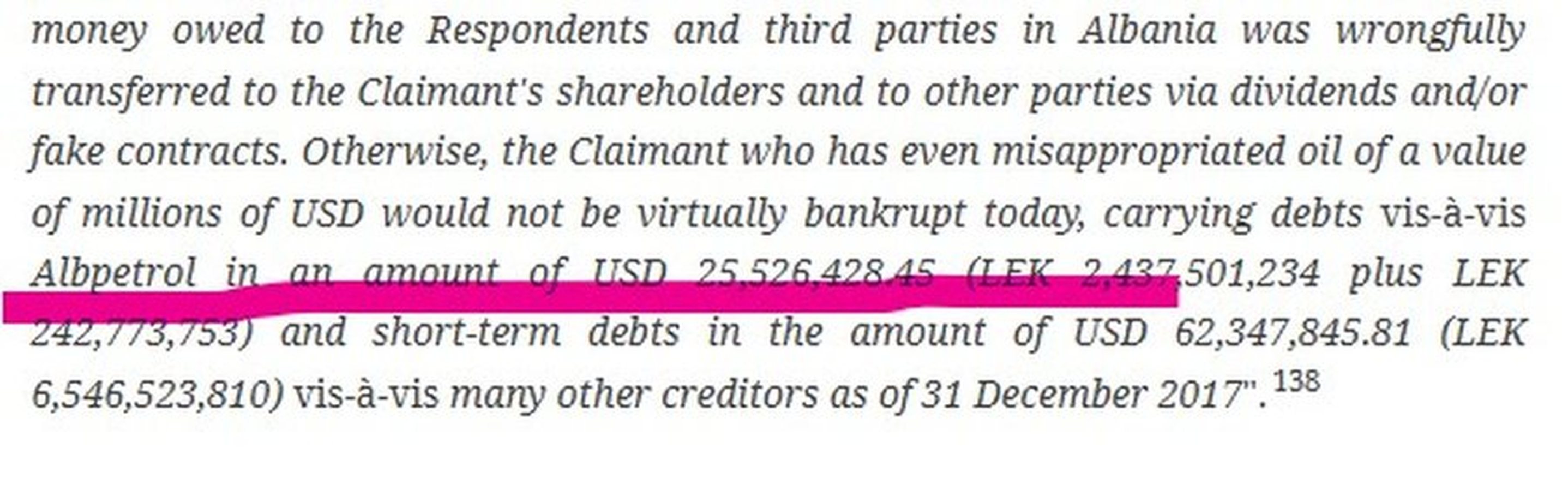
A year after the concession was awarded, in 2008, the government imposed a 10 percent royalty on oil concessionaires. Stream Oil claimed compensation under the stability clause in the concession contract, but the government refused. As a result, the company began to accumulate unpaid debts to the state, which amounted to $27 million to Albpetrol alone.
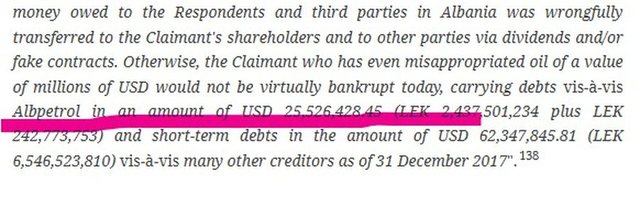
GBC Oil's debts to Albpetrol
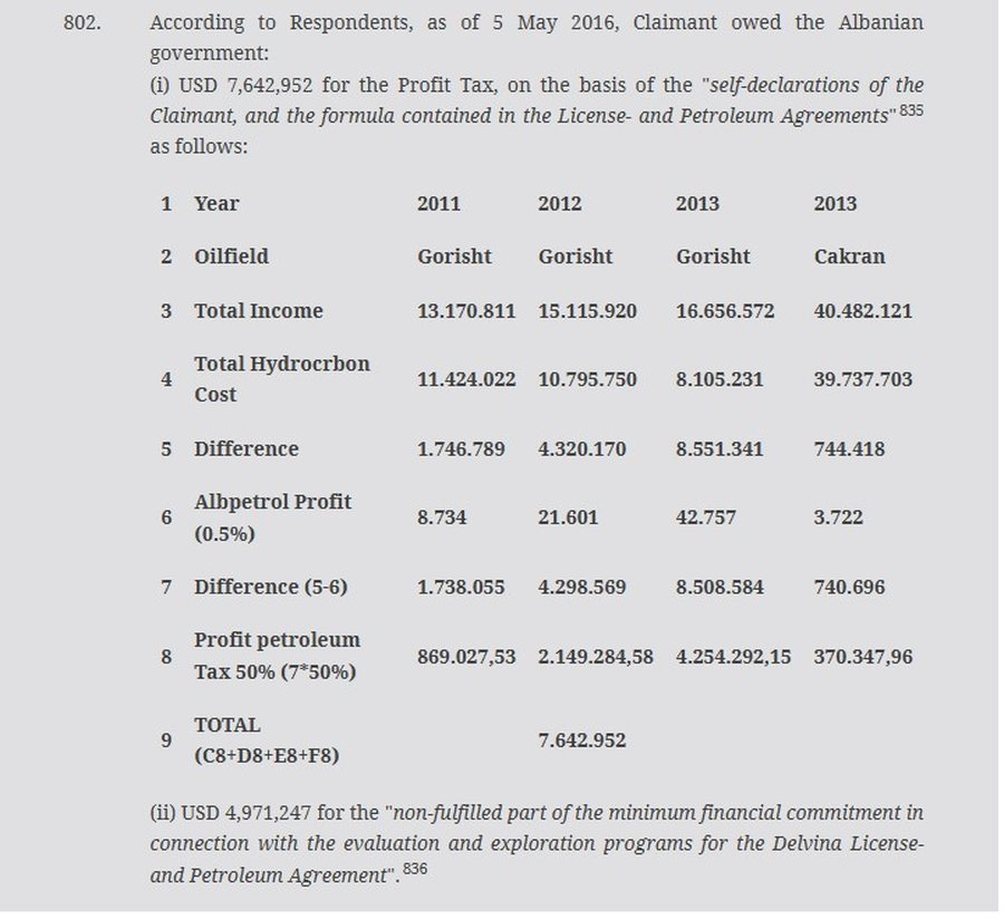
In parallel, the company accumulated $7.6 million in debts to Taxes and another $4.9 million to AKBN.
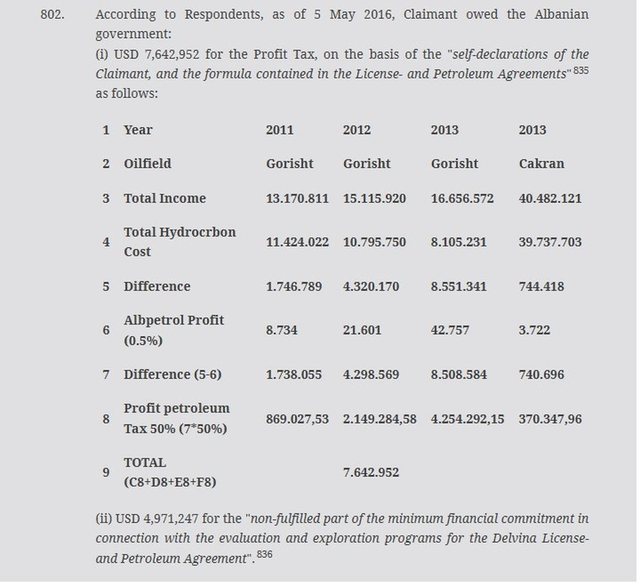
Debts to Taxes and AKBN
In 2014, after the rotation of power, Tartari sold the concession of four oil fields to an American company called Transatlantic Petroleum.
Shortly after buying the company, the Americans at Transatlantic realized that Stream Oil owed much more than the 27 million to Albpetrol. TransAtlantic held the concession for four fields for two years and sold it to the company GBC Oil, which was registered in the Cayman Islands, but owned by Naim Kasa, Kreshnik Greza and Mark Crawford.
Arbitration
In 2017, Albpetrol decided to renationalize the four oil fields, which were now under the ownership of GBC Oil, arguing that the company had not fulfilled its obligations under the concession agreement and had millions of dollars in unpaid debts to the state. After the nationalization, GBC Oil turned to the International Court of Arbitration in Zurich, seeking about $100 million in compensation from the Albanian government.
In July 2020, the Court rejected most of GBC Oil's claims, but recognized compensation for the rent paid in the amount of $12.7 million, which the government should return to GBC Oil as compensation to neutralize the increase in taxes after the concession agreement.
But all of this would be a mere paper operation, as GBC Oil owed the state $40 million and despite the recognition of $12.7 million by arbitration, it still had to pay over $27 million to the state. This is where the scheme begins.
GBC Oil and its debts to the state disappear, but the fine remains
Prior to the arbitration award, in 2018, GBC Oil entered into a financing agreement with a Canadian company called IMF Bentham. The latter undertook to finance GBC Oil's arbitration costs against the Albanian government, in return for a percentage of the potential profit in the arbitration. Shortly thereafter, IMF Bentham was acquired by Omni Bridgeway, an Australian fund specializing in financing legal disputes.
Documents obtained by Kapital show that Bentham and later Omni financed a total of $3.6 million in expenses for GBC Oil. But as they were awarded the $12.7 million in arbitration, events soon took an interesting turn.
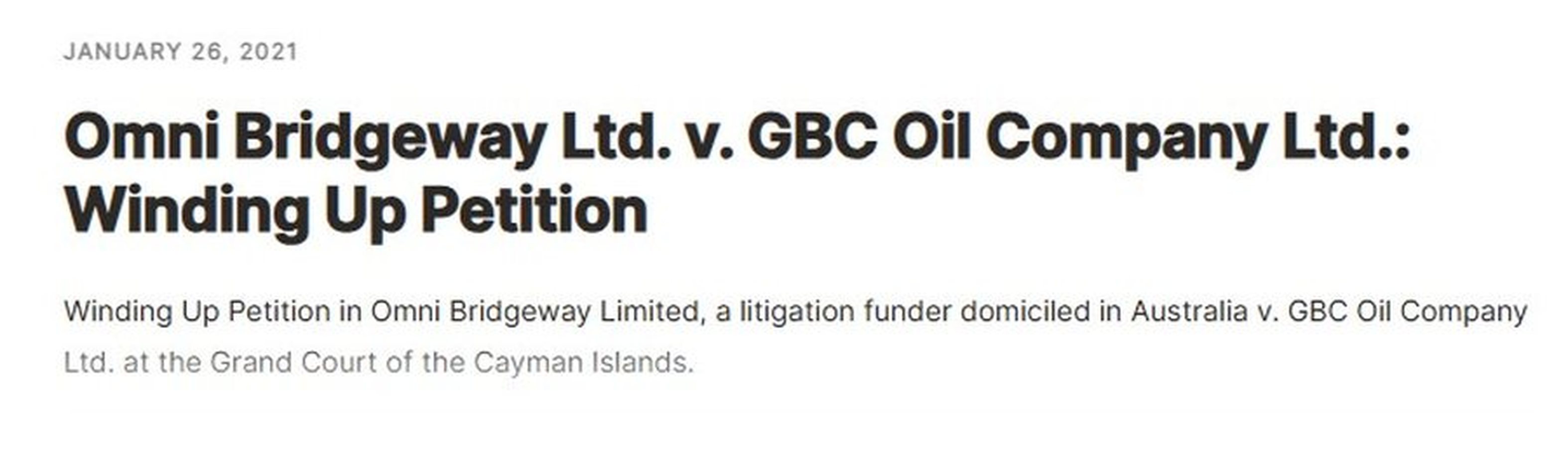
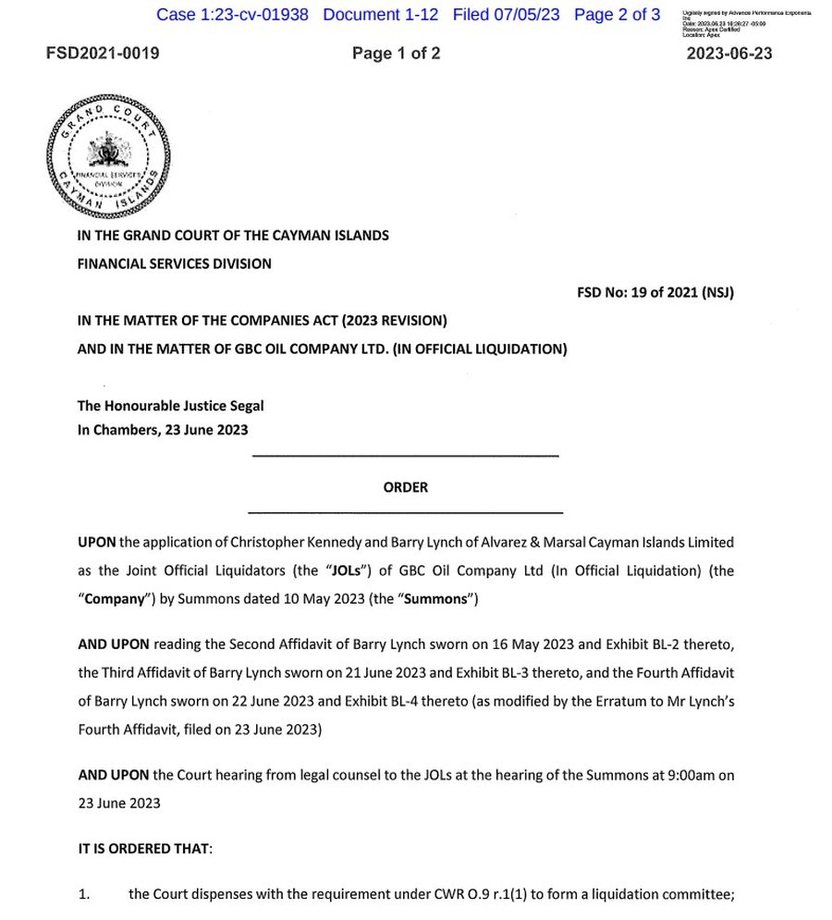
Three months after the arbitration award, Omni filed a lawsuit in a Cayman Islands court seeking the bankruptcy of GBC Oil. The reason was that GBC had failed to repay a 600,000 euro loan to Raiffeisen Bank in Albania.
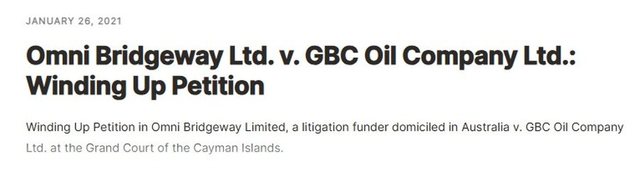
Omni's lawsuit to bankrupt GBC Oil
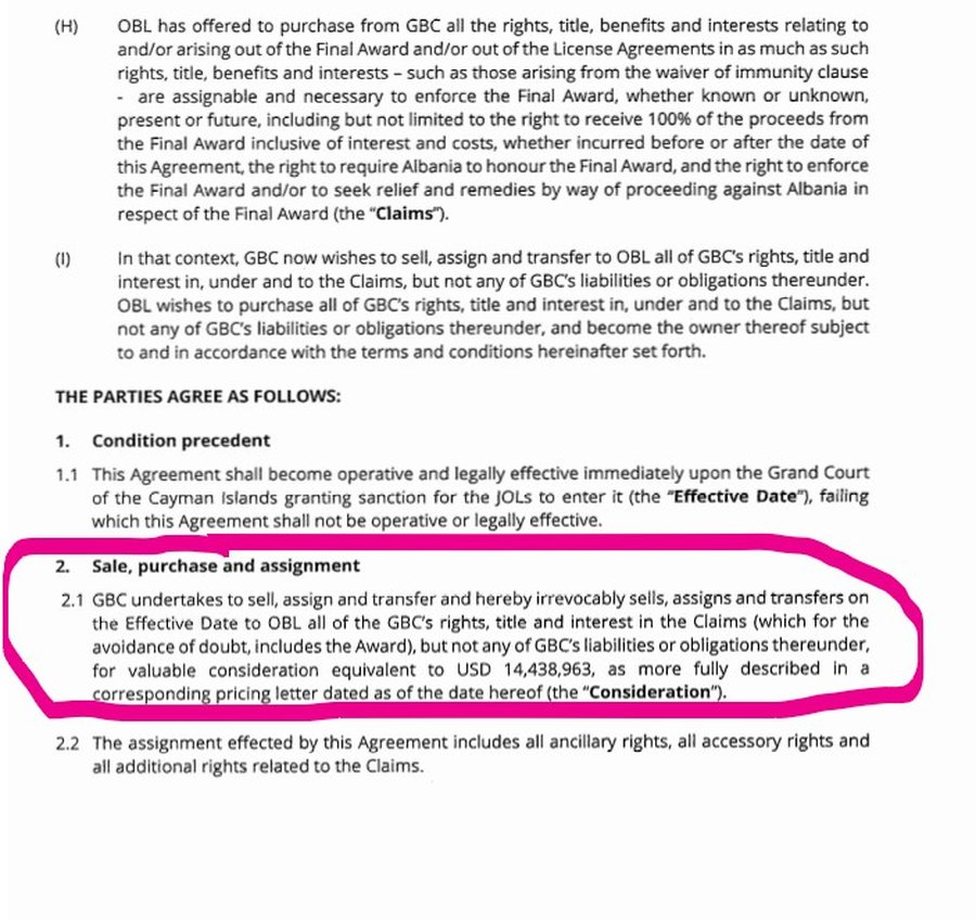
A judge in the Cayman Islands immediately placed GBC Oil into liquidation, appointing Christopher Kennedy and Barry Lynch as co-liquidators. The liquidation process took three years, but two months before GBC Oil officially went bankrupt, Omni and GBC, which was now administered by liquidators in the Cayman Islands, entered into a transfer agreement.
"GBC Oil hereby irrevocably sells, assigns and transfers on the Effective Date to Omnia BL all of GBC's right, title and interest in the Claim (which for the avoidance of doubt, includes the award in the Arbitration), for a consideration equivalent to USD 14,438,963, but none of GBC's obligations or liabilities," the agreement states.
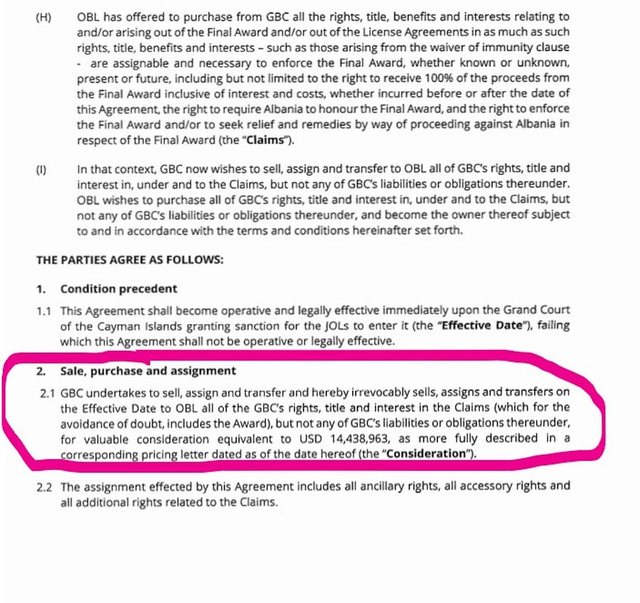
Goal deal $40 million
In short, through this agreement, Omni received the right to collect the fine determined by the arbitration decision, which together with interest amounted to $14.4 million, while the debts to the Albanian state remained with GBC Oil.
A month after this agreement, GBC officially went bankrupt, and with its bankruptcy, 40 million dollars of its debts to the Albanian state were also paid off. But what remained was the arbitration award, the rights of which were transferred to Omni Bridgeway.
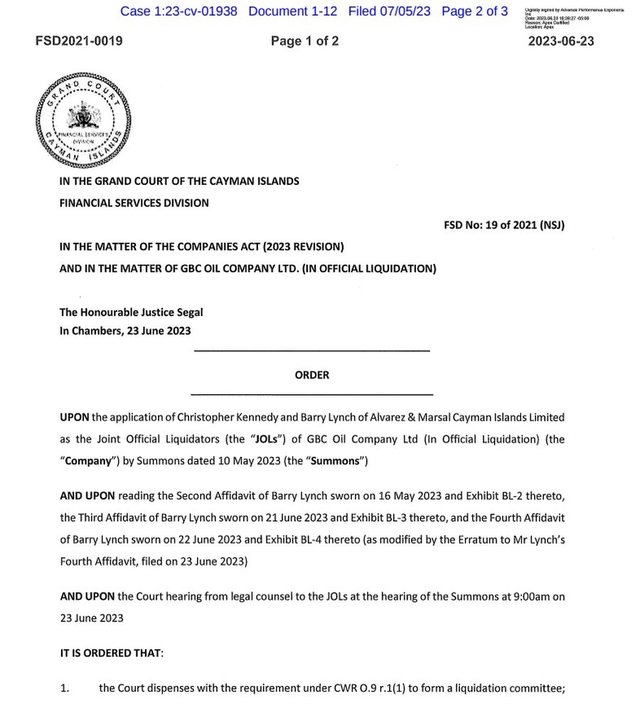
The bankruptcy of GBC Oil
As a result, Albania, which should have received $27 million in net proceeds from GBC Oil, will now not only receive nothing, but will pay $15 million to Omni.
This was the goal scored against Albania through the Omni-GBC Oil scheme, a goal that robbed Albanian citizens of $40 million, because the government did not deign to pursue the case and at least zero out the arbitration decision with the debts that GBC Oil had to the state./ Kapitali.al