Is this police force professional and capable of handling violen...
/ 2026-10-16 18:54:07Focus


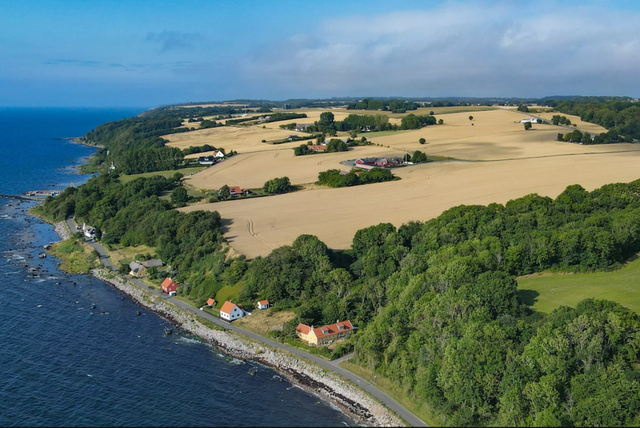
It's the biggest project in the history of the Danish energy industry: Together with Berlin, Copenhagen is transforming Bornholm in the Baltic Sea into a powerful energy hub. Without the threat of the US president, this multi-billion dollar venture would never have started.
Denmark has 1,419 islands with an area of over 100 square kilometers. If the President of the United States, Donald Trump, were to truly annex Greenland to the "American empire," the island kingdom of the descendants of the Vikings would shrink.
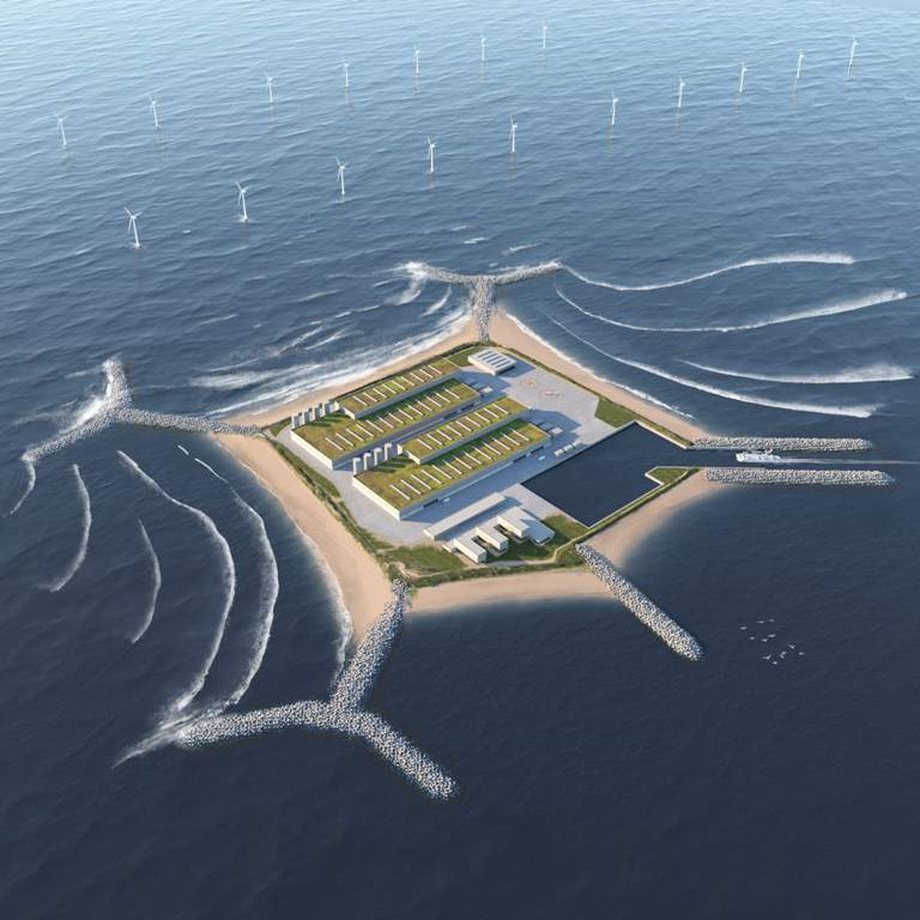
For now, however, Trump is helping it grow: by building offshore wind farms and conversion stations, Denmark is creating a kind of energy island at sea, connected to substations and electrolyzers located on the Baltic island of Bornholm.
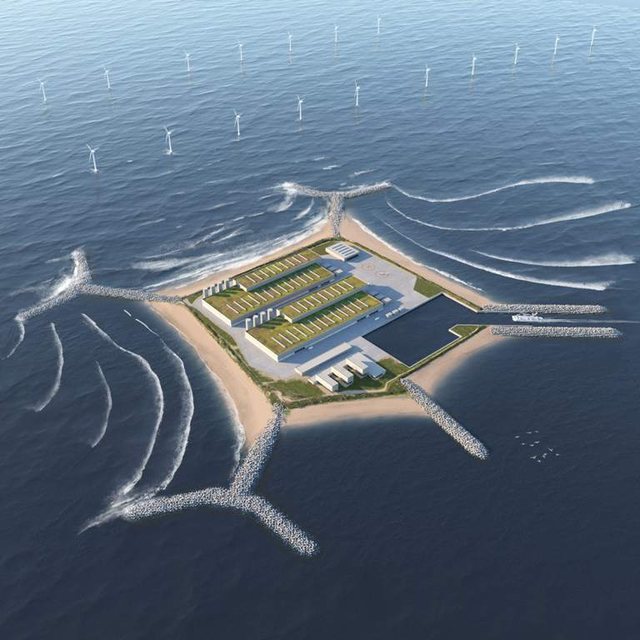
The entire complex, called Bornholm Energy Island, arises from the increasingly urgent need to become independent of any form of energy import. In the North Sea, Denmark even plans to anchor a completely artificial island with a similar function.
The Bornholm Energy Island project is the world's largest cross-border energy transition project and, at the same time, the most expensive ever implemented in Denmark, an artificial island will be built near Bornholm. Germany and Denmark signed a cooperation agreement for its construction during the third North Sea Summit in Hamburg. The agreement was announced by Federal Chancellor Friedrich Merz (CDU) together with Danish Prime Minister Mette Frederiksen.
The plan envisages the construction of large conversion stations that will transform electricity generated by offshore wind farms (yet to be built) and distribute it between Germany and Denmark. Part of the energy will be used by electrolyzers to split water into its components, producing hydrogen that will be transported to Germany via an underwater pipeline.
No more climate, but security
Denmark had originally planned two energy islands: in addition to the project in the Baltic, an artificial island in the North Sea, the size of 18 football fields, was also planned as a connection to Belgium's electricity grid.
Both projects date back several years and have been postponed several times. Offshore wind energy has recently become very expensive. As in Germany, in Denmark there were no longer any investors willing to finance giant turbines, due to high commercial risk, volatile energy prices and rising material costs.
The turning point came with Donald Trump's move on Greenland. "Without the political change in Washington, the Bornholm project would not have progressed," said a Danish observer at the North Sea summit in Hamburg.
Since the US president showed his willingness to pursue territorial expansion in violation of international law and to the detriment of his allies, the Baltic energy island project has changed its nature. Climate protection and the energy transition no longer justify this costly undertaking: the offshore wind farm is now considered a strategic security and self-sufficiency project, to reduce energy dependence also on the US.
“This cross-border project strengthens Europe’s energy autonomy, fosters innovation and increases resilience in the face of geopolitical challenges,” the German federal government explained. The European Commission has classified Bornholm Energy Island as one of the continent’s eight main “energy highways.”
A geopolitical response
According to Danish Prime Minister Frederiksen, this is not simply a cross-border energy project, but a response to new geopolitical realities: "It is an issue that concerns our democratic principles, our integrity and our identity."
Chancellor Merz welcomed the joint project, saying “we need more electricity to lower prices.” He drew a distinction between onshore and offshore wind power, stressing that offshore does not damage the landscape and makes better use of the wind. However, Merz reiterated his belief that wind power is a “transitional technology” that will be around for decades.
Federal Minister for Economic Affairs and Energy Katherina Reiche (CDU) has agreed in Hamburg with her Danish counterpart Lars Aagaard on joint support for the wind farms to be built as part of the Bornholm Energy Island project. This agreement removes the last obstacle to the island's realization.
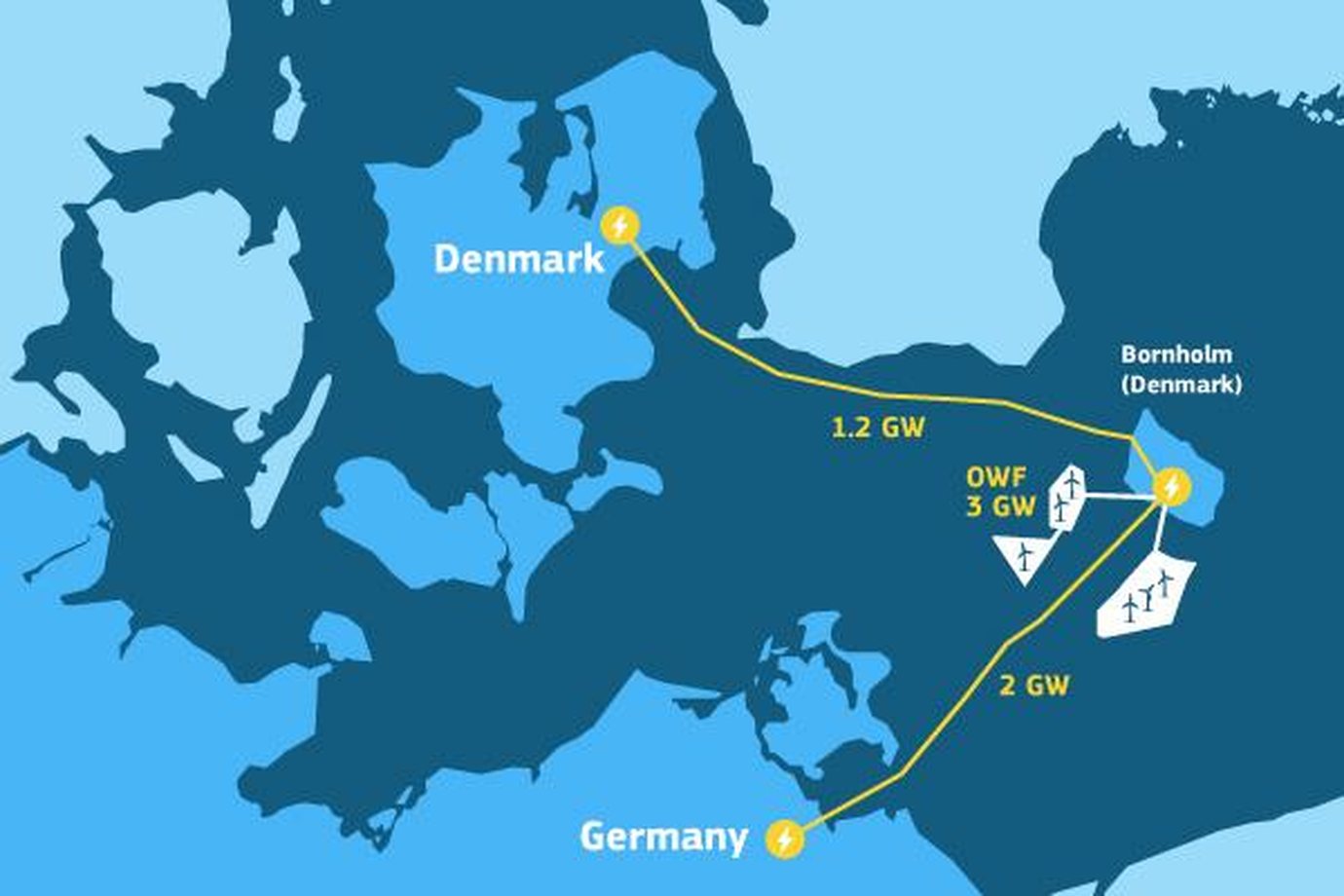
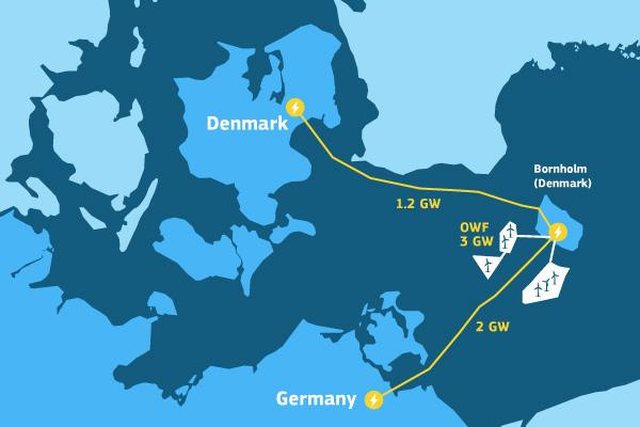
The project is a joint initiative of the transmission network operators Energinet and 50Hertz, with the aim of introducing 3 gigawatts of offshore wind energy into the European electricity grid. The energy produced will be distributed through new connections: 2 gigawatts to Germany and 1.2 gigawatts to Denmark. For comparison, a nuclear power plant typically has a capacity of around 1 gigawatt.
The total cost of the Bornholm Energy Island project amounts to around 7 billion euros, which will be shared between the two countries according to the energy distribution. The European Union contributes to the financing of the Danish part with 645 million euros.
An uncharted normative territory
To connect the two energy networks, a total of four large converter stations will be needed, capable of transforming direct current into alternating current and increasing the voltage to 525 thousand volts. One station will be in Denmark, one in Germany near Greifswald and two on Bornholm. The main equipment will be supplied by Siemens Energy, while the cables will be supplied by the Danish company NKT.
“The agreement between Germany and Denmark has a value that goes beyond the Bornholm Energy Island project in the Baltic and is an important signal for the offshore industry throughout Europe,” said Stefan Kapferer, CEO of grid operator 50Hertz, after the signing in Hamburg. “Both countries are entering uncharted regulatory territory and playing a pioneering role.”/ Die Welt