Is this police force professional and capable of handling violen...
/ 2026-10-16 18:54:07Focus


When they forget you until death!
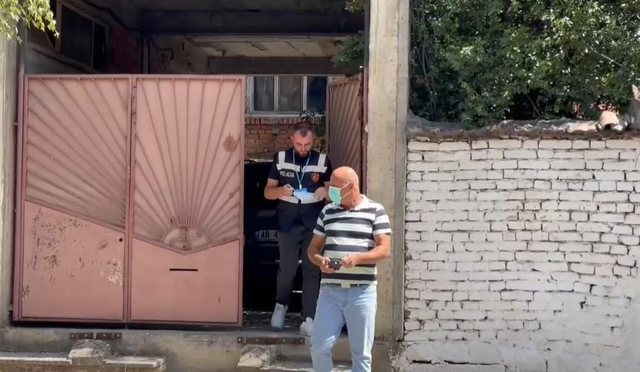
Today I had to report some difficult news. A 60-year-old man had been dead for months (I think since December) and no one had remembered him.
Behind a closed door, the body of a 60-year-old man waited to be remembered, the walls holding the scent of loneliness. He lived alone, his heart weary and his body fragile, while the world outside continued its pace, not asking who was left behind. When the police entered the apartment this morning, traces of his life had faded, as had the memories of those who once perhaps called him a loved one.
It is painful to think that from December until the end of August, no one knocked on his door. A phone call, a visit, a small reminder would be enough to stop this sad epilogue. The two children, one outside Albania and the other in Tirana, perhaps busy with their own lives, lost touch with him. Even his brother, who lived in the capital, said that time passed between work and commitments, until the delay turned into guilt.
He said that he had only come now, during the usual leave, to see the shared house. But the door he opened did not allow him to find his brother alive, but a body that had been silent for months under the weight of oblivion. A heavy scene, which leaves the neighborhood silent, which leaves the thought of each of us in suspense: how often we forget to remember those close to us, until it is too late.
Because it's not just the body that decomposes over time, it's also memory, when we don't know how to give time to care, love, and presence for those who may not ask for us, but need us more than ever.
And especially when it comes to your blood, your father, your brother...
This story is not an isolated case. Many elderly people in Albania today are lonely. Mass migration, hopelessness and poverty have emptied the country, leaving behind parents who age in silence. In search of a better life, the younger generations flee, but along with their dreams they leave behind the people who once held their hands.
In Korça, the phenomenon has become visible. There is only one private asylum, “Kennedi”, which has long since run out of places. No state structure has been set up to cope with the increasing number of lonely elderly people. Instead of having social policies, we have an institutional vacuum and collective indifference. No one follows these people closely, no one knocks on their door to ask: “Are you okay?”.
Ironically, one of the most profitable businesses in the city today is a delivery restaurant, “Delisia.” Why? Because children living in exile pay for their food over the phone, so that employees can deliver it to their elderly parents. Think about it: we are at a point where the only communication is a receipt, not a visit, not a hug, not a conversation. A lunch delivered by motorbike never replaces presence.
At its core, this tragedy speaks to the lack of social policies. In a country where unemployment, poverty and emigration dominate people's lives, there is no strategy to keep those who are most vulnerable close. Health systems have neither the time nor the staff to closely monitor the elderly who live alone. They are not just numbers in statistics, they are lives that are slowly, invisibly fading away.
We have reached a point where loneliness has become a collective disease. Our society, which once prided itself on warmth and family ties, is now experiencing an unforgiving coldness.
Stories like this should be a wake-up call, not just for institutions, but for each of us. We are becoming a society that knows how to mourn for the dead, but doesn't know how to care for the living.