Is this police force professional and capable of handling violen...
/ 2026-10-16 18:54:07Focus


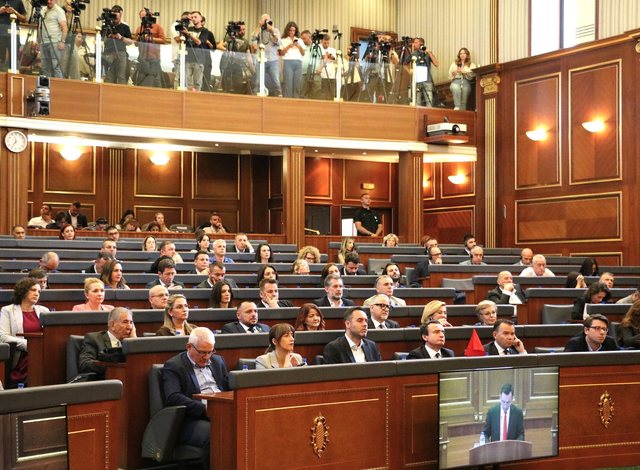
There may be parties that do not want to govern with another party (this is normal), but the fact that two parties cannot be found across the entire political spectrum to form a coalition indicates a deep deformation of not only political but also human relations. This distrust has its source in the main defect of Kosovar politics: cooperation is seen as weakness and often only as an opportunity to deceive the other and make a pit for them. In this pit, unfortunately, it is not the politicians who are falling, but Kosovo.
By Enver Robelli
While the political class of Kosovo has entered a long tunnel of extreme polarization, accompanied by an incessant propaganda of accusations and counter-accusations, with empty rhetoric and curses about who said what against the other on St. Mitre's Day in 2007 and how the political rival responded on St. George's Day in 2013, with relativization of everything, with use of totalitarian notions that demonstrate a lack of elementary historical knowledge, with tales of provincial mentality from digital snipers and pseudo-Stalinist commissars, with a bunch of frustrated and cynical people for empty public protagonism, with witch hunts and false apocalyptic warnings, with an elementary lack of willingness for compromise from all parties, with arrogance of numbers, boasting and weak governance (by the party with the most votes in the last 4 years), with (mis)use of the past for low-level manipulations of current daily politics. (in this country patriotism has often been used and is used as a mask to cover up long-standing corrupt and criminal politics), so in all this hubbub and inability to see beyond the Pinocchio nose, the news is circulating in the international media that German Chancellor Merz, French President Macron and Polish Prime Minister Tusk have demonstratively visited Moldova to support the pro-European president there a month before the parliamentary elections. Due to its proximity to Russia and Russian control over the phantom state of Transnistria, but also the division of the modal society into two camps (one pro-European, the other pro-Russian), Moldova in a geostrategic sense is certainly of greater importance than any Balkan state, including Kosovo.
However, this news – if anyone in Kosovo's political class reads it – should be seen as a signal that the country could slowly fall further off the radar of Western politics if there is no seriousness in dealing with state affairs.
There may be parties that do not want to govern with another party (this is normal), but the fact that two parties across the political spectrum cannot form a coalition indicates a deep deformation of not only political but also human relations. This distrust has its source in the main defect of Kosovar politics: cooperation is seen as weakness and often only as an opportunity to deceive the other and make a hole in them.
While Kosovo remains trapped in this absurd theater, the world is not waiting. German Foreign Minister Johann Wadephul, during his visit to Zagreb these days, gave some important messages, but does anyone in Pristina understand them? He said that EU accession is not a purely technical process, but also a geopolitical one. “We must not leave our neighborhood to autocrats, who try to exert influence through disinformation and corruption or want to force us into new dependencies,” said Wadephul (quoted from a Deutsche Welle report). “A new impetus for enlargement is now needed – for Ukraine, for Moldova and for the countries of the Western Balkans,” said the German diplomat. At the moment, even Zagreb seems far from Pristina.
The blockade may continue, the political games may continue, the elbowing may continue, because local elections are soon to be held, this is a priority for the parties, then the next crisis begins: early elections before or after the expected failure of the presidential election? Until then, have some fun with empty rhetoric and curses about who said what against the other on St. Mitre's Day in 2007 and how the political rival responded on St. George's Day in 2013.