Is this police force professional and capable of handling violen...
/ 2026-10-16 18:54:07Focus


G. Allison versus I. Bremmer
By Aladin Stafa
In a dynamic world, where emotional thinking has recently prevailed over reason, it has become increasingly difficult to predict the future; this is an ambitious curiosity of human beings. The last century, in the political arena, has been dominated by the US-China rivalry, where decisions and the thirst for absolute dominance of their power have played an important role for the peoples of the world. In particular, two authors have significantly influenced us with their theories of thought by describing the presentation of the situation and at the same time the respective solutions for the parties. Prof. Graham Allison, a political scientist and proponent of the theory of “Thucydides Trap” (Allison's Strategic Structuralism: The Thucydides Trap) and Ian Bremmer, another American author who argues in his work “The Power of Crisis” (2022) that a systemic crisis can even lead to a global upheaval. The latter believes in bilateral cooperation for the common good, while Allison emphasizes the impossibility of inevitable conflict.
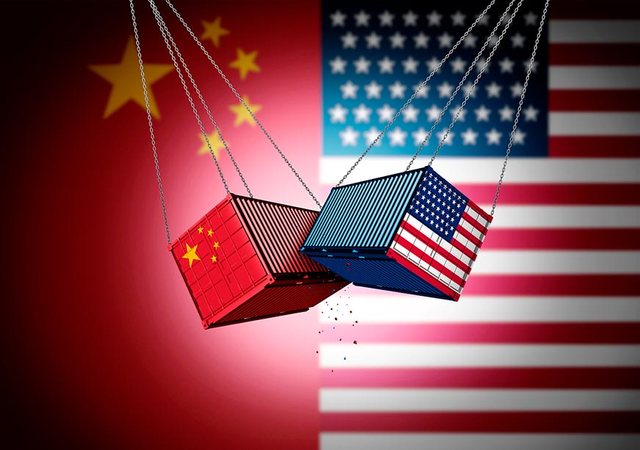
In his work “Destined for War” (2017), Allison highlights the concept of Thucydides Trap, based on a historical concept of events where the strengthening of one side threatens the hegemonic establishment of the other side for a possible replacement, increasing the probability of a war. If we were to refer to antiquity, the removal of a parallel between Athens and Sparta is the most classic example. China's furious growth in economy, technology and military could become a constant threat to the US. Therefore, it increasingly seems that China and the United States are heading towards a war but that the truth is that neither of them wants it. According to Harvard professor Graham Allison, the reason is the Thucydides Trap, a deadly pattern of structural stress that results when a rising power consistently tries to challenge the other, a much more powerful force.
Man, being an emotional being in his life activity and with a coldness lacking in the perception of the future, tends to feel more fear and uncertainty, the first causes that escalate and the tension created. Therefore, he always thinks that war is inevitable, threats and blackmails more than normal, extended, in what analysts call the axis of hegemonic transition.
But Ian Bremmer, in his book “The Power of Crisis”, sees the situation differently. He has a more flexible and optimistic approach, where from constant global crises - such as pandemics, climate change and technological disruptions - more cooperation can arise than rivalry and competition. According to him, the lack of global leadership such as “G-Zero World” has significantly increased instability. But at the same time, it has paved the way for a new form of multilateralism (an alliance between many countries with a common goal), with coalitions not planned in advance, causing isolationist and nationalist strategies to remain marginal or in the shadows. In the US-China context, both countries play the main role in preventing or not a collapse but without removing the possibility of practical cooperation, especially on existential topics as we noted above, pandemics or climate change.
By carefully observing the analytical thinking of the two authors, their perspectives are complementary and different at the same time. G. Allison reminds us of the importance that history carries as a science by pointing out that this dizzying development of China is unprecedented in time and space, naturally linked to the race for the transition of global power. On the other hand, I. Bremmer, who sees the threats as an opportunity to create a new world order, through a common language and not domination. If G. Allison sees the solution through the lens of human nature, based on repeated historical facts, I. Bremmer tries to hope for a more optimistic scenario. A scenario where man will have to give up the desire for absolute domination and power, where the ratio of forces does not exist and balance is found in the preservation of the common evil. However, the duality in the approach regarding this situation is important to understand. In a world where the exchange of power, the formation of a new order, and global threats exist and are current, scenarios for the future are numerous, perhaps initially based only on these two theses.