How Belinda Balluku is fabricating the rumor about Top Channel's...
/ 2026-10-19 16:19:54Focus


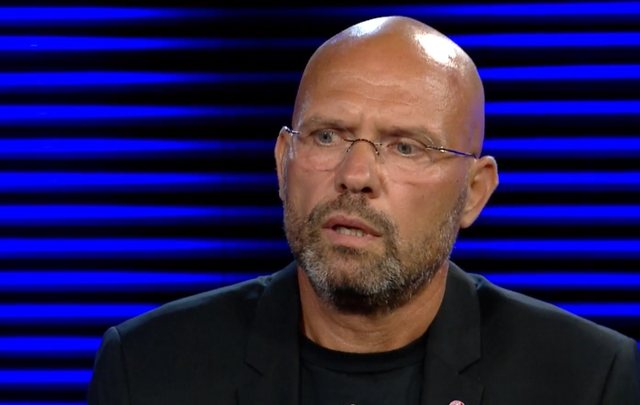
By Ylli Manjani
Always within the framework of the new Penal Code, I think that the idea of punishing corruption should be thoroughly discussed.
Today we have adapted the idea of corruption as a bilateral relationship.
One party, (the asset) gives money, while the other party in the illegal relationship (the passive) gives the favor in exchange for money.
Seen from this point of view, the state employee or politician with power being called "passive" looks like a victim and not a person who breaks the rules, disrupts the competition and damages the budget and public interest. The criminal law almost does not say "deserted passive crime"!!!
That "asset", which is basically the need for work and service, he is the base, the criminal...!!!
But legally, today they are both the same, let's say.
The question is: is this the right law?!
I say NO.
For me, corruption has only one person responsible: the public official who violates the rule and harms the public in exchange for personal gain.
This is where the reasoning on the criminal offense of corruption begins and ends.
If we want to effectively fight this phenomenon, this is the understanding that focuses the solution on the problem. Apportioning blame and responsibility does not combat it, but spreads it artificially. It takes punishment where it should not be until it makes it impunable.
Look carefully, he/she who gives money does it for two reasons:
Either he/she will give a tip as a sign of respect, or he/she will pay a price as a condition to get work.
Both cases are legitimate. In no case does the giver of money have the intention of harming the public, but of personal service.
Gift exchange is human. In the country where we grew up and live, this thing has always happened and will happen, because it is part of the public culture. Gift, up to a certain level is accepted, but must be declared. The whole west does this.
The gift exchange relationship does not have to be criminalized. It is resolved administratively. Non-declaration is criminalized, but not acceptance of the gift.
While the "Active", i.e. the one who pays the price as a condition to get the job, is a "victim" and by no means a criminal!
The one who harms the public is the official, who uses the office to make money.
The official who imposes a condition to get a job or service is the essence of corruption. Therefore, this is the subject of criminal responsibility
***
Ah, one more thing, the active and the passive are different in today's concept of electoral corruption. In this case, the active is the politician, the passive is the people...
I think that here we are not before the relationship of corruption, but before the buying of votes.
So this concept should also be changed in the new Penal Code.
There is no electoral corruption, but there is vote buying.
I think so.