Is this police force professional and capable of handling violen...
/ 2026-10-16 18:54:07Focus


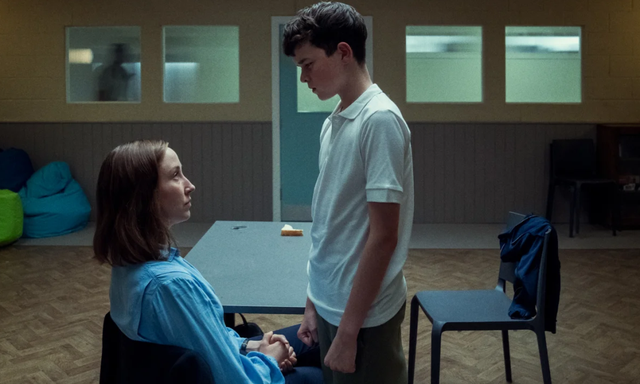
Over the weekend I watched the Netflix miniseries 'Adolescence'. It is a premiere that began airing in mid-March and has already aroused great interest. In less than two weeks, it has managed to top Netflix's viewership lists in 71 countries around the world. At the same time, it has attracted the attention of critics, but is also provoking wide public discussions. Opinions about it are being published in many prestigious media such as 'The Economist', 'The Guardian', BBC, CNN, New Yorker, etc. In Britain, Prime Minister Starmer himself praised it during a speech in parliament and said that they were watching it together as a family.
The subject of 'Adolescence' presupposes a thriller with shocking intrigue and secrets that arouse curiosity and impatience to be discovered. But the authors have not preferred this approach, although they take their cue from a murder, even an almost unimaginable murder: a 13-year-old, who still keeps a teddy bear in his bedroom, stabs a classmate to death. And this horrific act, of which the viewer sees only a vague sequence taken by a business camera, is done because the classmate, on the Internet and on everyone's face, has described him as the type of man who does not attract women.
Indeed, the four miniseries shot with a continuous camera do not resemble a classic thriller with intrigue and unexpected plot twists, but rather tear you apart to experience them as a drama or stage play aimed at revealing characters. Emblematic of this is the third series, which ultimately focuses on a conversation between Jamie, the child who committed the crime, and the psychologist, and despite this focus on the same environment, it keeps the viewer's attention in suspense because with a human approach it reveals Jamie's psychology as a pleasant and friendly child, but at the same time aggressive and unrestrained. When you watch it, you tend to think that the aggressiveness of the teenager, and perhaps even of men in general, does not stem from strength, but from weakness and inner insecurity.
Told as a natural narrative, the film's narrative encourages the viewer to delve deeper into a phenomenon that is becoming more and more disturbing every day: social networks are strongly influencing the formation of children and adolescents, and the worst thing is that parents and society often do not even understand what is happening. The parents of the teenager who stabbed his classmate, until the day of the crime, believe that they are raising a normal and compassionate child. Meanwhile, the investigating police officer has not noticed the severe bullying that his son suffers at school and, although very skilled in investigating crimes, manages to orient himself in the codes of online communication of adolescents, only when his son helps him.
The miniseries in this film do not aim so much to provide answers to the phenomenon depicted, as to raise questions about the impact that social networks have on children's lives through the popularization of toxic attitudes that portray women and girls as objects, as enemies, and as victims of male violence.
In this way, the authors have succeeded in putting into practice Proust's advice when he said that, in a true work of art, the reader begins to generate questions where the author draws conclusions. This is perhaps one of the reasons why the film has aroused so much interest and discussion that is not so much related to artistic achievements as to directorial conception, acting, narration techniques, etc. but to a sharp social phenomenon: today's teenager, even locked in his bedroom, is as threatened as if he were walking through a tropical forest alone.
Following some of the discussions on the social aspect of the miniseries 'Adolescence', one's mind goes to the shallowness, monotony and poverty that dominates our public and media discussions whenever we are faced with such crimes. Based on these discussions, it is difficult to say how affected today's Albanian teenagers are by the Andrew Tate-style concepts that fill the manosphere and feverishly promote machismo, misogyny, opposition and hostility on gender grounds. It is even more difficult to say how much the internet affects teenagers and how much our current reality, quite intoxicated by the machismo and misogyny of adults, but also by the hate speech and extreme conflict that politics conveys.
It is said that a few months ago there was a wide discussion about TikTok, but it is difficult to perceive what mark this discussion left on our mindset, and it is even difficult to find it documented in the media in the form of debates, surveys, and analyses.
Most of the media discussions about TikTok took place on second-rate shows, with low viewership and even lower professionalism. Not to mention that once again politics served to stifle the debate, simplifying it into a political war between the two main parties, one for the closure and the other against.
It is not the first time that the mixing of political 'dinosuars' in issues of acute social interest has resulted in the fading of the social aspect and the overemphasis of the political aspect, simplistically conceived as a struggle for power.
The inappropriate mixing of politics with social causes, which require active participation of civil society, is most often driven by the fact that political parties lack the sharp causes that arouse interest and enliven social action. Thus, without causes, they attack every concern and sharp social discussion to appropriate it and turn it into their political mill, which almost all the time grinds the message that stinks of the mold of propaganda: vote for us and everything will be solved.