Berisha: Altin "Troplini" Dumani amnestied electoral crimes, SKA...
/ 2026-10-19 11:44:20Focus


Fabio Turco – Linkiesta
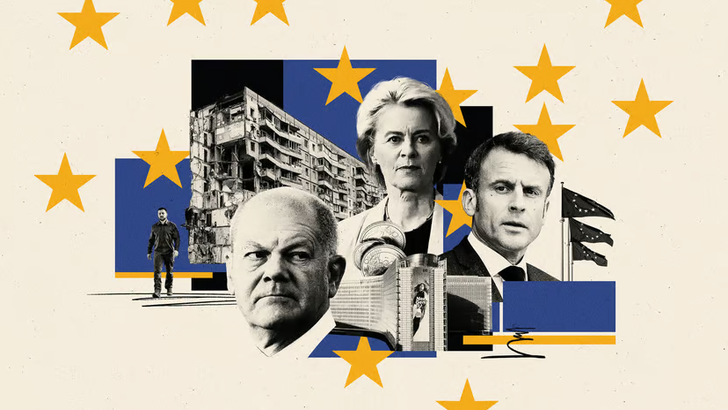
In recent weeks, the war has suddenly returned to the center of attention in Europe. The difficulties that the counterattack of the Ukrainian army is facing, have allowed the Russian army to regain some positions in the east of the country, as they have resumed the massive bombing of large cities.
Vladimir Putin is appearing more confident, while Brussels' aid to Kiev is still blocked by Viktor Orban. Meanwhile, US aid has remained a hostage in Congress, accompanied by the worrying prospect of a Donald Trump victory in the November elections, and a complete distancing of it from supporting Ukraine.
And in this depressing scenario, Europe seems to be unaware of the great danger that is knocking at its doors. A few days ago, some confidential reports of the German and Estonian armed forces made headlines. They emphasize that a direct clash with Russia is more likely and closer than we can imagine.
Such information causes astonishment or surprise, because the European public opinion does not have the perception of the danger that threatens it, and is not prepared for what may happen. Fabian Hoffmann, a researcher for the Nuclear Project at the University of Oslo in Norway, reminded us of this a few days ago: "Since 2014, Russian intellectuals have widely and publicly discussed how to win a war against NATO. Where are we with our discussions on this scenario?".
For too long we have been told that this debate applies to most of Europe, but not to all. For example, it does not apply to those countries that are on the front line behind the front, and that for historical and geographical reasons have always had close relations with Russia.
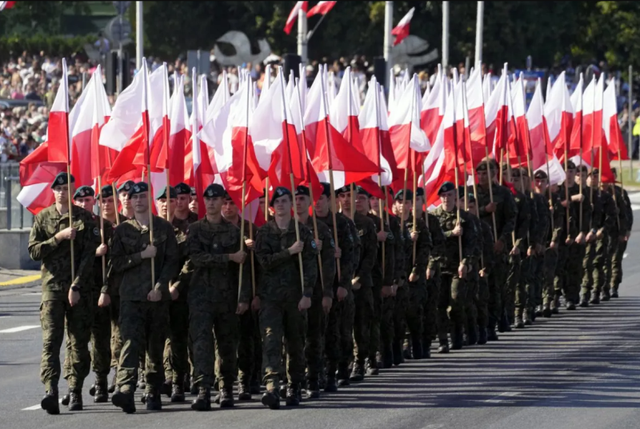
So the alarm applies above all to Poland. In recent days, the Polish Ministry of Defense has published new instructions in the event of a general military mobilization or the outbreak of a war. The established rules are very restrictive. Those mobilized will have only 6 hours to report to the command.
Anyone who fails to do so will be sentenced to not less than 3 years in prison. Even more severe punishments are provided for those who avoid mobilization altogether. No less than 5 years in prison is foreseen for them. The fact that these measures were approved less than a month after the new government was sworn in proves that the issue of military preparedness in the event of a Russian attack is a top priority.
Nothing should be left to chance. On the other hand, the fact that Poland has been preparing for some time for a possible clash with Moscow is not something new. It is no mystery that one of Warsaw's objectives is to have the largest land army in Europe.
A total of 300,000 troops, of which 250,000 professionals and 50,000 volunteers, will be added to the contingent of 11,600 soldiers who are already part of NATO units.
The new budget – currently being discussed and expected to be approved – aims to increase spending on the military to 4 percent of GDP, as promised by the previous government. Among other things, a 20 percent increase in the salary of soldiers and professional officers is expected.
A large part of the funds are intended for rearmament, which is known to be a very large program. Over the past 18 months, Poland has signed major deals with the United States and South Korea for the purchase of 1,400 new tanks, 48 new FA-50 and 32 F-35 fighter jets, air defense systems, artillery heavy caliber and rocket launchers.
At the moment, the issue of national security seems to be the only point of continuity between the old government and the new one. Even the country's president, Andrzej Duda, has often referred to the importance of this concept. During his New Year's speech, Donald Tusk said, among other things, that it is unacceptable to talk about war fatigue in Ukraine.
A message addressed to many allies, and especially to all Western countries that are starting to turn their backs on Kiev, but also to local public opinion. In fact, the war for Poland is always imminent, although at first sight it cannot be understood. But it can be seen and felt in the faces and stories of millions of Ukrainians who were forced to seek refuge in the neighboring country to escape Moscow's bombs and soldiers.
Over time, these war refugees have become neighbors, colleagues and friends. And yet, the war is at the same time something that we tend to forget, especially in cities where life moves fast, and where prosperity sometimes dims and blurs the memory of the fear and excitement of the first months after the occupation, when the Poles welcomed thousands of Ukrainians in their homes, when they were standing in line at the passport office and exchanging money, and when the sound of a siren shook them all.
Much of that feeling has disappeared, to be replaced by a new normal where Cyrillic letters have become commonplace, where 1 in 5 people you meet on the street speak another language. Although support for the Ukrainian cause is still very high among the population, signs of intolerance are beginning to appear among some minority groups.
These are driven above all by the extreme right, Confederation, and to a lesser extent during the latter part of the governing mandate of the Law and Justice party. This happened due to the protest of farmers, who demanded a ban on grain imports from Ukraine, as they had invaded the local market.
It also happened with the truck drivers, who ask their Ukrainian colleagues to put an end to the liberalization of licenses. Both of these interest groups have in recent months caused a prolonged blockade at border crossings, straining relations between Warsaw and Kyiv. For this reason, they have become a priority of the new government of Donald Tusk. A mission that has been partially successful. The truck drivers have announced the suspension of the protest until March 1, while they wait for the Ministry of Infrastructure to present concrete proposals regarding their demands.
In a similar move, the farmers have declared that they will not protest until March 15.
However, Poland is a country where war has de facto penetrated more than once. This happened on the morning of December 29, 2023, when a missile entered Polish airspace from the Ukrainian border, flew for several minutes over Lublin, before returning to the direction from which it had come.
Many drew a parallel with the tragedy that happened in Przewodów, when on November 15, 2022, a rocket fell on the land of an agricultural company in a village near the border, killing 2 people. To date, these are the only victims of the conflict outside of countries directly involved in the conflict.
In that case, it was discovered that the explosion was caused by a Ukrainian anti-aircraft missile that went out of control. An accidental event, but which for a few hours seemed to put the world on the brink of World War III.
Meanwhile, the case of the rocket that landed in a forest 20 kilometers from Bydgoszcz, a city of 320,000 in northern Poland, caused much less reaction. The incident happened just a month later, but only became public in the spring of last year when debris from the rocket was accidentally found by a man out riding a horse.
There is no doubt that the authorities were aware of what had happened, but had failed to find the remains of the missile and covered up the incident. The distance from the Ukrainian borders makes you think that it could hardly have been an accident.
And this probably explains the reluctance of the then Polish government to make it public. What would have happened if a month after the 2 killed in Przewodó, it had been proven that the Russians had launched a rocket into the heart of Poland?
What happened at the end of last year fits the framework of events. After the national security cabinet meeting, it was revealed that the missile had been launched by the Russians. An accusation denied by Moscow, but confirmed by allied countries that had identified the trajectory of the flying object.
It is likely that the missile was a test by the Kremlin of the reaction capacity of the new Polish government. On the other hand, this kind of confrontation is nothing new. In August last year, 2 helicopters of the Belarusian army flew for several minutes over the Polish village of Białoëieża.
Those were the weeks in which several hundred Wagner militants settled in Belarus after Yevgeny Prighojin's failed coup. The climate was very tense. For its part, the Polish Ministry of Defense had re-positioned more than 10,000 soldiers at the border.
But even at that time, even the action of the Minsk regime seemed to be more of a provocation and pulse measurement. The variable that changes the specific gravity of this type of incident is what is happening now in Ukraine and the overall context.
If last summer the situation could still be considered stable enough, now it is no longer the case, so it is necessary to ask ourselves what might happen if things go really bad. On the other hand, Ukrainian President Volodymyr Zelensky has repeated it several times, even at the Davos Forum: "Putin will not be satisfied with Ukraine alone!".