How Belinda Balluku is fabricating the rumor about Top Channel's...
/ 2026-10-19 16:19:00Focus


Almost two decades have passed since the Passover massacre on March 27, 2002 in Israel. The suicide attack was carried out by the Hamas terrorist group at the Park Hotel in the city of Netanya. Thirty civilians were killed and over 140 others were injured. It was considered one of the deadliest attacks against Israelis during the Second Intifada. Most of those killed were Holocaust survivors.
Two years after the worst global health crisis in a century, the world is still trying to recover, but in the meantime the wars continue. The three conflicts burning in three parts of the globe are fires that produce victims every day.
Ukraine. Kosovo. And finally the war in Israel and Gaza.
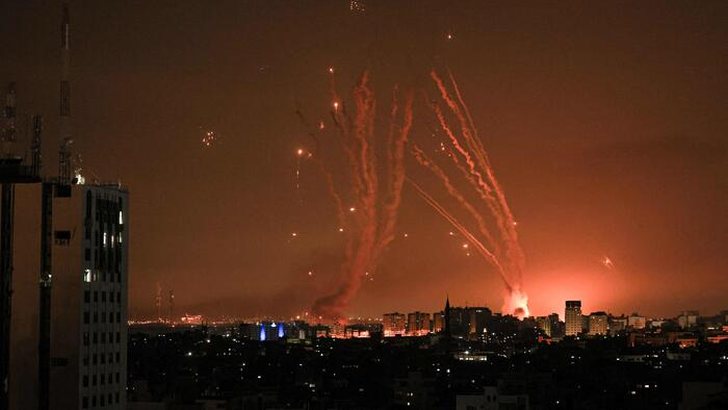
How did the most recent conflict begin, the one between Israel and the Palestinians in Gaza on the morning of October 7, two weeks ago?
..
Gaza is a country with over 2 million inhabitants. Palestinians. Terribly poor. Isolated and without sovereignty. They have no citizenship. In another part of its occupied territories such as the West Bank, with residents of the same nationality, more than 3.5 million Palestinians live.
The West Bank is a territory that has not fared so well under the Palestinian Authority. A self-governing body that has recognized Israel's right to control the country.
Gaza even worse. With few natural resources and under the leadership of Hamas, which does not recognize Israel's right to control this territory, this area of land with its inhabitants is heading towards an unstoppable social and economic crisis.
As is understood, these are two territories with residents of the same nationality who have not been living well for a long time.
But the problem that has been raised for years is that in order to lead this work towards a normal stability between the two countries, Israel and Palestine, it lies in the fact that do the Palestinians have the ability to self-govern? Do they know how to control their economic dynamics? Foreign policy? Borders or everything else?
But these are questions that do not stand now. Apparently, the great powers did not show confidence.
And today we are facing a war.
The story of solving the issue with the creation of two states lost all collective interest. Now it looks like a failed solution.
For two reasons.
First, because the Middle East as a region has moved forward. A number of countries have realized that they can develop their own direct relations with each other. Some formal and some informal as well with Israel.
Although in the middle lies the issue of Palestine.
We saw this with the Abraham Accords where the United Arab Emirates, Bahrain and Morocco all together established diplomatic relations directly with Israel.
If you go to Dubai or Abu Dhabi today you will see Israeli tourists that you would never have imagined. They are enjoying the Arabian sun like never before.
It was unimaginable for this to happen 10-20 years ago. In fact, Saudi Arabia was very close to signing an agreement with Israel that would allow the two sides to establish diplomatic relations. On the other hand, Israel itself had strengthened its geopolitical positions in the world, a position it had not had in decades. He was indeed surrounded by "enemies", but "enemies" who shook their hands whenever it came to money. So is Israel. So is global competition.
The arrangements were not completed. Another one for solar power was signed a few weeks ago with Jordan, where Israel will have its own benefits. 5 years ago this thing could not even be pronounced. From this Israel a high technological power would continue to do business with these countries making money as well.
But what was happening to Palestine?
Nothing. Just nothing. Will this territory benefit you? Its inhabitants? No benefits. No coin for that country.
And why did we see Israel in the headlines of the day? We were used to seeing him always involved in some terrorist attack with someone from Hamas. But nothing actually related to this conflict.
Until two weeks ago, Israel was experiencing deep political instability. With frequent elections, with a government suffering pressure from the ultra-orthodox right wing, with an unfinished justice reform, Israel was only producing news that resembled Albania.
Several dozen protests these six months. Quiet but who managed to raise the good people to their feet.
And in this context, no one cared about Palestine. On Hamas and its danger.
With Israel eyeing its own crisis, the Palestinians thought they would not only lose their friends in the region but also an intriguing plan of their own, perhaps for the Israeli government and Israelis in particular.
Due to this protracted crisis between the two countries and the other crisis in particular, today we live another war in the globe.
Clarifying the challenge that we must face together.