Is this police force professional and capable of handling violen...
/ 2026-10-16 18:54:07Focus


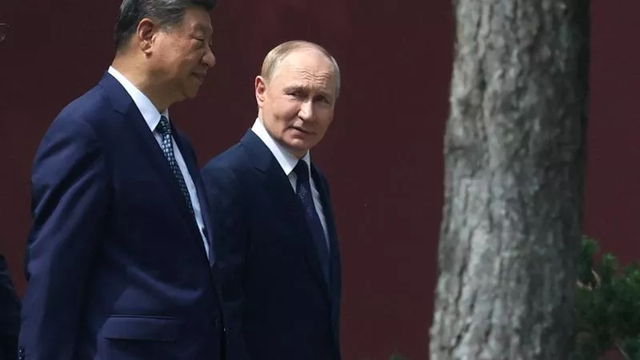
In fact, the friendship between China and Russia has its limits! This was confirmed by an exclusive report by the Reuters agency, according to which state-owned oil companies in China have suspended purchases of Russian oil transported by sea.
This decision comes after the sanctions that the United States imposed on two Moscow-based oil giants, Rosneft and Lukoil, as well as after the European Union's measures against Chinese companies and refineries for purchasing and processing oil of Russian origin.
Reuters reports that Chinese state-owned companies PetroChina, Sinopec, CNOOC and Zhenhua Oil will avoid trading Russian oil by sea due to concerns about sanctions. This situation will remain in place for at least a short period of time, until other ways to deal with these restrictions are found. At the same time, India announced, in agreement with the United States, a significant reduction in Russian oil imports.
However, there are important differences between the two countries. First, China has not made and is unlikely to make political commitments to Washington on this matter. While India’s ban is part of a trade negotiation that appears to be drawing to a close with the White House, China’s decision is largely an operational measure without any official announcements. Second, the impact on the Russian economy is different. India is the largest maritime buyer of Russian oil, and New Delhi’s import ban is expected to significantly affect Moscow, risking tensions in relations between the two countries.
China imports about 1.4 million barrels of Russian oil per day by sea, but most of it is purchased by independent refiners, including small operators known as “teapots.” The impact of the purchase ban affects only a small fraction of this volume. According to analysis by Vortexa Analytics, Chinese state-owned companies bought less than 250,000 barrels per day in the first nine months of 2025, while consultants Energy Aspects estimate this figure to be almost twice as high.
However, this amount is much smaller compared to the oil imported through pipelines. China also imports about 900,000 barrels per day through pipelines, all destined for PetroChina. These imports are not expected to be affected by the ban, while for those by sea, Beijing is expected to try to increase trade through intermediaries.
Some of the 250,000-500,000 barrels per day of imports will be replaced with supplies from other countries, mainly the Middle East, Africa and Latin America, according to traders quoted by Reuters. This is expected to boost prices for oil that is not subject to sanctions.
The news is particularly important because it confirms that Chinese support for Russia has limits, especially in the face of sanctions. This is not the first time this has happened. In the spring-summer of 2024, Chinese state-owned banks suspended many financial transactions with Russia due to fears of Western sanctions, blocking transactions worth billions of yuan, corresponding to hundreds of millions of US dollars.
The impact on trade was clearly felt. In recent years, due to the war in Ukraine, trade between China and Russia increased sharply and reached record levels. But from the second quarter of 2024, growth slowed significantly, even declining at times. Recently, due to concerns about reaching a kind of ceiling in trade exchanges, Moscow has quietly imposed additional taxes on some Chinese imports, starting with cars.
The suspension (at least temporarily) of oil purchases by sea becomes a symbol of the difficulty in maintaining the balance between economic interests and geopolitical constraints in an increasingly fragmented world.