Is this police force professional and capable of handling violen...
/ 2026-10-16 18:54:07Focus


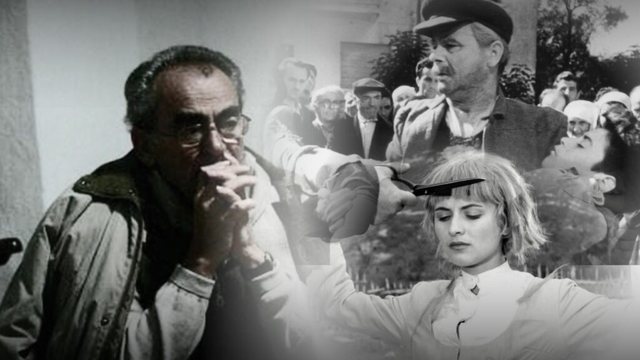
There is something deeply natural in the passing of Dhimitër Anagnosti. He departed with the calm of a sun that slowly descends towards the horizon, leaving behind light. Like the sun, even remarkable people do not disappear permanently — they are born and reborn in the work they have created, in the legacy that will be seen, re-seen, and will speak and unite the great Master of the screen with the spectator of today and tomorrow.
The sense of nature is not only evident in the Master's departure, it lives on in his entire life and the creativity he left us. He studied to be a cinematographer, but quite naturally he became a director — not simply because the time called for films, but because he himself was a born storyteller, a man of rare gifts and with a sensitivity that transcended his craft.
He knew the camera, he knew the image, he knew the cinematic language like few others. But technical mastery, no matter how subtle, can make you a valuable craftsman, not necessarily an artist.
His path to directorship was naturally facilitated by his special sense of words and literature. For some of his films, he was both director and screenwriter. He tried his hand at novels and short stories, not without attracting the attention of the reader. His good knowledge of the specifics of cinema, as well as literary mastery, allowed him to take well-known texts and turn them into film language.
He did it with Kadare's 'The General of the Dead Army', he did it with particular success with Çajup's '14 Years Old Groom' and left us a work like Tale from the Past, which transcends the comedy in question and invites us to a deeper reflection on Albanian society.
He was a rare storyteller. He demonstrated this not only in the flow of the film, but also in the way he built conflicts and increased tension, how he gave life to the characters, how he let the camera be silent when necessary, and speak when words were not enough. In the wedding scenes, for example, so repeated in his films but also equally fresh and original, you don't just see folklore — you experience character clashes, psychological disintegration, society in motion.
He knew like few others that external beauty is not enough if it does not serve to reveal the depths and essence. This is likely one of the main sources of his success: without detaching himself from the surface and image, he delved deeply into Albanian history, culture, and identity.
In 'Gjoleka, biri i Abazi', 'Përralë nga e paštala', 'Malet me blerim veçë' and other creations, he proves that he knew Albania not as a decor, but as a substance. He brought it not as a postcard, but as tension, as a breath, as a land that speaks. The mountains, villages, and stone roads, brought with an impressive camera in some of his films convey a sense of authenticity and isolation, which highlights the human drama in Albanian clothing but with universal substance.
For a short time, chance brought me to work with him at the Ministry of Culture. A short time, but ample enough to see and understand that behind the artist I had known from films, as the foundation of foundations stood an open-minded man, a tireless and persistent worker, a citizen of pure principles. This harmony between man and artist is perhaps the most prominent testimony of a distinguished, but also rare, personality.