Is this police force professional and capable of handling violen...
/ 2026-10-16 18:54:07Focus


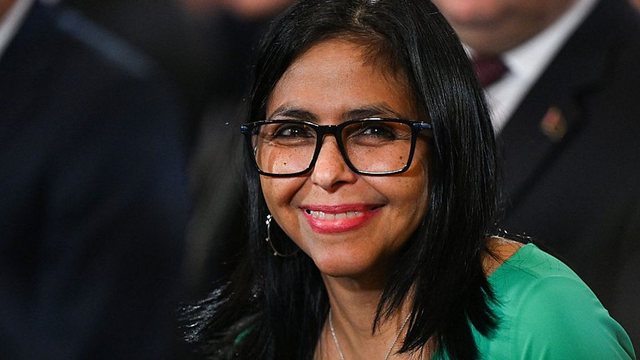
Among the many questions that have erupted after last weekend's dramatic events in Caracas (and there are many), one concerns the bespectacled woman who now leads what US officials call Venezuela's "interim authorities."
Why Delcy Rodríguez?
What is it about Delcy Rodríguez, the daughter of a former Marxist guerrilla and deputy to ousted dictator Nicolás Maduro, that has caught the attention of the Trump administration? And why has Washington decided to keep a self-proclaimed “Chavista” revolutionary in power (a term that refers to supporters or followers of the ideology and policies of Hugo Chávez, the former president of Venezuela), instead of supporting opposition leader María Corina Machado, whose movement is widely believed to have won the 2024 presidential election?
According to former US ambassador to Venezuela, Charles Shapiro, the answer is simple:
"They have chosen stability over democracy. They have maintained the dictatorial regime without the dictator. His people are still there. I think it is extremely dangerous."
The alternative, complete regime change and support for Machado, would bring other risks, including divisions among opposition figures and the departure of the roughly 30% of Venezuelans who voted for Maduro.
At a press conference on Saturday, President Trump surprised many observers by calling Machado “disrespectful” inside Venezuela, while describing Rodríguez as “noble.” Former U.S. diplomats criticized the decision, saying it effectively disowned the entire opposition movement.
The speed and ease with which Maduro was overthrown and Rodríguez installed in power raised suspicions that it may have been part of the plan. But analysts such as Phil Gunson of the International Crisis Group point out that real power remains with Defense Minister Vladimir Padrino López and Interior Minister Diosdado Cabello, both Maduro loyalists.
The decision to support Rodríguez came after warnings that Machado could bring dangerous instability. ICG reports and a classified US intelligence assessment warned of the possibility of violence and guerrilla fighting by elements of the security forces.
The Trump administration sees Rodríguez as a figure with whom it can negotiate: she has shown a penchant for economic reform, openness to foreign capital, and cooperation on issues such as oil and the war on drugs. However, a genuine democratic transition does not appear to be an immediate priority for Washington.
Secretary of State Marco Rubio presented a three-phase plan: stabilization of the country and management of the oil under American supervision, a reconciliation process with amnesty and the release of political prisoners, and finally a transition. But Trump said that elections are not on the horizon: “We have to fix the country first. There can be no elections.”
Analysts warn that without the rule of law and legitimacy, major foreign investment will not come. Former ambassador Shapiro compared Rodríguez’s rise to the “dedazo” Hugo Chávez did when he named Maduro as his successor: “This is Trump’s dedazo,” he said. (Note: dedazo is a Spanish word used when a leader chooses his successor without following the normal democratic process.)