"We are drowning..." - From Lisbon, Milan to Tirana, "The Guardi...
/ 2026-10-18 23:13:32Focus



A few months ago, when the draft law "On Lobbying" was still in the discussion phase, the Council of Europe proudly announced its support for this initiative, describing it as "an important step towards transparency, accountability and strengthening public trust in institutions."
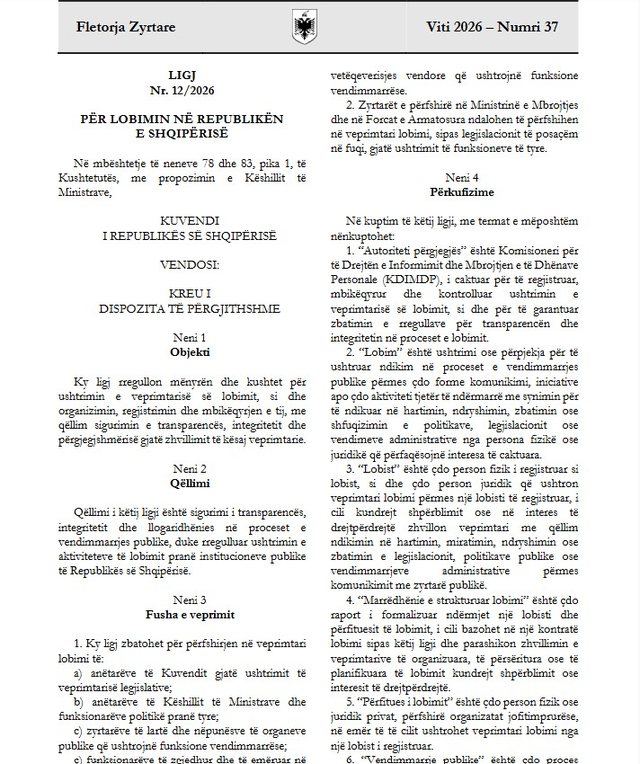
Today, this is no longer an idea on paper. The draft law that was voted by the Assembly, and was promulgated by the President, after receiving the official name “Law No. 12/2026 “On Lobbying in the Republic of Albania””, is published in the Official Gazette with number 37.
Along with it, the establishment of a “Digital Lobbying Registry” is also envisaged, part of a project co-financed with Switzerland — an instrument that, in theory, should shed more light on the relationship between politics and private interests.
Albania, which still does not have a functioning registry for regulated professions such as lawyers, veterinarians or notaries, will now have a registry for those who in practice are often called “influence brokers”: lobbyists. In the European Union, regulation of this field itself has been difficult and late — the European Parliament introduced the registry of lobbyists only in 2011.
However, Albania, still outside the EU, has decided to adopt standards similar to those of the union. Lobbying is one of them.
Eager to align with Western standards, the Albanian government produces modern laws, foreign experts contribute to their technical drafting, but the essential question remains today even more relevant than yesterday: Is Albania ready for this law? Not on paper, but in practice — now that it is becoming part of the country's legal order.
The former draft law is now an approved law and is presented as a means to bring order where informality has prevailed until now. From Article 3, it clearly defines to whom it applies:
"This law applies to the involvement in lobbying activities of:
a) members of the Assembly during the exercise of legislative activity;
b) members of the Council of Ministers and political functionaries close to them;
c) senior officials and employees of public bodies who exercise decision-making functions;
ç) elected and appointed officials at the local level, as well as employees of local self-government units who exercise decision-making functions.”
So, the law covers MPs, ministers, heads of administration, municipalities. All those who can be influenced by businesses, oligarchs, or investors.
The problem is not what is written in the article, but how it will be implemented in reality. It is known that the “deals” and contacts between our state officials and private business interests do not go through official email, protocol or minutes. They go through cafes, lunches by the sea, conversations “between friends”, phone calls that are not traced, or through messages that are given in “secure” forms of communication. In this culture and reality, it is almost impossible to think that “now we will establish order, everything will enter the Lobbying Register”.
Even the definitions are very broad. The law states that:
“Lobbying” is the exercise or attempt to exert influence on public decision-making processes through any form of communication, initiative or any other activity undertaken with the aim of influencing the drafting, amendment, implementation or repeal of policies, legislation or administrative decisions by natural or legal persons representing certain interests.
A "lobbyist" is anyone who, for compensation or in their own interest, attempts to influence laws, policies, or administrative decisions by communicating with officials.
"Beneficiary of lobbying" is any natural or legal person on whose behalf lobbying is exercised.
In a country with strong institutions, these are normal definitions. In Albania, with its clientelistic culture of decision-making, these sentences open a very dangerous path: everything that is called “pressure”, “undue influence”, “bargaining” today, can tomorrow be rewritten as “registered lobbying”.
Corruption can be called lobbying, or "lobbying" itself can seek to cover up corruption.
It is enough to return to some cases that have already been made public. Conversations emerging from investigative files, where businessmen, builders, informal “lobbyists” discuss building permits, regulatory plans, favors, appointments. Today, these are treated as facts that lead to investigations for corruption or abuse of office. With an Albanian law on lobbying, many of these contacts could be justified: “we were negotiating a lobbying contract”, “we were preparing documents for registration”, “it is not corruption, because it was part of the legitimate lobbying process”.
This becomes even more suspicious when you see Article 13 of the Law “On Lobbying in the Republic of Albania”. The lobbying contract becomes the perfect alibi if you read this article: A lobbyist cannot exercise activity without a written contract. However, the contract can be submitted to the Commissioner within 30 days from the date of signing!
Practical findings. Lobbying may have begun, meetings may have been held, messages may have been exchanged, “political” pressure may have been exerted, and only then, when someone sees fit, is the contract formalized. In a country like Albania, an evasive forecast with “30-day” deadlines is an open invitation to abuse. Today, secret contacts may constitute evidence of corruption. Tomorrow, they may be presented as an alibi before SPAK, as a “preliminary phase of a lobbying relationship in the process of formalization.”
Imagjinohet një kompani ndërtimi që kërkon leje për një kullë të re në Tiranë. Sot, kur dëgjojmë për takime të mbyllura mes kryebashkiakut, drejtorëve të urbanistikës dhe biznesmenëve, mendja të shkon te korrupsioni, pazaret, favorizimet. Nesër, me ligjin “Për lobimin në Republikën e Shqipërisë”, e njëjta kompani mund të ketë një lobist të regjistruar:
Lobisti nënshkruan kontratë me kompaninë.
Dorëzon kontratën te Komisioneri brenda 30 ditëve.
Takohet me kryetarin e bashkisë, drejtorët, këshilltarët.
Dërgon “opinione teknike” pse kulla është “zhvillim strategjik”.
Shfaqet edhe në dëgjesa publike, ku flet për “punësim” dhe “rigjallërim të zonës”.
Formalisht, ky është lobim i ligjshëm. Në thelb, është e njëjta histori e vjetër: një interes privat që kërkon maksimumin nga një vendim publik. Diskutimi nuk do të bëhet më nëse kishim të bënim me “korrupsion” apo thjesht “ndërhyrje”, por nëse jemi para rastit të “lobimit me kontratë” apo “lobimit pa kontratë”.
Një terren i favorshëm për abuzim janë edhe ligjet e “qepura”. Deri tani, kur një ligj përputhet çuditshëm mirë me interesat e një oligarku apo një sektori shumë pranë tij, flitet për “ligj të porositur”. Nesër, e njëjta gjë mund të shitet ndryshe: si “kontribut i sektorit privat në hartimin e politikave”, “proces lobimi me përfshirje të biznesit”, “harmonizim i legjislacionit me nevojat e tregut”.
Një “lobist i regjistruar” mund të hartojë nenet, t’i dërgojë gati në ministri, të organizojë tryeza të mbyllura me “aktorët e interesuar”, e më pas të shfaqet në komisionet parlamentare si “ekspert i fushës”. Në teori, ky është lobim. Në praktikë, është po ajo gjë që Shqipëria ka njohur për shumë vite “demokraci”, si kapje të ligjvënies, të vetë shtetit, nga interesat e ngushta private që shumë shpesh, janë “kapur” të lundrojnë kundër interesit publik.
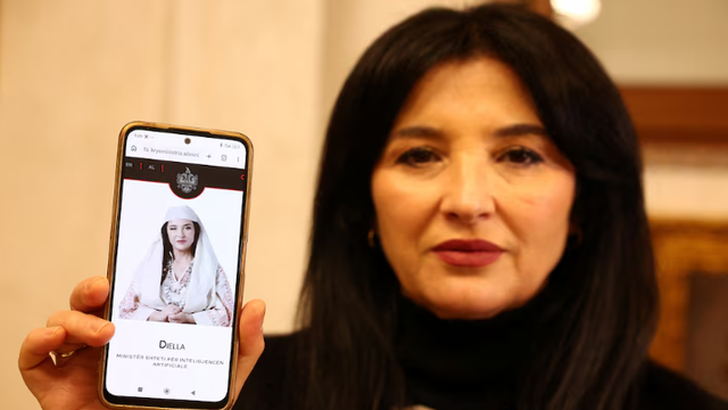
Kush është autoriteti që do mbikëqyrë këtë “qenie” të re, që do i përngjajë “Diellës” por do ketë gjak dhe mish?
Komisioneri për të Drejtën e Informimit dhe Mbrojtjen e të Dhënave Personale. Ligjërisht, ky është institucion i pavarur. Në realitet, pavarësisht emrit që e drejton apo do e drejtojë në të ardhmen, historia ka treguar që pavarësia e tij “varet” në litarin e qeverisë.
Këtij institucioni do t’i kërkohet që të regjistrojë lobistët; të kontrollojë kontratat; të publikojë listat; të mbikëqyrë ish-zyrtarët që nuk duhet të lobojnë për 2 apo pak më shumë vite dhe, në fund të marrë masa “administrative”- t’i gjobisë “të pabindurit”.
Në një vend ku, Komisioneri për të Drejtën e Informimit dhe Mbrojtjen e të Dhënave Personale nuk ruan dot “shapkat” e veta, është e vështirë të besosh se do të ketë fuqinë reale të kontrollojë marrëdhëniet më delikate mes politikës dhe biznesit.
A e ka sot Shqipëria kulturën, pjekurinë politike dhe forcën institucionale, për ta zbatuar këtë ligj, pa e kthyer “lobimin” në alibi të korrupsionit?
If the answer were "No, not yet!", then we are not dealing with a real instrument against corruption, but with a sophistication with its legal clothing. A clear risk that corruption, clientelism and state capture will no longer be hidden under the table, but will emerge on it, with a contract, with a NIPT, with a logo, with a "suit and collar" and dressed up with the modern term: "lobbying".
It will be a new challenge for the prosecution, especially for SPAK, because ordinary citizens will not know how to distinguish where legal "lobbying" ends and where the purchase of decision-making against their interests begins. Because this law seriously risks not being a tool for transparency, but the final step for the legalization of illegal influence over public decision-making.
Albania, unlike the EU and the US, where lobbying is part of a long and proven institutional culture, does not yet have the luxury of conducting such dangerous experiments... registering "corruption" with an address and name, in the registry.
/ Kontrast.al