Is this police force professional and capable of handling violen...
/ 2026-10-16 18:54:07Focus


The Catholic world is in mourning!
Pope Francis died at the age of 88. He was the first pope from South America and also the first Jesuit pope.
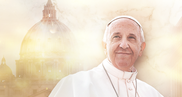
But who was Pope Francis?
Pope Francis was born in Buenos Aires on December 17, 1936, with the original name Jorge Mario Bergoglio.
Since 13 March 2013, he has been Pope of the Catholic Church and Bishop of Rome, the Eighth Sovereign of the Vatican City State, and the 266th pope in history.
He was the first pope from the South American continent, despite being of Italian origin, his parents from the Piedmont and Liguria regions.
He served as a cleric his entire life, as a Jesuit, and was also the first to reach the top of the hierarchy from this religious order.
Recently, his health deteriorated significantly as a result of pneumonia, a disease that marked his life since the age of 21, where as a result of pneumonia, he underwent surgery, where the upper part of his right lung was removed.
As he himself has confessed, at a very young age, his first job was as a cleaner in a factory, then as a security guard outside a bar in a problematic neighborhood in Cordoba, and he even had a fiancée, before embarking on his journey as a religious that began in 1958.
After many experiences, he was appointed to high episcopal positions in Argentina and also served as rector of the Faculty of Theology and Philosophy in San Miguel. He then pursued further studies in Germany to complete his doctorate, but failed to obtain the title.
After returning to his homeland, his ascension continued, until 1997 when he was appointed Archbishop of Buenos Aires and, a year later, of Argentina.
During the years of military dictatorship in Argentina, Bergoglio helped opponents of the regime.
Bergoglio was the first pope to choose the name Francis in 11 centuries. During a conversation with reporters, he explained the reasons for choosing this name, which none of his predecessors had had.
He explained that the papal name came to his mind the moment he was elected Pope, after Cardinal Claudio Hummes had immediately congratulated him and told him: "Don't forget the poor !"
He explained that that sentence stuck in his mind and, in relation to the poor, he immediately thought of Francesco D'Assisi, the man of the poor, of peace, the man who loved and protected creatures and creation. And he chose him because Francis is the emblem of the protection of the poor and the patron saint of Italy.
During his papacy, Francis undertook a series of reforms, including the Vatican Penal Code, where he brought punishments closer to those of international law.
He also reformed the economic system of the Holy See, toughened corruption laws and crimes against minors, severely condemning even the scandals that had previously engulfed the Catholic Church.
During his papacy, he visited 66 countries around the world, with 47 episcopal journeys, and his first trip to Europe as Pope was precisely to Albania on September 21, 2014.
This trip left an extraordinary impression on him, as he met and heard the stories of clergymen who had suffered during the communist dictatorship.
Pope Francis stood at the head of the Holy See, with strong ideas, often speaking out against the "Gender" ideology, which he labeled "dangerous, nullifies differences, and the ugliest danger of our era." He often used the concept of "people," not without significance.
With this expression, he addressed not only Catholic believers, but generalized and brought all communities closer together, starting from the nucleus, the family, which was sacred to him.
Above all, followed by its motto " A Church of the poor for the poor ", in respect for human dignity, human respect and the values of love, kindness and mercy.