Is this police force professional and capable of handling violen...
/ 2026-10-16 18:54:07Focus


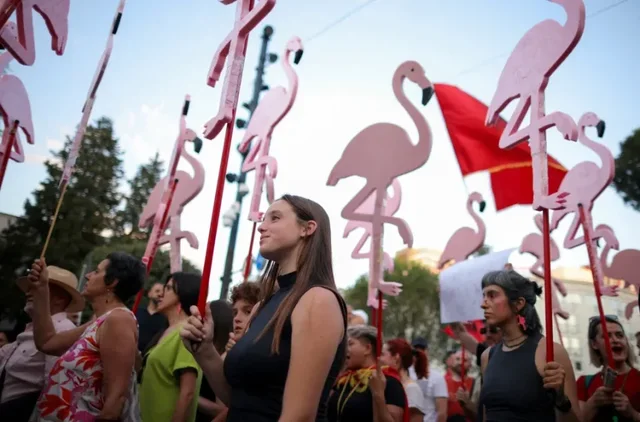
The German magazine Der Spiegel has dedicated a lengthy report to the protests that have been taking place in Albania for more than a month, arguing that they have gone beyond opposition to Jared Kushner's investment project in Zvërnec and have turned into a broader revolt against the country's way of governing.
According to the report, the initial anger was sparked by a project to build a luxury resort in the protected area of Zvërnec and the island of Sazan, where one of the investors is Jared Kushner, son-in-law of US President Donald Trump. The protests gained momentum after a video of an environmental activist being forcibly dragged away by a private security guard went viral on social media.
However, the magazine notes that on the streets of Tirana, protesters are not only targeting the project or foreign investors. Slogans are also directed against Prime Minister Edi Rama and opposition leader Sali Berisha, whom many protesters hold responsible for corruption, state capture and the lack of political alternatives.
The report also quotes the reaction of Prime Minister Rama, who has rejected the accusations against the government and has ironized the protesters, while also mentioning the use of the flamingo symbol by the Prime Minister on social networks, as a response to the civic movement.
Der Spiegel also pays attention to the protesters' perception that the economic development of recent years has favored a small political and economic elite. In interviews with protest participants, corruption is mentioned as the main reason for the mobilization, while Kushner's project is seen as the "spark" that brought to the surface accumulated dissatisfaction for years.
The magazine describes the protests as a movement without a single political direction, involving young people, pensioners, environmental activists, diaspora representatives and supporters of small parties, united by the demand for more transparency, the fight against corruption and change of the political system.
At the end of the analysis, Albanian analyst Lutfi Dervishi states that the energy of the protests is the greatest the country has experienced since 1991, adding that the first changes are already visible in the public debate, although it remains unclear whether this movement will produce long-term political consequences.