Is this police force professional and capable of handling violen...
/ 2026-10-16 18:54:07Focus


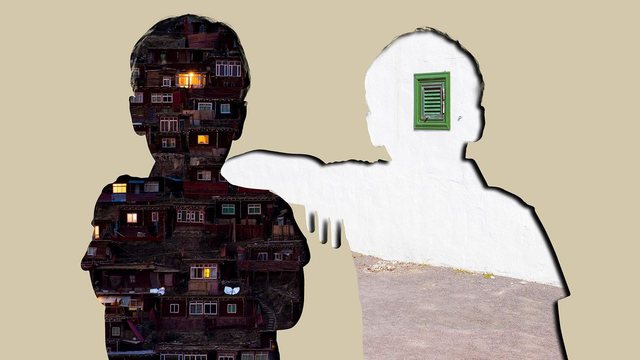
A growing body of research is helping to uncover the truth about whether we would be a different person if we had grown up in a different part of the world. Every human being's DNA is unique, and its basic structure generally doesn't change depending on where we go, but DNA alone doesn't make us who we are, says Ziada Ayorech, a psychiatric geneticist at the University of Oslo in Norway.
To study this puzzle, scientists typically use studies that compare identical twins, who share nearly identical DNA, with fraternal twins, who share, on average, half of their genome. This way, if identical twins are more or less likely to share a trait than fraternal twins, it suggests that that trait is driven more by genetics than by environment.
In a 2015 analysis of nearly 50 years of studies, which included about 17,000 different traits in 14 million twins worldwide, exploring everything from education and political beliefs to psychiatric conditions, scientists concluded that genetics accounts for, on average, only 50% of the variation.
It is worth noting that the environment shapes some traits more than others. Research shows that IQ is on average over 50% heritable and genetics play a more essential role later in life than in childhood, while personality traits are approximately 40% heritable and therefore more influenced by the environment.
Ayorech, who was born in Uganda, spent most of her life in the UK and then moved to Norway. “If you compare the version of me that lived here in Norway to the version of me that lived in the UK, it would be fair to say that I am less of an extrovert now,” says Ayorech.
She goes on to say that, given her genetic makeup, it's unlikely she'll ever completely lose her outgoing nature. She continues to subconsciously gravitate toward activities that encourage more spontaneous interactions. "We tend to seek out environments that are consistent with our genetic traits," Ayorech says.
According to Ching-Yu Huang, a cross-cultural psychologist at National Taiwan University, “culture is an absolutely essential part of who we become.” “The brain you have now would be very different if you were born and raised in Taiwan, even if you have the same DNA,” she says.
On the other hand, Vivian Vignoles, a cross-cultural psychologist at the University of Sussex, states that “whatever genes you have, you need a certain environment to bring them out.”
Although scientists had long assumed that human psychology was universal and that the results of studies about human behavior conducted in the US and Europe would hold true worldwide, this was not the case.
Experiments show that people in the West tend to be more individualistic compared to people in Japan, who tend to be more collectivist and are likely to define themselves in terms of their social roles.
In a study that compared brain scans of people, in Westerners, the part of the brain responsible for self-awareness lit up when they thought about themselves, while in Chinese participants this part lit up when they thought about their mothers.
In various tests, cross-cultural psychologist Huang and her colleagues examined whether the children of ethnic Chinese immigrants to England viewed authority differently than non-immigrant English children.
“All children were equally likely to obey their parents, but Taiwanese children were more likely to obey them even when initially reluctant, compared with Chinese immigrants raised in England.” Huang argues that this is likely due to Asian culture valuing obedience and respect for parents, while children whose families had emigrated to England were likely to have been influenced by the culture in the UK to become more individualistic.
A 2022 study, which compared personality trait tests across 22 countries, found that people living in a group of countries with cultures that place a strong emphasis on self-discipline, such as Albania, India, Germany, France, Hong Kong, and China, scored higher on measures of commitment and organization. Countries with more flexible and individualistic cultures, such as Canada, New Zealand, South Africa, Australia, the United Kingdom, Ireland, Norway, and the Philippines, showed higher levels of agreeableness and openness to experience.
On another note, Philip Goff, a philosopher at Durham University, believes that there is a kind of "fundamental unity" of cells and particles, and that consciousness is built in, that makes us who we are, regardless of where we grow up. But this is likely to change over time, as we grow and mature./ BBC