


How Belinda Balluku is fabricating the rumor about Top Channel's...
/ 2026-10-19 16:19:00Focus


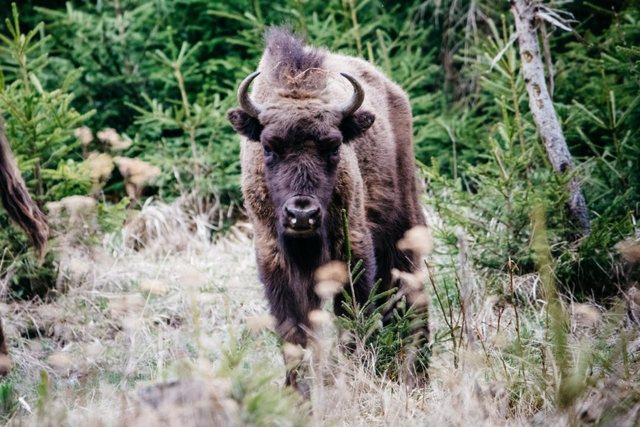
After becoming an endangered species in nature, efforts to restore the European bison to the forests of the Old Continent began in 1954. The last human intervention, in an attempt to "revive" the great beast, took place in 2012, in Romania.
Nowadays, photographer Alexander Turner embarked on a journey to the Carpathian Mountains, to find and immortalize in his camera the largest terrestrial mammal in Europe.
Together with members of the Carpathian Reserve Foundation (FCC), Turner went deep into the woods in search of more than 150 bison thought to live freely in Romania. They used antennas in an attempt to locate the bison to which the trackers were placed, although the difficult terrain makes it almost impossible to spot the animals. Over the years, researchers have been able to find about 37 bison, and some gold, in the dense forests.
Adrian Aldea, biologist and FCC manager, tells The Guardian why the presence of bison is a good thing for biodiversity. "Bison grazing will preserve the condition of the meadows while the forests will take on a more natural structure, thus serving other species as well," he says.
Since the introduction of the bison in Poland in 1954, other countries, such as Germany, Switzerland, Belarus and Lithuania have done the same. But although this has made the animal escape total extinction, the bison remains classified as an endangered species.





