"We are drowning..." - From Lisbon, Milan to Tirana, "The Guardi...
/ 2026-10-18 23:13:32Focus


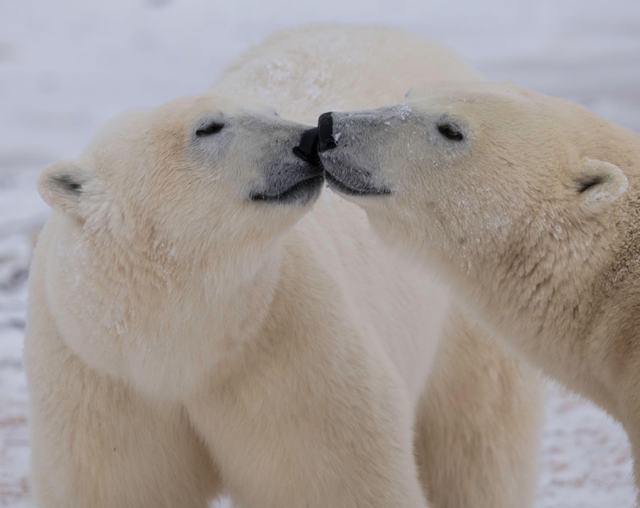
A new scientific study suggests that polar bears may be activating rare genetic mechanisms to adapt to rising global temperatures, a development that for the first time establishes a statistically consistent link between climate change and the DNA of a wild mammal species.
According to The Guardian, researchers from the University of East Anglia have discovered that some polar bears in southeastern Greenland are showing noticeable changes in the activity of so-called "jumping genes," small, mobile segments of DNA that affect how other genes function.
A biological effort for survival
Global warming is seriously threatening the existence of polar bears.
Current projections indicate that by 2050, about two-thirds of their population could disappear due to melting ice and loss of natural habitat.
In this alarming context, the researchers analyzed blood samples from polar bears in two regions of Greenland and compared them with local climate data. The results showed that bears living in warmer areas are showing higher activity of these “jumping genes,” particularly in genes related to heat stress, metabolism, and aging.
According to the study's lead author, Dr. Alice Godden, these changes may represent an emergency survival mechanism as sea ice is rapidly disappearing.
Diet, environment and DNA
The study also notes that bears in southeast Greenland have diets lower in fat and more based on plant sources, unlike bears in the north that rely primarily on seals.
These dietary changes also appear to be reflected in DNA, particularly in areas related to fat and energy processing.
The findings, published in the scientific journal Mobile DNA, suggest that some populations of polar bears are undergoing rapid and fundamental genetic changes, a process that usually takes much longer.
Hope, but not a solution
Although the study offers a ray of hope for the adaptive capacity of polar bears, scientists warn that this is not a reason for complacency.
Genetic changes do not guarantee the long-term survival of species if global temperatures continue to rise.
The next step for the research team is to analyze other polar bear populations around the world to see if similar processes are occurring.
As Dr. Godden points out, reducing carbon emissions and reducing dependence on fossil fuels remain essential. Biological adaptation may buy time, but without concrete action on climate change, the risk of extinction remains real.