Protests, violence, curfews: From France to Albania, why Europe'...
/ 2026-10-20 23:47:20Focus


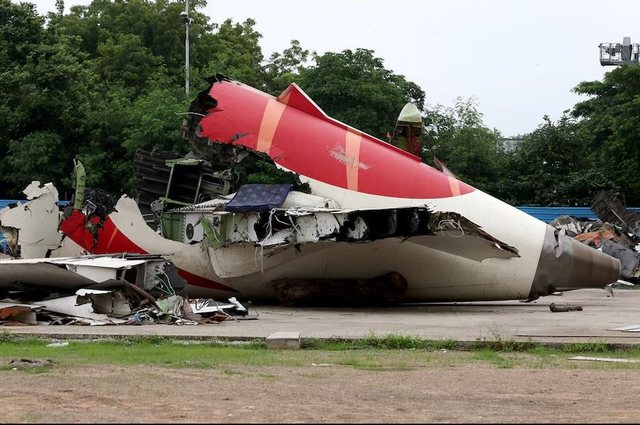
Three seconds after takeoff of Air India Flight 171, Captain Sumeet Sabharwal raised his right hand, moved it to two levers in the center cockpit of the Boeing 787 and cut off the fuel flow first to the left engine and then to the right engine.
At that delicate stage, with all the attention focused on getting the plane as high as possible, First Officer Clive Kunder, the pilot in charge of main operations at the time, could do nothing. His hands were busy managing the plane. This is the conclusion reached by a report in the Wall Street Journal, reported by Corriere della Sera.
The deadly crash has reignited a decades-old debate in the aviation industry over installing video cameras that monitor the actions of airline pilots to supplement the cockpit voice and flight data recorders already used by accident investigators.
Distinct sound
If he didn't see it, Kunderi must have sensed that the commander, who was acting as a monitor pilot, had switched the switches from "Run" to "Cutoff": the sound produced by the up-and-down movement is unmistakable. And as the engines began to lose power, as recorded by the audio from one of the black boxes, the argument began, with Kunderi repeatedly asking "Why did you do that?", in an increasingly desperate voice, and Sabharwal trying to deny it for several seconds, as revealed exclusively by Corriere della Sera two days ago. The first officer then tried to save the situation, restarting both engines after 10 and 14 seconds. But it was too late.
The points are now clarified.
The Wall Street Journal has confirmed the details, citing US officials familiar with the audio files. Jennifer Homendy, head of the NTSB, the US investigative body that investigates transportation accidents, also listened to the material closely. This reconstruction, on the one hand, completely exonerates Boeing and GE Aerospace, the manufacturers of the aircraft and engines, respectively. But on the other, it casts doubt on the Indian investigators, who left this detail out of their initial report.
Flight
On June 12, an Air India Boeing 787 with 242 people on board crashed 32 seconds after takeoff from Ahmedabad Airport. It was en route to London Gatwick. A total of 260 people died: 241 on board (one passenger survived) and 19 on the ground, who were inside one of the buildings the plane crashed into. The preliminary report confirmed that three seconds after takeoff, the switches regulating the flow of fuel to the engines switched from "Run" to "Cutoff", without explaining how.
Voluntary termination
One of the pilots deliberately cut off the fuel flow, disabling the engines. And the black boxes leave little room for error regarding responsibility: it was Commander Sabharwal who initiated the sequence that led to the crash, by removing the fuel. The First Officer Kunder, initially surprised by the move, then panicked, repeatedly asking his superior why he had done so, while the commander initially denied it, but then fell silent.
Who were the pilots?
Sabharwal, 56, is described by colleagues and neighbors alike as a kind man, devoted to his ailing father, a former civil aviation official in India. He has no professional "flaws," although an Indian pilot recently revealed that he suffers from depression. Kunder, 32, dreamed of flying since childhood, thanks in part to his mother, who worked as a flight attendant for Air India.