"We are drowning..." - From Lisbon, Milan to Tirana, "The Guardi...
/ 2026-10-18 23:13:32Focus


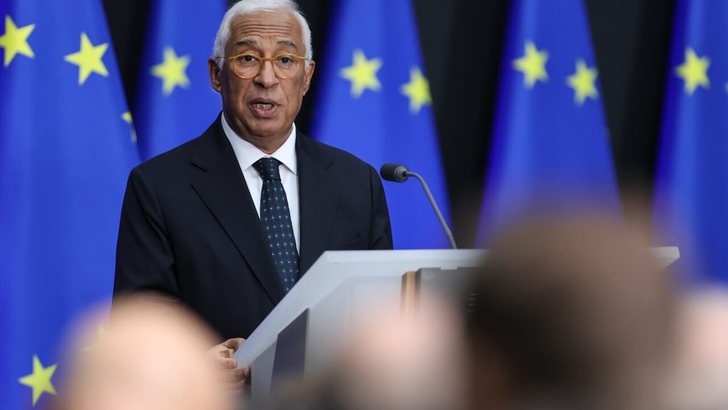
The applause stopped and NATO chief Mark Rutte carefully arranged his papers on the podium. It took him 62 seconds to get to the point.
"The dark oppressive forces are marching again," he said. "We are Russia's next target."
Rutte's speech in Berlin on December 11 was the latest in a series of unprecedented warnings of a direct conflict with Russia that were made in 2025 by senior European officials and intelligence agencies.
In February, Danish intelligence said that “Russia sees itself in conflict with the West and is preparing for a war against NATO.” In June, Germany’s top general said an attack could happen within four years, and in November, his words were echoed by his Polish counterpart – two days after German Defense Minister Boris Pistorius said that “some military historians even believe that we are in the last summer of peace.”
These are not the only warnings. But Rutte has made such warnings most frequently.
In January, he called on NATO countries to increase spending or take Russian language courses, while in June he said an attack could be coordinated with a Chinese attack on Taiwan.
His December 11 speech was the loudest alarm bell yet. He spoke of “the scale of the war that our grandparents or great-grandparents experienced” with “massive mobilization and millions of displaced people.”
What is behind these warnings?
These frequent statements have made headlines in the mainstream media and raised questions, especially at a time when the United States is showing a decline in interest in maintaining the level of security support it has provided to Europe in the past.
"This is something I have thought about separately, given that there is no evidence that Russia can or wants to attack NATO," John Foreman, a former British military attaché in Moscow and Kiev, told Radio Free Europe.
"I think a number of politicians and military figures are using the Russian threat for more prosaic reasons: Rutte is encouraging NATO countries to meet their spending commitments. The Poles to bring more NATO presence to their territory," he added.
Other skeptics say that after nearly four years of war, Russia has not been able to subdue Ukraine, even though it has made progress this year at tremendous cost in human losses and equipment.
Teemu Tammikko, from the Finnish Institute for International Affairs, also said that Russia does not appear "ready and able to attack NATO, at the moment."
But he told REL's Russian Service that Russian President Vladimir Putin's retention of power "depends on an external threat," meaning "in the long term, a direct military provocation is possible, especially if the war in Ukraine is blocked."
Some argue that this is already happening, as with Russian drones and incursions into NATO airspace. But warnings made this year suggest even darker scenarios.
Attack on Estonia
A report published by the European Council on Foreign Relations (ECFR) on December 18 focuses on fears of a direct attack on Estonia, to test the willingness of the US and other NATO allies to fight.
"In Europe, this anxiety rests on a deeper fear: that the US government, distracted by domestic politics and tempted by austerity, could soon reduce its presence or impose conditions on its role in defending Europe," it says.
Describing Estonia as "small, flat-land and exposed", the report says a 2016 military exercise predicted that Russian forces could capture the capital within 60 hours during an invasion.
But the report also notes that Russia would need 5-10 years after the end of the war in Ukraine “to reorganize and rearm for such an attack,” which is a much longer period than that predicted by Rutte, Pistorius, and others.
It is worth noting that US officials have not repeated these European warnings.
The recently published US National Security Strategy argues that “European allies enjoy a significant hard power advantage over Russia by almost every measure except nuclear weapons.”
But she also acknowledges the need for American diplomatic engagement "to reduce the risk of a conflict between Russia and European states."
"War mongers"
Kremlin officials have called European leaders “warmongers” and denied any desire to launch an attack. They have made similar statements about Ukraine on the eve of a full invasion in February 2022, although this does not automatically mean that there are plans for further aggression.
“Russia is not pursuing the military goals attributed to our country,” Deputy Foreign Minister Sergei Ryabkov said on December 22. “As the Russian president has already said, we are even ready to guarantee this legally as part of a settlement of the war in Ukraine,” he added.
But any such commitment is unlikely to be taken seriously by many in the West. Russia also signed and then reneged on promises to respect Ukraine's borders in the 1994 Budapest Memorandum.
In the end, it all depends on one person.
"As we know, Russia is not a democracy. Such a decision, in essence, is the result of Vladimir Putin's decision whether he wants to attack a European country that is a member of NATO, or another European country, so we have no way of knowing," Elizabeth Braw of the RUSI Institute for Defense and Security told REL's Russian Service.
"That's why you see military leaders all over Europe saying we have to be prepared for something that happens tomorrow. It could happen in five years, ten years or never, but you can't count on that."/ REL