Protests, violence, curfews: From France to Albania, why Europe'...
/ 2026-10-20 23:47:20Focus


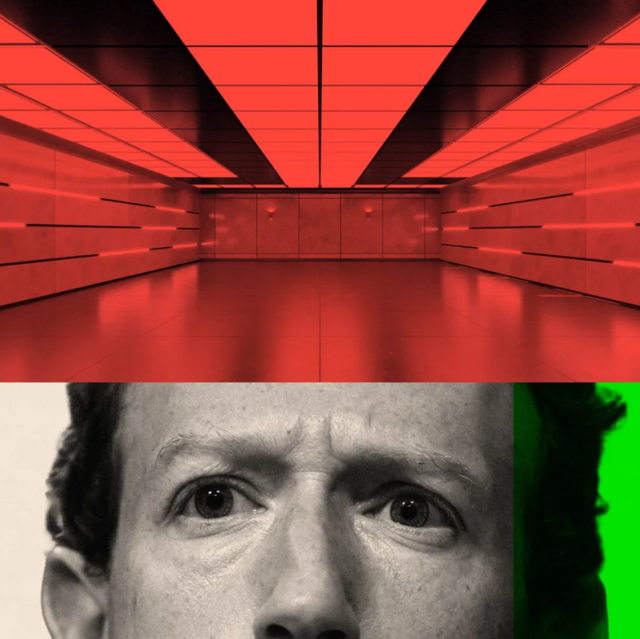
Are they really preparing for war, for the consequences of climate change, or for some catastrophic event that the rest of the world doesn't yet know about?
Mark Zuckerberg reportedly began construction on Koolau Ranch, his sprawling 1,400-acre compound on the Hawaiian island of Kauai, in 2014.
The complex is expected to include a special shelter, equipped with its own power and food supplies, however, according to a report by Wired magazine, carpenters and electricians working there were prohibited from talking about the project due to non-disclosure agreements (NDA).
A six-foot (about 1.8 meters) wall blocked the view of the project from a nearby street.
When asked last year if he was building a doomsday shelter, the Facebook founder responded with a resounding “no.” He explained that the roughly 5,000-square-foot underground space is “just a little shelter, like a basement.”
That hasn't stopped speculation - nor has his decision to buy 11 properties in the Crescent Park neighborhood of Palo Alto, California, where he is said to have added a 7,000-square-foot underground space.
Although his building permits mention basements, according to the New York Times, some of his neighbors call it a bunker. Or a billionaire's lair, like Batman's.
Then there is the speculation about other tech executives, some of whom appear to have been busy buying up vast tracts of land with underground spaces, suitable for conversion into luxury multi-million pound bunkers.
Reid Hoffman, the co-founder of LinkedIn, has spoken about “apocalypse insurance.” He has previously claimed that about half of the super-rich have something like this, and New Zealand is a favorite destination for building these homes.
So are they really preparing for war, for the consequences of climate change, or for some catastrophic event that the rest of the world doesn't yet know about?
In recent years, the advancement of artificial intelligence (AI) has only added to the list of potential existential concerns. Many people are deeply concerned by the dizzying speed of this development.
Ilya Sutskever, senior scientist and co-founder of OpenAI, is reported to be one of them.
By mid-2023, the San Francisco-based company had launched ChatGPT – the chatbot now used by hundreds of millions of people around the world – and they were working at a rapid pace on updates.
But over the course of that summer, Mr. Sutskever became increasingly convinced that computer scientists were on the verge of developing artificial general intelligence (AGI) – the point at which machines equal human intelligence – according to a book by journalist Karen Hao.
In a meeting, Mr. Sutskever suggested to colleagues that they build an underground shelter for the company's top scientists before such a powerful technology was launched into the world, Ms. Hao reports.
“We will definitely build a bunker before we launch AGI,” he is widely reported to have said, although it is not clear who he meant by “us.”
This sheds light on a strange fact: many prominent computer scientists and technology leaders — some of whom are working intensively to develop an extremely intelligent form of AI — also seem deeply afraid of what it might one day do.
So when exactly — if ever — will AGI arrive? And could it really be so transformative as to scare ordinary people?
An arrival 'sooner than we think'
Tech leaders have claimed that AGI is imminent. OpenAI chief Sam Altman said in December 2024 that it will come “sooner than most people in the world think.”
Sir Demis Hassabis, co-founder of DeepMind, has predicted it will arrive within the next five to ten years, while Anthropic founder Dario Amodei wrote last year that his favorite term — “powerful AI” — could arrive as early as 2026.
Others are skeptical. “They keep changing the target,” says Dame Wendy Hall, professor of computer science at the University of Southampton. “It depends on who you talk to.” We’re on the phone, but I can almost hear her eyes rolling.
“The scientific community says AI technology is amazing,” she adds, “but it’s nowhere near human intelligence.”
It would take some "fundamental breakthroughs" first, agrees Babak Hodjat, chief technical officer of technology company Cognizant.
Moreover, it is impossible for this to happen in a single moment. Artificial Intelligence (AI) is a technology that is advancing at a rapid pace — it is on a journey — and there are many companies around the world racing to develop their own versions of it.
But one of the reasons this idea is generating excitement in Silicon Valley is because it is thought of as a precursor to something even more advanced: ASI, or super-smart artificial intelligence — a technology that surpasses human intelligence.
It was in 1958 that the concept of "singularity" was posthumously attributed to the Hungarian-born mathematician, John von Neumann.
This term refers to the moment when computer intelligence advances beyond human understanding.
Most recently, the book Genesis of 2024, written by Eric Schmidt, Craig Mundy, and the late Henry Kissinger, explores the idea of an incredibly powerful technology that becomes so efficient at decision-making and leadership that we end up handing over control entirely to it.
According to them, it is a matter of when, not if it will happen.
Money for everyone, without the need for work?
Those who support AGI and ASI are almost religiously devoted to its benefits.
They argue that this will discover new cures for deadly diseases, solve climate change and invent an inexhaustible source of clean energy.
Elon Musk has even claimed that super-smart artificial intelligence could usher in an era of "universal high income."
He recently supported the idea that AI will become so free and widespread that almost everyone will want their own “personal R2-D2 and C-3PO robots” (referring to the droids from Star Wars).
"Everyone will have the best medical care, food, transportation and everything else. Sustainable abundance," he enthused.
Of course, there is also a scary side.
Could this technology be used by terrorists as a giant weapon?
Or, what if she herself decides that humanity is the cause of the world's problems and destroys us? / Taken with abbreviations from the BBC